
The complete guide
Choosing a Kids Play Tent That Actually Gets Used
The problem with giving kids "their own space"
Most homes do not have a spare room going begging. What children actually get is a corner, and corners are shared property. The dog walks through. Someone needs the floor for the washing basket. A pile of toys gets scooped up at five o'clock because guests are coming.
None of that is unreasonable. It is just that children build long, elaborate games, and those games need somewhere to live for more than twenty minutes. A play tent solves this by drawing a line on the floor. Inside the fabric walls is their territory. Outside it, normal household rules apply. That simple boundary is why a cheap fabric structure often gets more use than an expensive toy.
The catch is that a lot of play tents are bought, loved for a fortnight and then quietly folded into a cupboard forever. Usually that comes down to a handful of practical problems. Too small to sit in properly. Only one door, so siblings fight. A bare floor so nobody wants to sit down. Too fiddly to put up, so it never comes back out after the first pack-away.
How this tent is put together
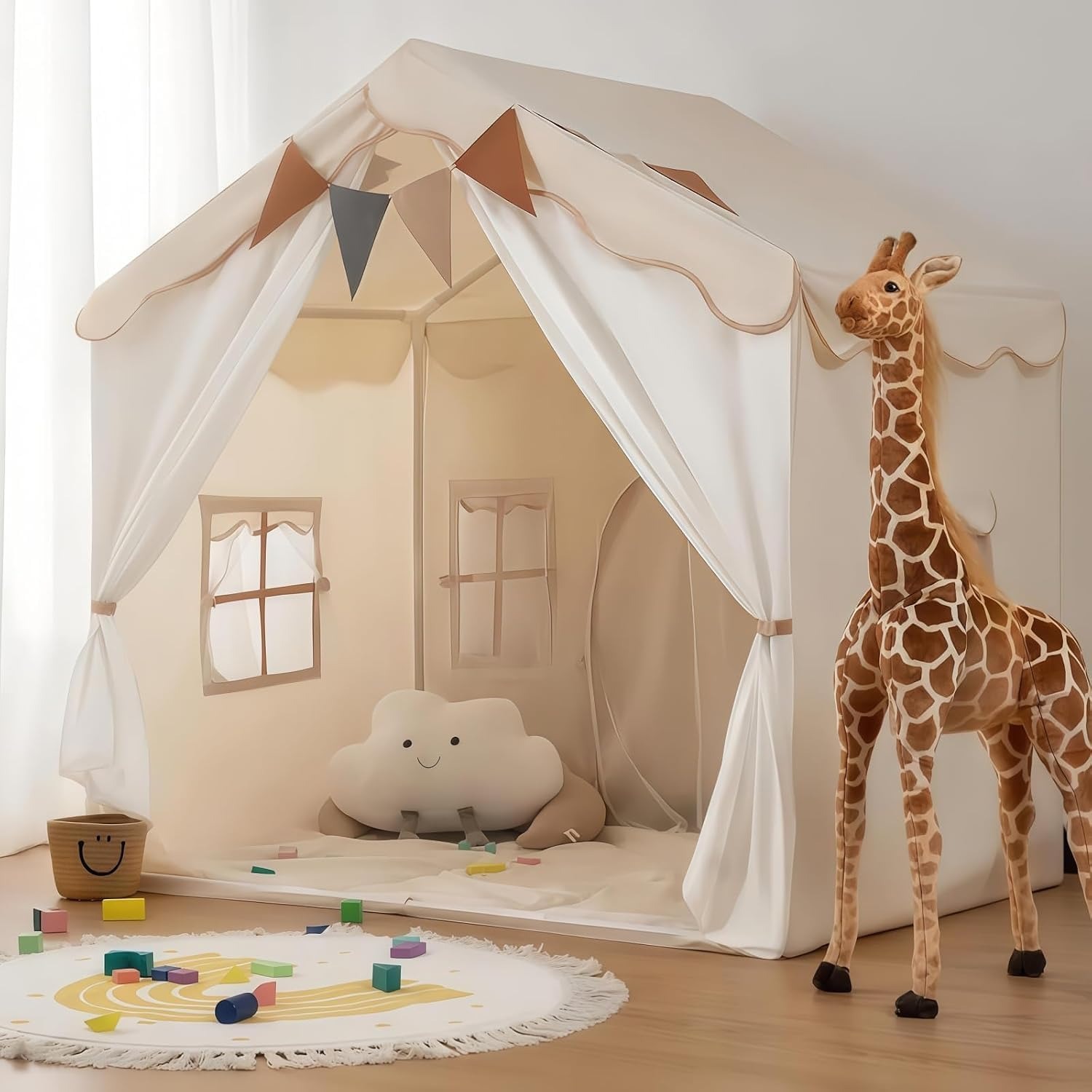
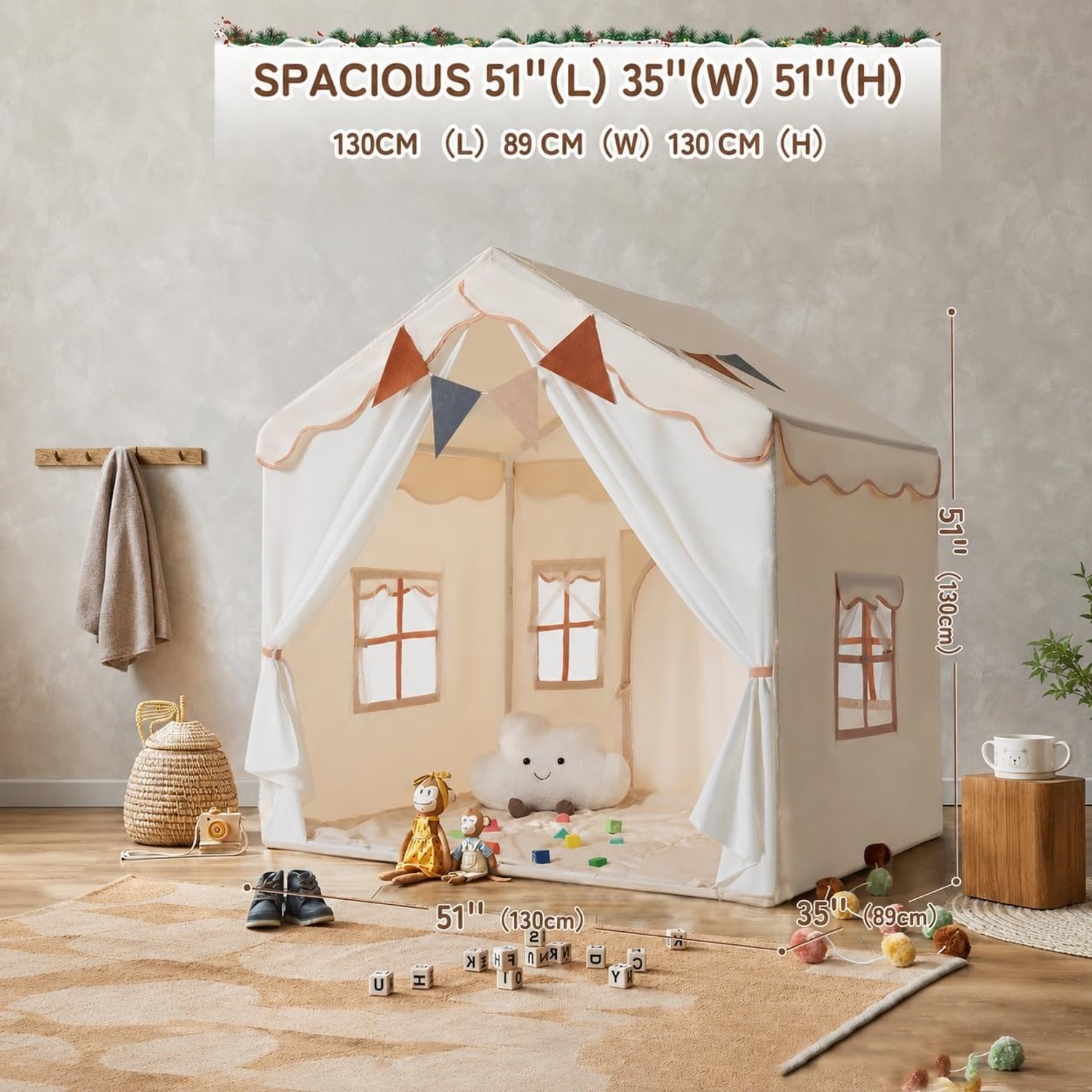
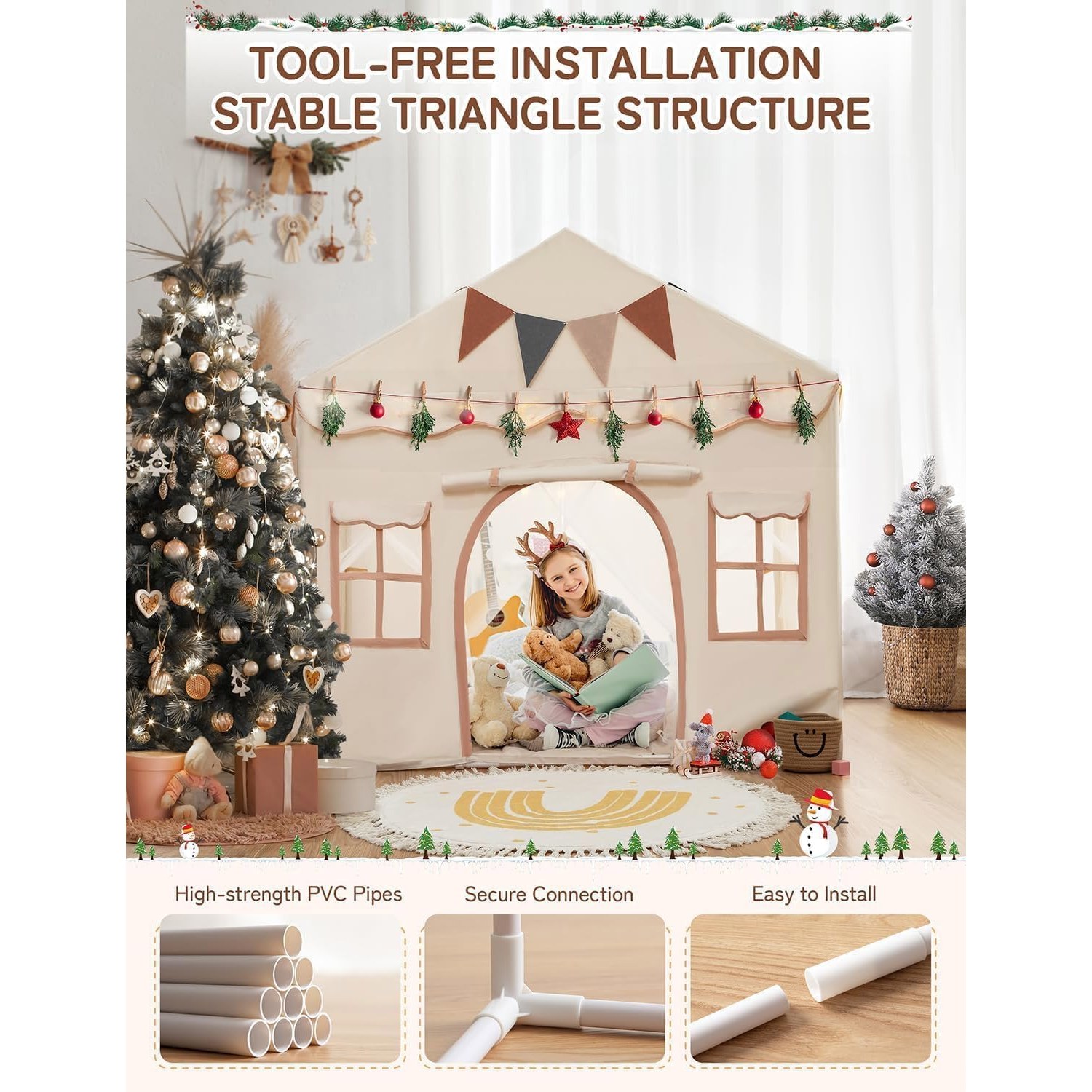
The structure here is a pole frame with a fabric cover that slides over the top. Set up, it measures 89 cm deep by 89 cm wide and 130 cm high. That square base is roughly the size of a large bath mat, and the height means most young children can kneel up or stand without ducking.
The frame collapses. Poles come apart, fabric folds, and the whole thing weighs 2.5 kg. That is light enough to carry assembled from a bedroom to the lounge, or to pack into a car boot when you visit family.
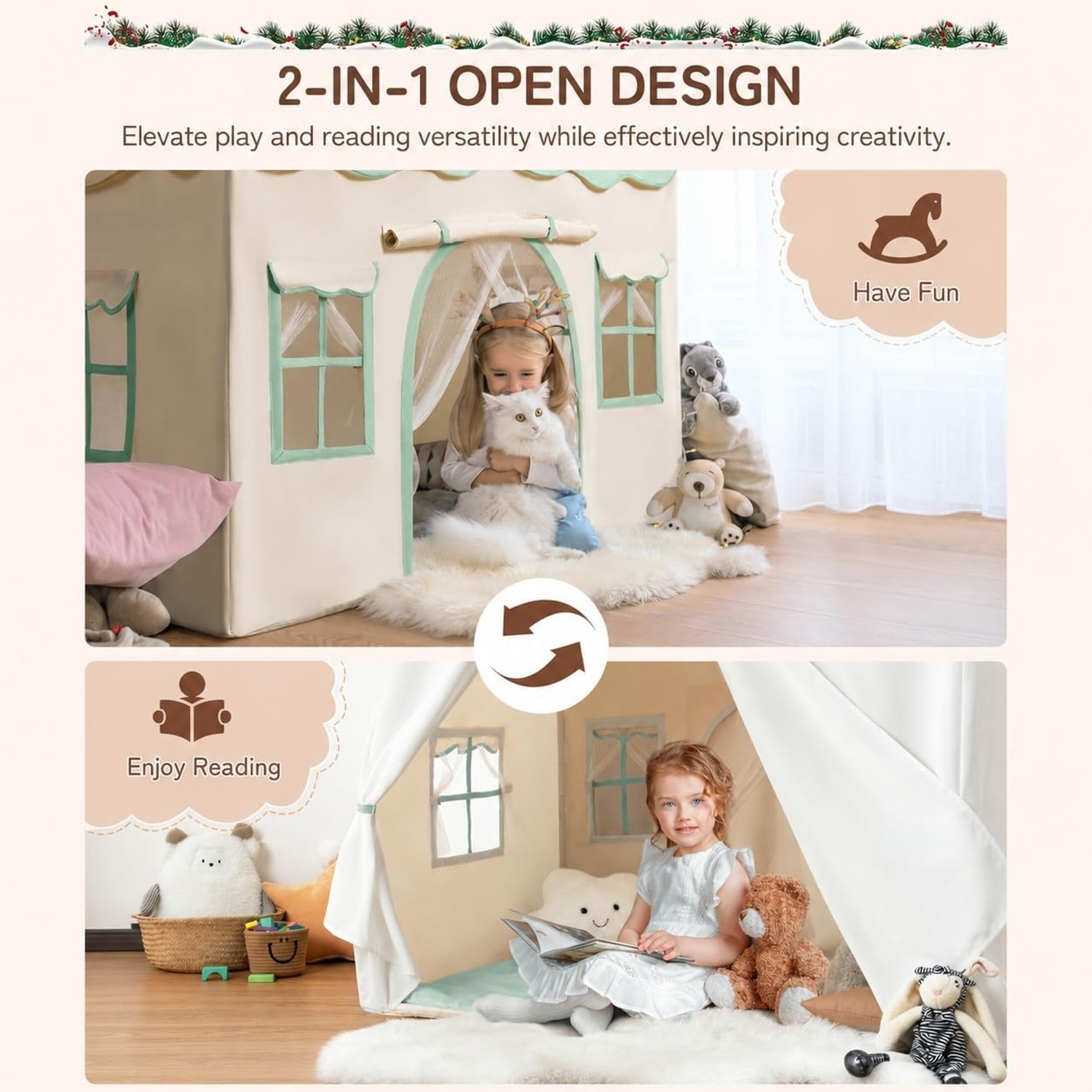
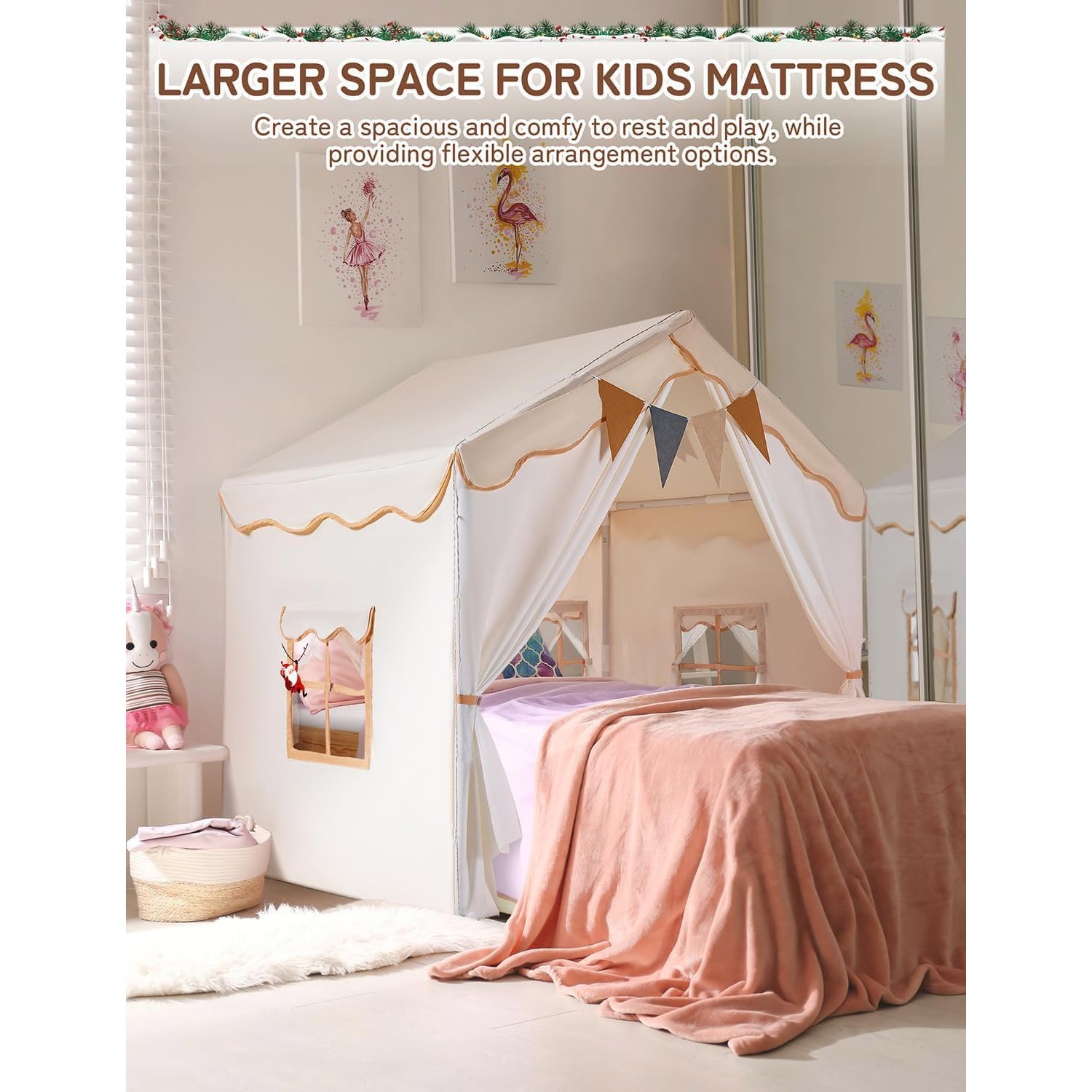
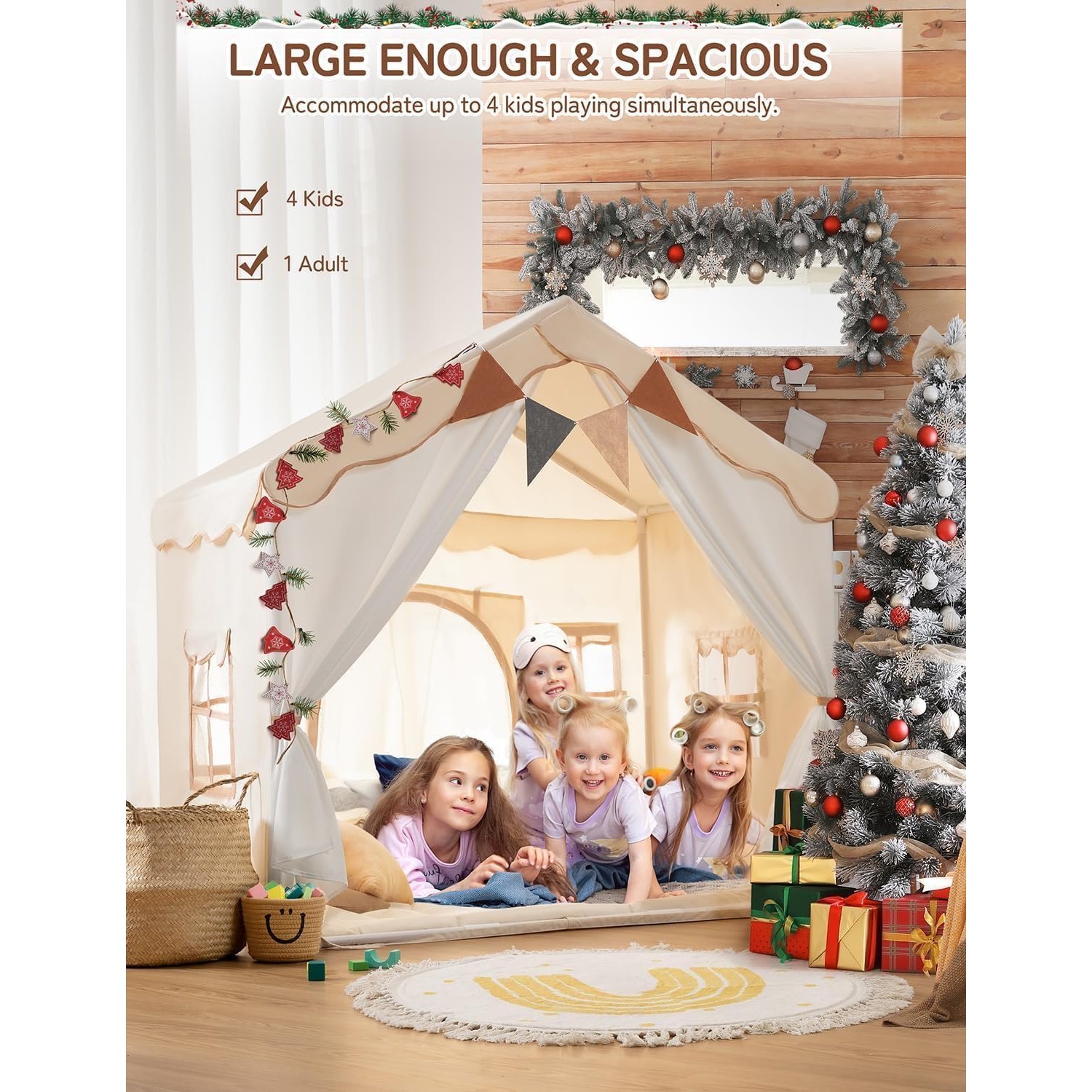
There are two doorways on opposite sides and four windows. The doors sound like a small detail until you watch two kids try to use one entrance at the same time. Two openings mean a clear exit whichever way they are facing. The windows let light in, which matters because a dim tent is a tent nobody wants to read in. They also give you a sightline from the sofa.
Inside there is a padded mat. It is a separate piece rather than a sewn-in floor, so you can lift it out, shake it and wipe it. On tiles, floorboards or short grass it is the difference between a child settling in and a child complaining their knees hurt.
The look is beige and white with a giraffe motif and bunting flags. The theme is listed as nursery and safari. It is a deliberately quiet palette, which is worth thinking about if the tent is going to sit in a living room where adults also spend time.
Who it suits
The maker recommends ages 3 and up. In practice, the sweet spot runs from about three to seven. Three year olds use it as a hideaway and a nap spot. Five and six year olds turn it into a shop, a vet clinic, a spaceship or a den for whispering in. By eight most children have outgrown the floor space, although plenty still use one as a reading corner because it is cosy and the rest of the house is not.
It suits families with limited room, because it folds. It suits a shared bedroom, because it gives one child a defined retreat. It suits grandparents who want something to pull out when the grandchildren visit and put away again on Sunday night.
It is less suited to anyone wanting a permanent outdoor structure. This is an indoor play tent that happily goes outside for an afternoon, not a weatherproof shelter. Leave it out through a wet week and you will regret it.
How to choose between play tents
A few things are worth comparing when you are weighing options.
Floor area against your actual corner. Measure before you buy. An 89 cm square needs about a metre of clearance each way once children are crawling in and out. Tape the outline on the floor if you are unsure.
Height. A 130 cm peak lets a child stand. Shorter pop-up tents force crawling, which is fine for young children and annoying for a six year old.
Number of doors. If you have more than one child, this is the quiet winner. The best kids play tent for siblings is nearly always the one with two ways out.
Whether a mat is included. Buying a tent and then buying a rug for it adds cost and faff. A playhouse tent with mat included starts out usable.
How it packs down. Pop-up tents are instant but can be awkward to twist back into their bag. Pole frames take a few minutes to build but fold flat in a predictable way. This one is a pole frame, collapsible, and packs down to something a cupboard can swallow.
Style. Licensed cartoon prints date fast and clash with everything. A neutral safari themed play tent in beige and white tends to survive a change of bedroom and a change of favourite character.
Setting it up without the swearing
Assembly is required, and there is one thing that catches almost everybody the first time. Every pole joint has to be pressed fully home. If even one connection is a centimetre short, the finished frame is shorter than the cover expects, and the cover will not reach. People then assume the cover is undersized and start pulling harder, which is the wrong move.
Work around the frame methodically. Push each joint until it seats properly. Then lift the cover over the top and ease it down. It should go on without a fight.
Set it up on a flat surface. Carpet is fine, and so is a level lawn. Avoid sloped ground outdoors, because the frame will lean and the walls will sag.
If you want to add fairy lights, pick a low-heat battery set and keep the cable clear of the doorways. Cushions go on top of the padded mat rather than instead of it.
Keeping it in good shape
Fabric playhouses are not demanding, but a few habits keep them looking decent.
Wipe marks off as they appear with a damp cloth and a bit of mild soap. Light fabric shows a sticky handprint, and a fresh mark comes off far more easily than one left for a month. Let everything dry fully before you fold it, because folded damp fabric picks up a musty smell that is hard to shift.
The padded mat can be spot cleaned the same way. Take it out of the tent to do it, lay it flat and let it dry properly.
Keep the tent out of long stretches of direct sun. Any dyed fabric fades eventually, and a tent parked in a sunny window for a summer will look tired sooner than one in a shaded corner.
Check the pole joints every so often, especially after the tent has been packed and unpacked a few times. Push any loose sections back together before the kids pile in.
Store it somewhere dry. A cupboard shelf, under a bed, the top of a wardrobe. At 2.5 kg it does not need a special spot.
A note on supervision
Common sense applies. The frame is light and the walls are fabric, so it is not built to be climbed, swung from or leaned on hard. Children under the recommended age should be supervised. Keep it away from heaters, candles and open flames, as you would with any fabric item in the house.
The short version
This is a 89 cm square, 130 cm tall fabric playhouse with two doors, four windows, a padded mat and bunting, in a neutral beige and white safari design. It weighs 2.5 kg, collapses for storage and is recommended for ages 3 and up.
The two doors stop sibling traffic jams. The mat makes hard floors usable. The folding frame means it does not have to own a corner of your house permanently. Those three things are what separate a tent that gets played in from a tent that gets put away.
If you have a child who wants somewhere of their own and a home that cannot spare a whole room, this is a sensible answer. Take a few extra seconds over the pole joints during setup and the rest looks after itself.