
The complete guide
How to Choose a Playhouse Tent Your Child Will Actually Use
The problem with most play tents
Buy a cheap pop-up tent and you usually get the same story. It looks great for a week, then one pole bends, the single doorway becomes a bottleneck whenever a friend visits, and the inside turns into a warm, airless pocket on a summer afternoon. Eventually it ends up folded badly in a cupboard and nobody mentions it again.
That is a shame, because a good play tent is one of the better things you can put in a child's room. It gives them somewhere that belongs to them. Small children spend most of their day in spaces built for adults, and a corner they can crawl into and close off is genuinely useful for their mood as well as their imagination.
So the question is not whether a play tent is worth it. It is which one survives real use by real children.
How a frame tent differs from a pop-up
There are two broad types on the market. Pop-up tents use a sprung wire hoop sewn into the fabric. They spring open in a second, which is lovely, and they are notoriously awkward to twist back into their bag. The wire also fatigues over time, and once it kinks it never sits straight again.
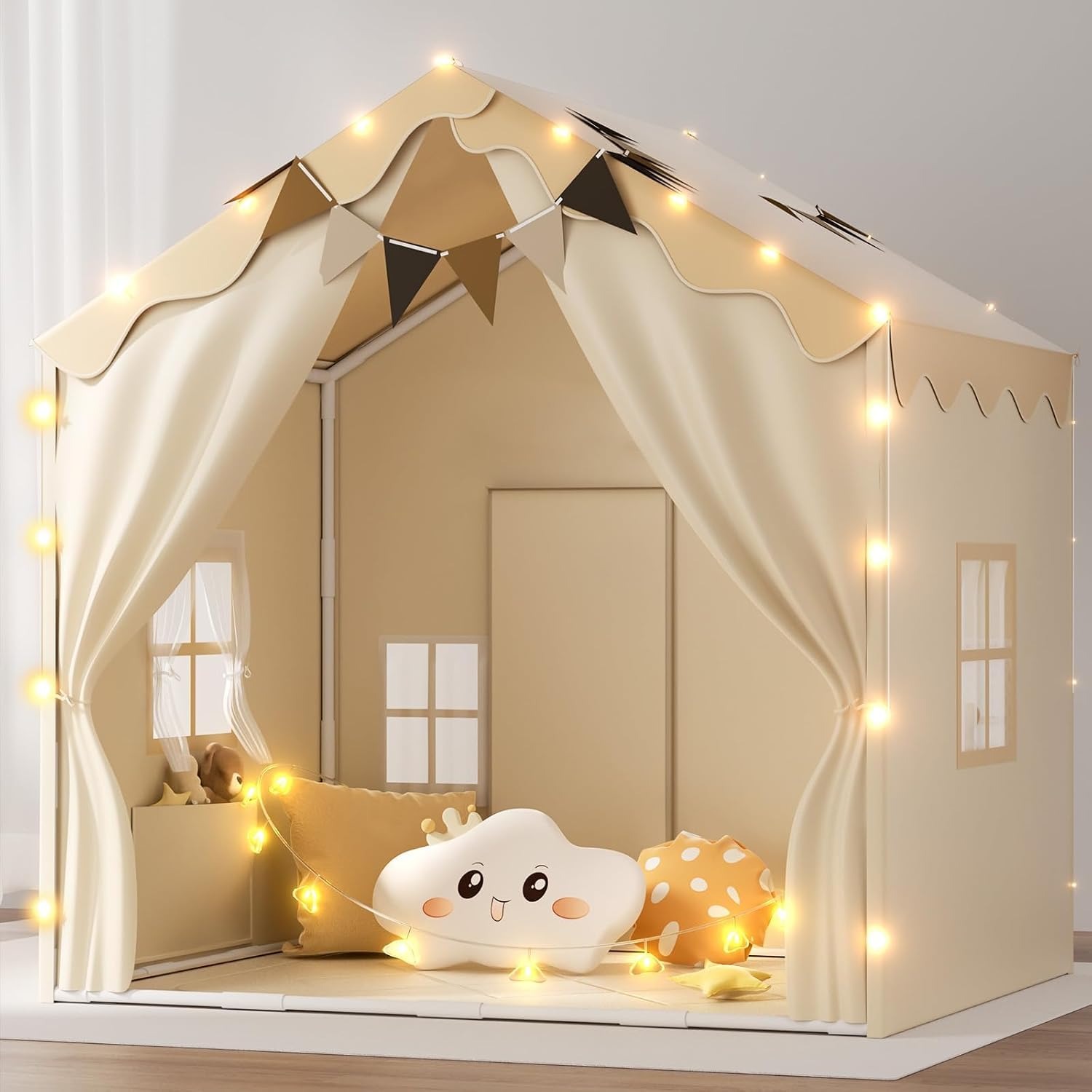
Frame tents, like this one, use separate poles that you push together and then cover with a fabric canopy. Assembly takes a few minutes rather than a second. In exchange you get a structure that holds its shape, stands at a consistent height, and can be taken apart and rebuilt as many times as you like without anything bending permanently.
This tent uses PVC poles. They are light enough for a child to help carry and they connect by hand, so there is no screwdriver or spanner involved. An instruction sheet comes in the box. Assembling it together is honestly part of the appeal, because children who help build something tend to treat it better afterwards.
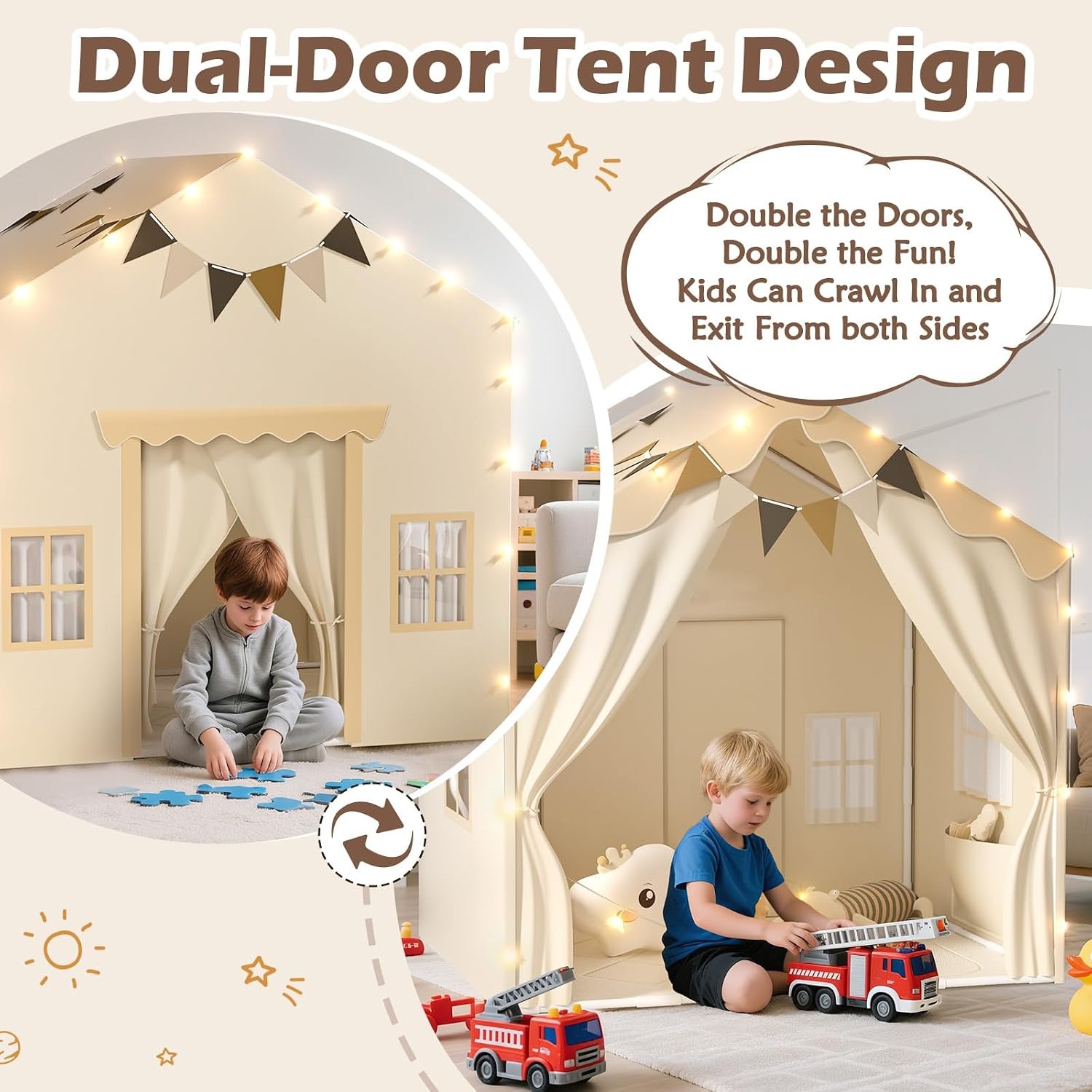
Why two doorways change the game
A single-door tent works fine for one child. Add a sibling or a visiting friend and the doorway becomes the busiest square metre in the house.
Two doors, one at the front and one at the back, fix that. Children crawl straight through instead of reversing out. Games spread across both ends. One child can run a shop at the front while another stocks shelves at the back. It sounds like a small design detail, but if you have ever refereed an argument about who gets to go first, you will understand why it matters.
The open layout also makes the inside feel bigger than the measurements suggest. Light comes in from both ends rather than one, so it never feels like a dark pocket.
Size, and whether it will fit your room
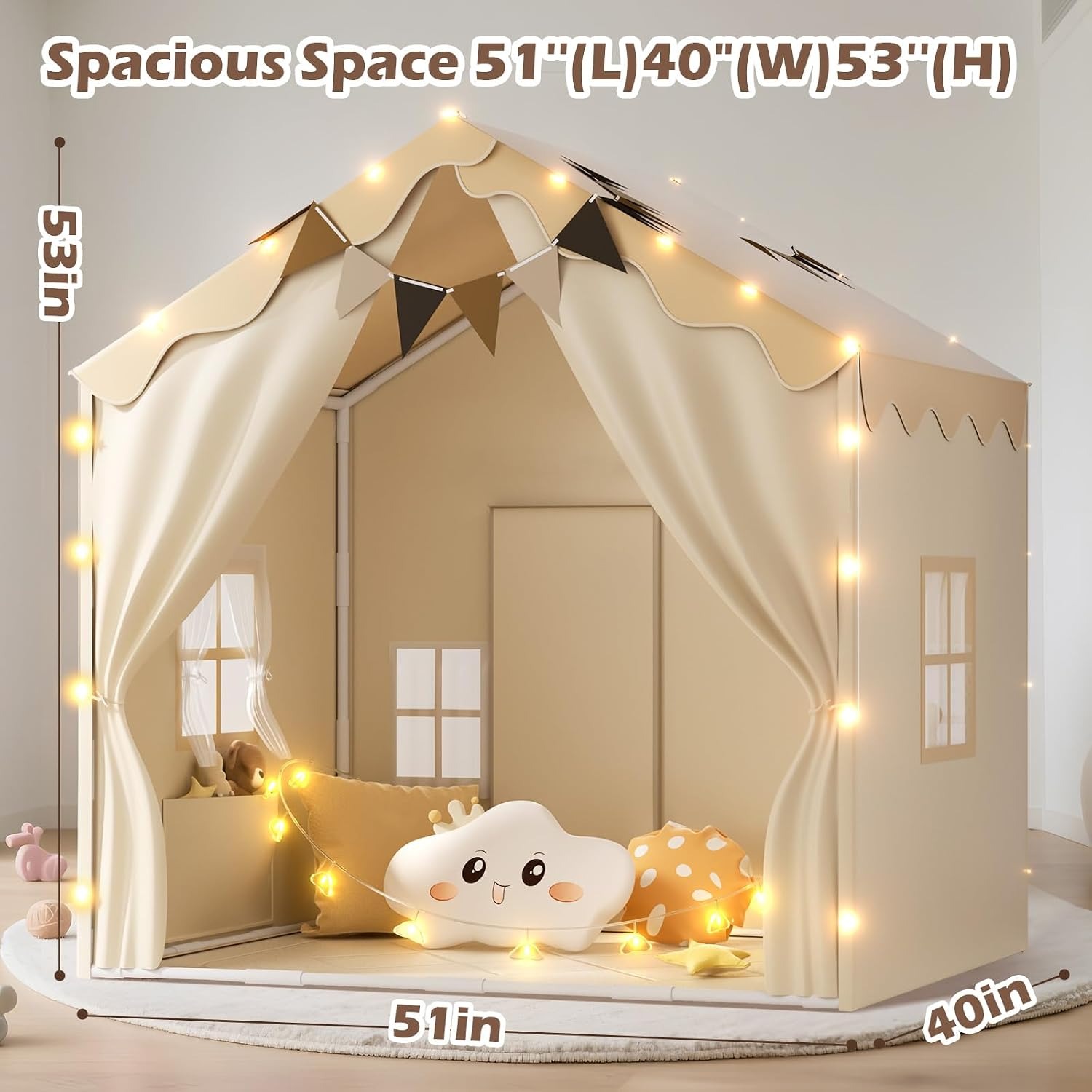
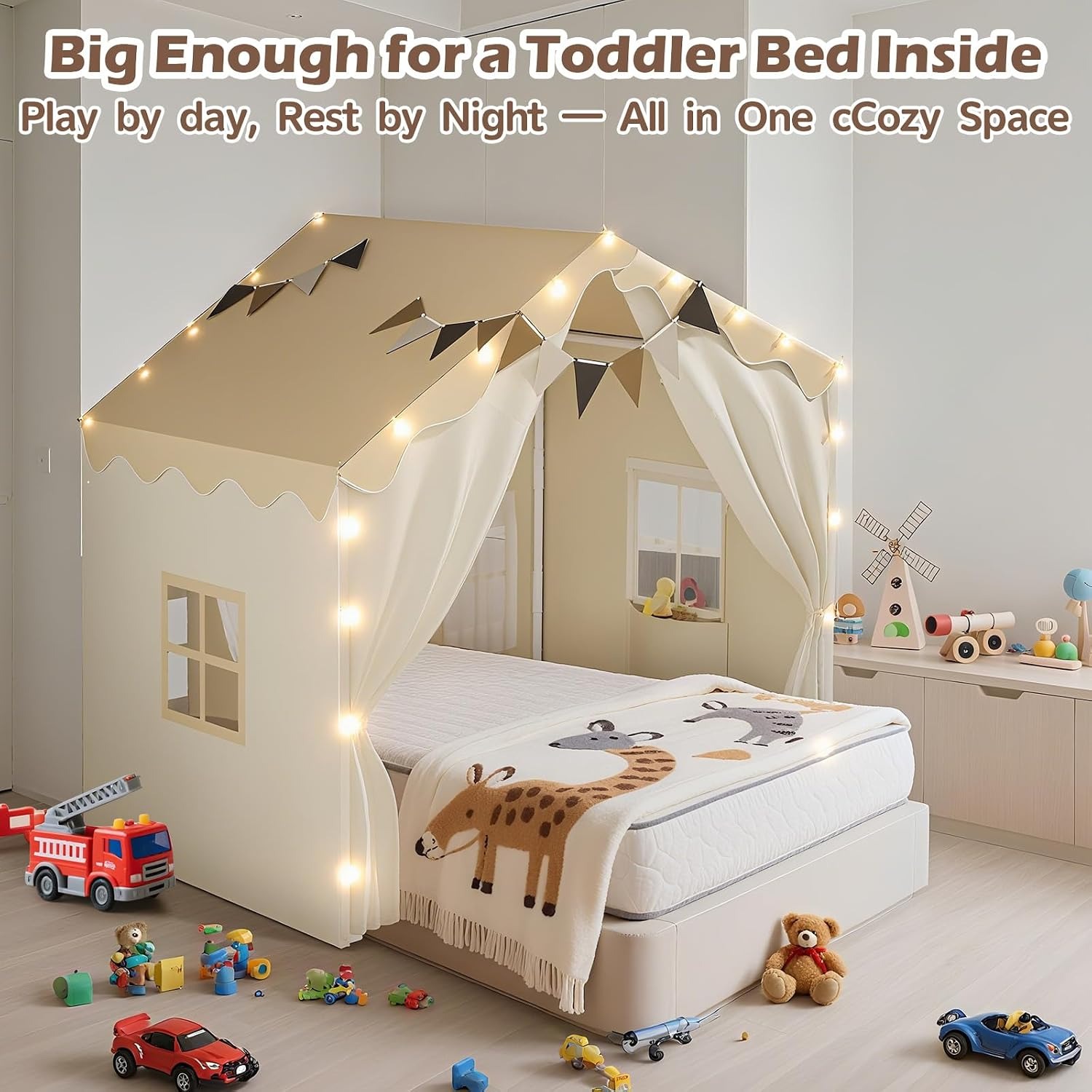
The assembled footprint here is 135 centimetres deep by 128 centimetres wide, standing 100 centimetres tall. Before you order anything, mark that out on the floor with masking tape. It takes thirty seconds and it stops the single most common regret with play tents, which is buying one that technically fits but leaves no room to walk past.
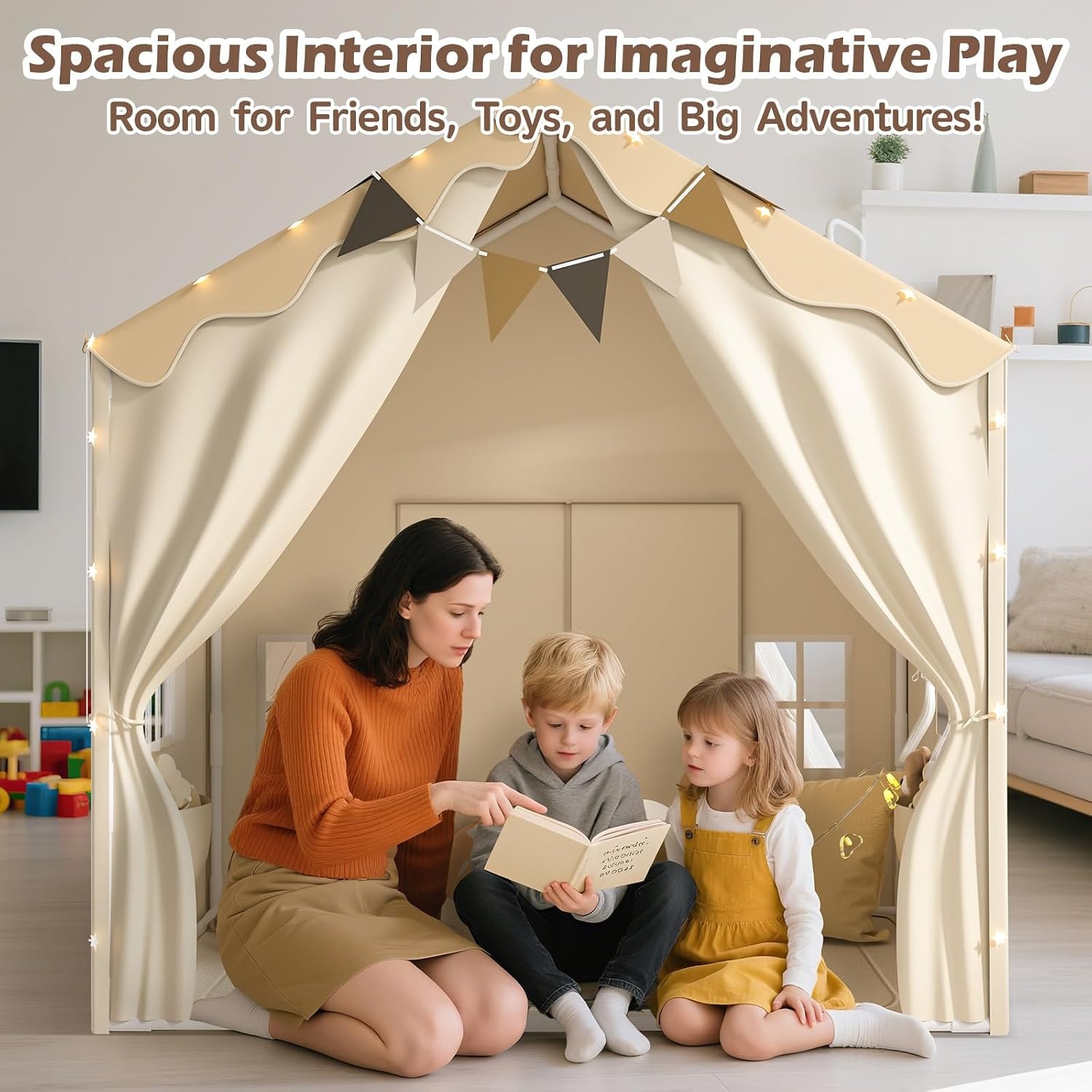
A metre tall is a sensible height for the 3 years and up age group. Most children in that range can stand up inside without ducking, which makes the space feel like a room rather than a crawl tunnel. Adults can sit in with their knees bent, which is all you really need for a bedtime story.
When it is not in use the tent packs down to 40 by 31 by 20 centimetres. That is wardrobe-shelf territory. If your living room needs to be a living room in the evenings, that packed size is the number that matters most.
Airflow, visibility and peace of mind
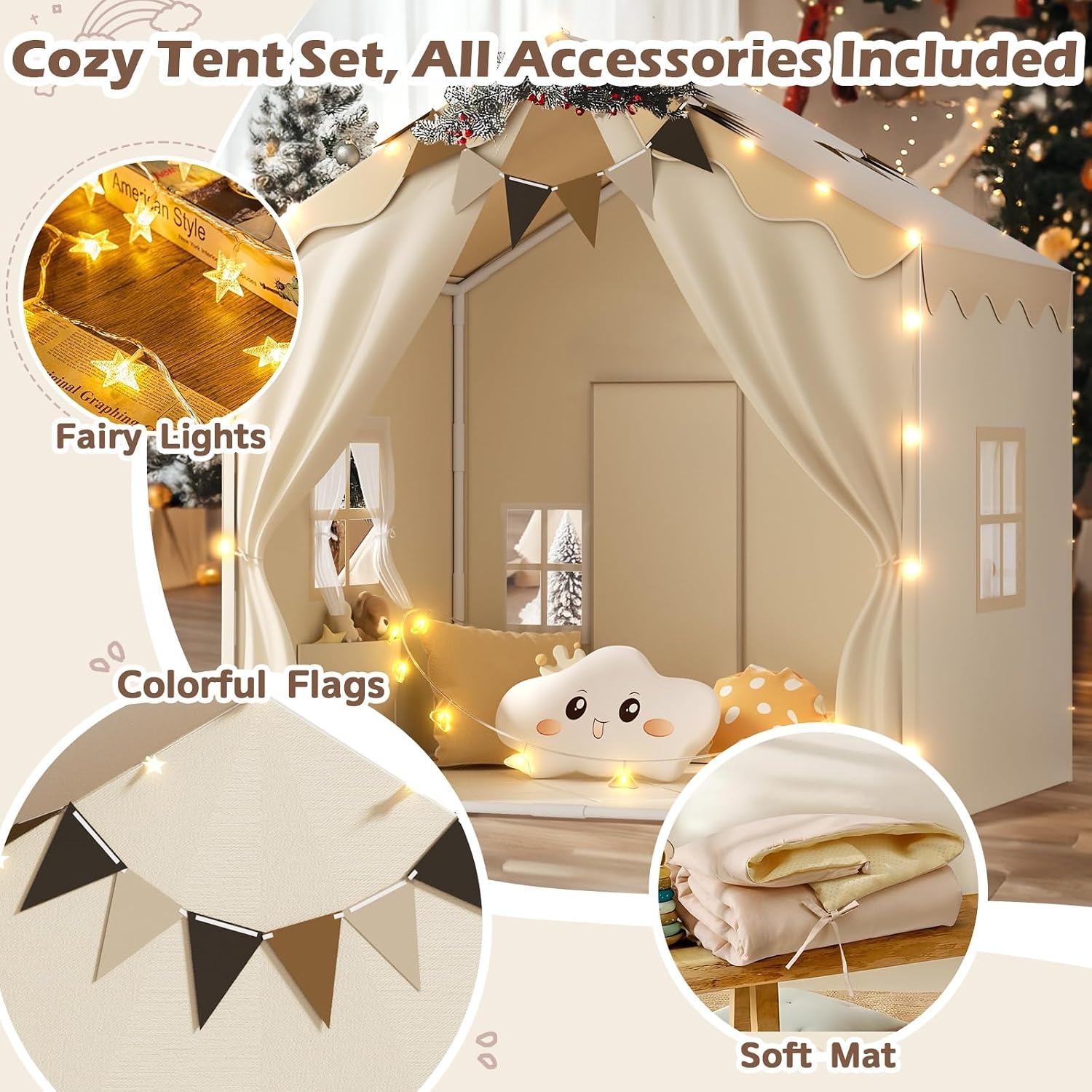
Four mesh windows do two jobs at once. The first is airflow. Fabric enclosures warm up quickly with a couple of children inside, and mesh panels let that heat escape so the space stays comfortable through a long session.
The second job is visibility. You can glance over from the kitchen bench and see what is happening inside without opening a door and interrupting whatever elaborate story is underway. Children like privacy. Parents like line of sight. Mesh gives both sides what they want.
For anyone comparing the best indoor play tent options, ventilation is worth more attention than it usually gets. A tent without mesh panels is a tent that gets abandoned on warm days.
Storage pockets are not a gimmick
Two large side pockets are sewn into the walls. They hold picture books, a soft toy, a torch, pencils, a snack.
The practical effect is that the floor stays clear. Floor space is the whole point of a play tent, and in a tent without pockets everything ends up underfoot within ten minutes. The pockets also make packing up obvious. There is a place for things to go, so "tidy up" stops being an abstract instruction.
If you are setting it up as a quiet corner rather than a play space, the pockets are where the bedtime books live. That small bit of structure is what turns a tent into one of the best reading nooks for kids in the house.
Where to put it
Indoors is where this tent spends most of its life. A bedroom corner is the obvious spot, though a playroom, the end of a wide hallway or a quiet corner of the living room all work. Leave clear space in front of both doorways so children are not crawling into furniture.
Outdoors is fine on dry, flat ground. A lawn or a patio on a still afternoon is perfect. Bring it inside before rain and before dew settles overnight, because no waterproof rating is stated for this product and damp fabric that gets folded away will smell within a week. Treat it as fair-weather equipment and it will keep looking good.
Put a rug or soft mat underneath on hard floors. It makes the inside far more inviting and it protects the base of the canopy from grit.
Keeping it in good shape
Care is simple. Wipe marks off the fabric with a damp cloth and a little mild soap, then let it air dry completely before folding. Avoid bleach and strong solvents. Spot cleaning is safer than machine washing unless the care label on your tent says otherwise, since washing machines are hard on seams and decorative trim.
Keep the poles clean and dry, and push every joint fully home before children get in. A loose joint is the usual cause of a tent that sags. Store the whole thing folded flat in a dry cupboard rather than a damp shed.
One house rule saves most problems. The tent is for sitting in, not for climbing on or hanging off. It is a fabric structure, not furniture, and children understand that distinction quickly if you explain it once.
Who it suits
This one makes most sense for households with more than one child, or one child who often has friends over, because the second doorway stops the bottleneck. It suits families who want something that can be built and taken down rather than left up permanently, and anyone looking for a quiet corner as much as a play space.
It is less suited to very small rooms where a 135 by 128 centimetre footprint would block a path, or to families wanting something to leave outside year-round. For that you want a hard-shell cubby, not fabric.
The short version
A double door playhouse tent gives children a space of their own with two ways in, enough floor for a small group, mesh panels that keep it breathable and pockets that keep it tidy. It builds by hand in minutes with no tools, stands a metre tall for the 3 and up age group, and folds into a box small enough for a wardrobe shelf.
Tape out the footprint first, pick a corner with light and clear access to both doors, and let them help build it. That last part is what makes them use it.