


The complete guide
Choosing a Kids Play Tent That Actually Gets Used
The problem with most play tents
Plenty of play tents get bought with good intentions and end up shoved behind a wardrobe by the end of the month. Usually it comes down to one of three things. The tent is a pain to put up, so nobody bothers. It is too small to actually sit in once a child is past young child age. Or it only works as one thing, a castle or a fire truck, and the novelty wears off in a fortnight.
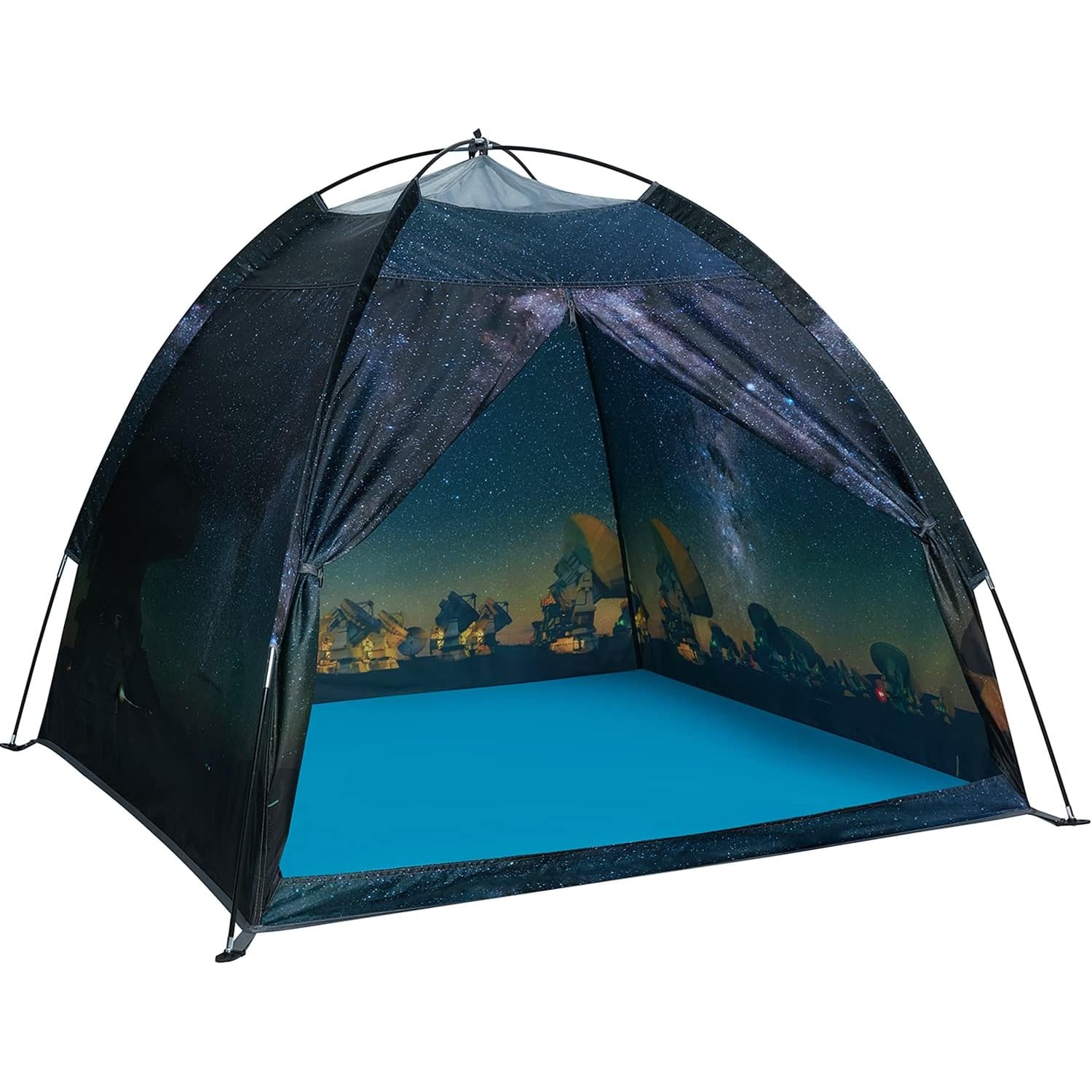
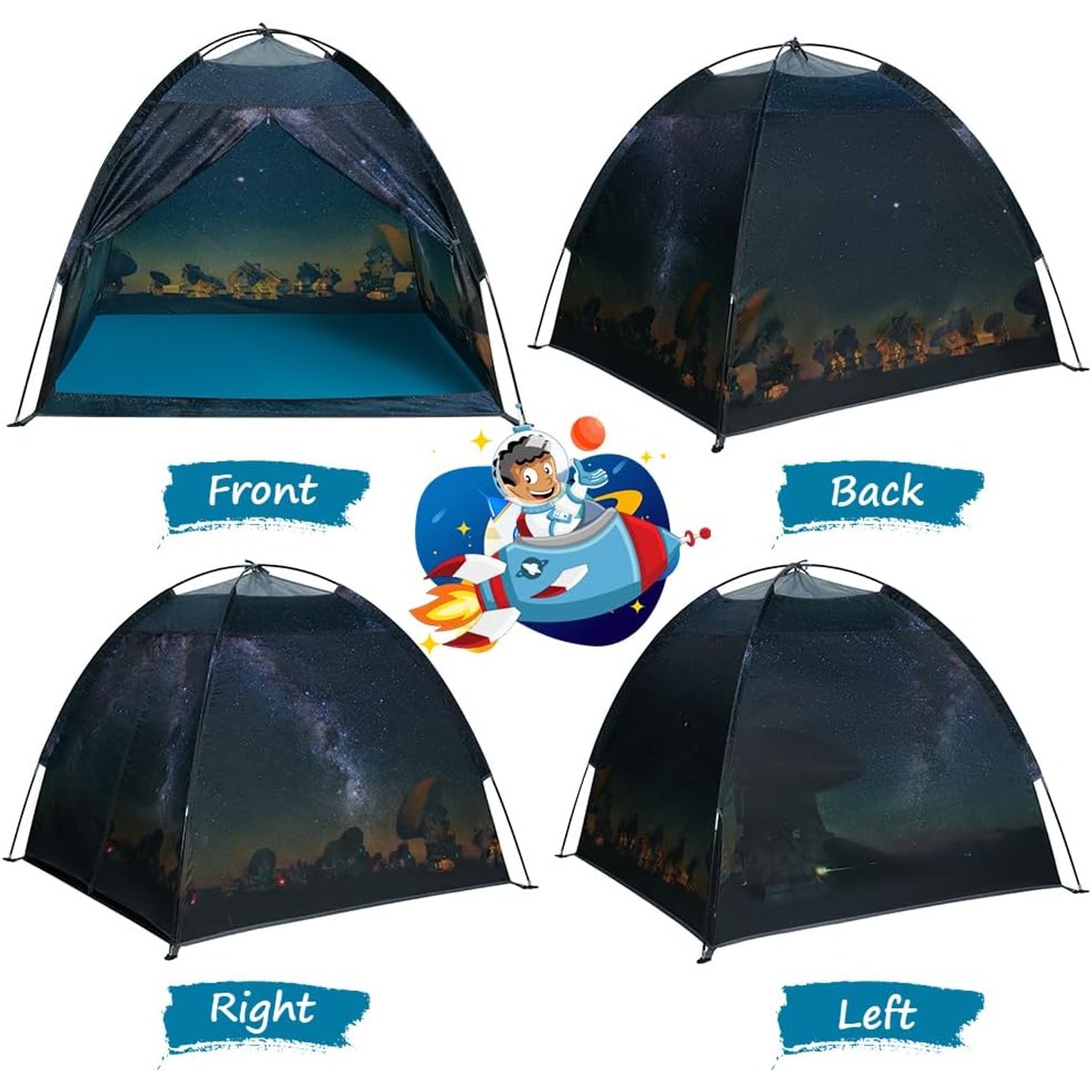
A tent that gets used is a tent that is quick to pitch, roomy enough to lie down in, and open-ended enough that the child decides what it is. The Galaxy Dome Play Tent is built around those three points. The theme suggests space without locking the story in, the footprint is a bit under 1.2 metres square, and it goes up with two shock-corded poles in a few minutes.
Why children want a small space of their own
Kids like enclosure. Watch any child in a room with a dining table and a blanket and you will see it within about four minutes. A low roof and a defined edge make a space feel manageable, and for a child who spends their day in rooms built for adults, that matters. It is also the reason cardboard boxes outperform most expensive toys.
A play tent formalises that instinct without a blanket sliding off the chairs every ten minutes. It gives a child somewhere to retreat to when the house is busy, somewhere to invite one friend in, and somewhere to put the things that matter to them. Parents often notice the quiet benefit first. A child who was bouncing off the walls will sometimes take a book into the tent and go still.
How the dome design works
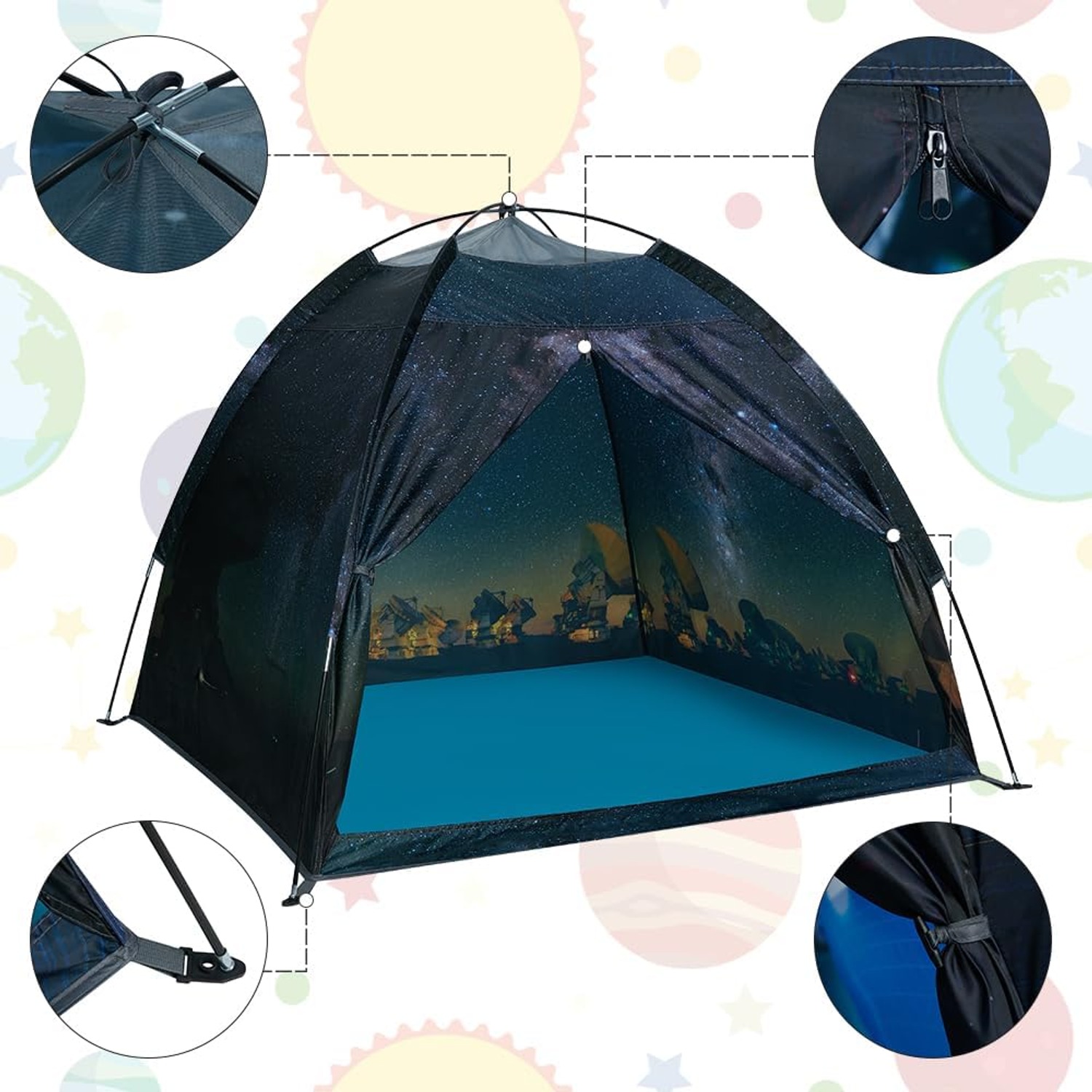
This is a dome tent, which means the shape comes from flexible poles bending into arcs and the fabric holding the tension. Two poles cross over the top and the polyester body pulls taut between them. Shock cord runs inside the poles so the sections stay together and snap into line when you shake them out, which is why these take minutes rather than a frustrating half hour.
Domes have a practical advantage over square frame tents. There are fewer hard corners at head height, and the curved walls shed knocks instead of collapsing at a joint. The frame material here is metal, and the fabric is polyester with double stitching along the seams, which is the part that matters most. Seams are where play tents fail, because children lean on walls and grab edges to haul themselves in.
Mesh panels handle airflow. This sounds like a minor spec until you have a child inside a sealed fabric box on a warm afternoon. Breathable polyester plus mesh keeps the inside from turning stuffy, and it also means a parent can glance across the room and see what is going on.
Who this suits
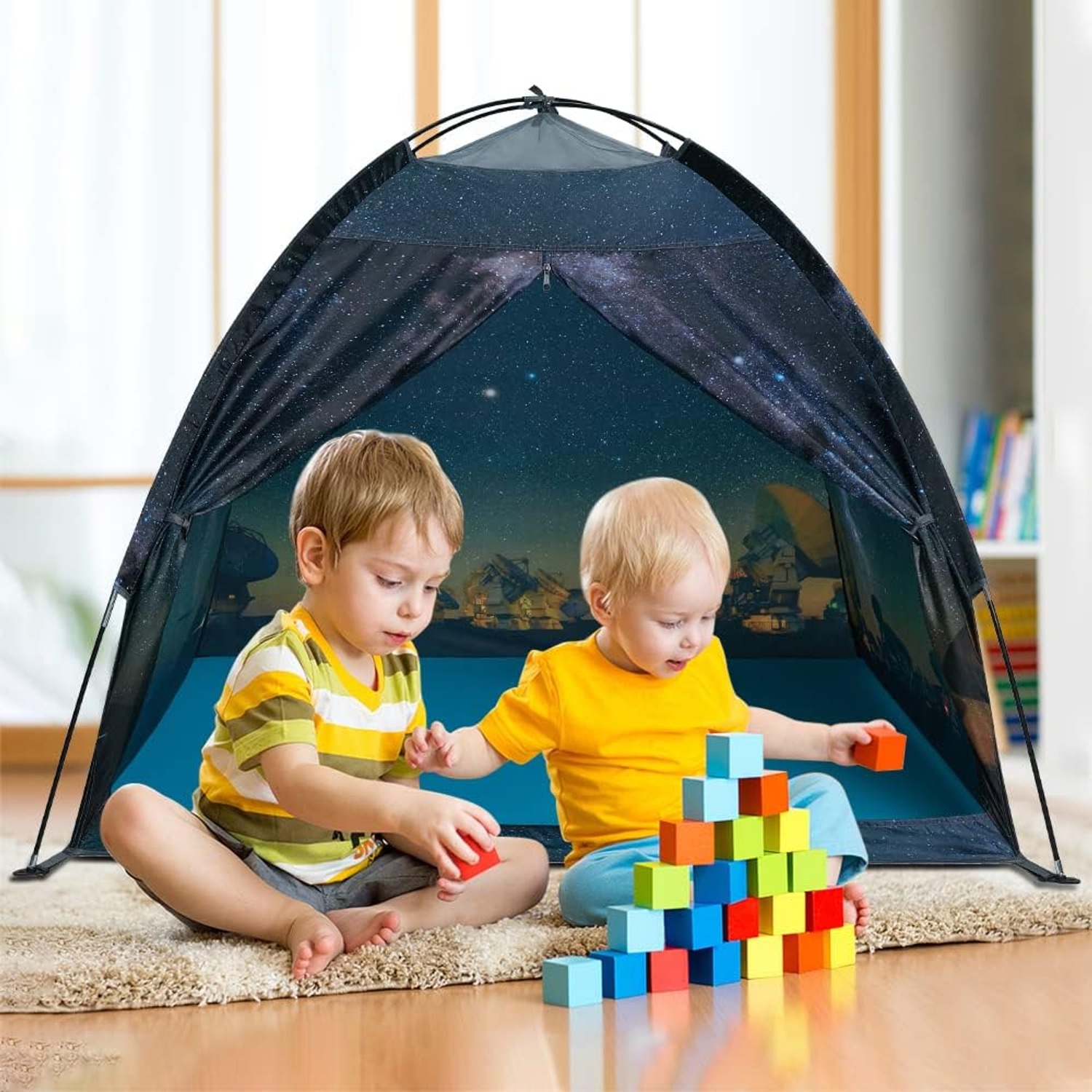
The manufacturer lists an age range of 36 months to 12 years, which is broad but sensible for this size. A three year old will treat it as a cubby. A seven year old will treat it as a base. A ten year old will use it as a place to read or hide from a younger sibling, which is arguably the highest form of play tent success.
Two to four children fit inside, so it works for siblings and for a visiting friend. If you are shopping for the best playhouse tent for young children, note that very young children should be supervised and that the poles and bag should be kept out of reach when the tent is packed away.
It also suits homes that cannot give up floor space permanently. At 0.85 kg and with a carry bag included, it folds away when you need the room back. That flexibility is the difference between a tent that stays in rotation and one that becomes a storage problem.
Choosing between a tent and the alternatives
A pop-up tent with a spring frame is faster to open but harder to fold, and the frames tend to warp. A teepee looks lovely in photos but the four-pole structure takes up more floor for less usable interior, and the poles come loose. A fabric play house with a plastic frame is sturdier but heavy, bulky and nearly impossible to travel with.
A pole-tensioned dome sits in the middle. It takes a couple of minutes instead of a couple of seconds, but it packs down small, holds its shape properly and does not rely on a spring that eventually gives out. For most families that trade is worth making.
What to check before you buy
Measure your space first. You need roughly 1.2 metres square of clear floor, plus a bit of room to crawl in and out without knocking a side table. Check the ceiling clearance too if you are thinking of a bunk alcove or under a loft bed, since the tent stands 109.2 cm tall.
Think about where it will live when it is down. The carry bag solves this, but only if the bag has somewhere to go. A hall cupboard, a toy box or the boot of the car all work.
Finally, think about the surface. Indoors, carpet is ideal and hard floors are fine with a rug underneath for comfort. Outdoors, choose flat grass and avoid anything sharp. Gravel and fabric floors do not get along.
Looking after it
Care is simple and mostly about habits rather than products. Shake out crumbs after a session. Spot clean marks with a damp cloth and a little mild soap, then let the fabric dry fully in the air. Skip the washing machine, the dryer, bleach and the iron, all of which will damage polyester panels or the stitching.
The one rule worth repeating is never pack it away damp. If it has been outside and the fabric feels cool and slightly tacky, leave it up for an hour indoors before folding. Damp fabric in a closed bag is how musty smells and marks start, and they are much harder to fix than a bit of mud.
Keep it away from heat sources. Fabric play tents and heaters, candles or fireplaces do not mix, and that is true of every tent on the market, not just this one. Give the poles a quick look every so often for bends or splits, and keep the packed tent out of direct sun for long stretches so the colours stay strong.
Making it a place they want to be
A bare tent is fine. A tent with a few additions is better. A folded blanket or small rug on the floor makes a big difference to how long a child will stay in there. One or two cushions, a battery operated light or fairy lights (never anything with a flame), and a small basket for books turn it from a novelty into a spot with a purpose.
Let the child set it up how they want. The quickest way to kill interest in a play tent is for an adult to arrange it perfectly and declare it finished. Hand over the cushions and let them sort it out.
The short version
The Galaxy Dome Play Tent is a 119.4 by 119.4 by 109.2 cm dome in polyester with a metal pole frame, double-stitched seams and mesh panels for airflow. It weighs 0.85 kg, packs into the carry bag that comes with it, and suits children from about three to twelve, two to four at a time.
It goes up in minutes, it works indoors or on flat ground outside, and it is light enough to take with you. If you want somewhere for a child to read, play or simply have five minutes to themselves, without rearranging your whole house, this is a sensible place to start.