

The complete guide
Choosing a Play Tunnel Set That Actually Gets Used
The problem with most indoor toys
There is a gap between what kids need and what most toys offer. Children between three and ten have a lot of physical energy, and they need to move it rather than sit with it. Most of what ends up in a toy box asks them to sit still. Puzzles, blocks, craft kits, tablets. All fine in their place, but none of them burn energy.
Then the weather turns, or the park is a drive away, or it is 4pm on a school day and nobody wants to go out again. The energy is still there. It usually comes out as running laps of the hallway, jumping off the couch, or an argument between siblings that started over nothing.
A play tunnel set fills that gap. It gives kids something physical to do in a space you already have. Crawling, hiding, popping out, going round again. It is simple, and simple is often what works.
How a pop-up tunnel set works
The mechanism is older than it looks. Inside the fabric channels of each piece there is a sprung alloy steel frame, coiled flat under tension. Release it and the frame springs out to its full shape, pulling the polyester skin tight. There are no poles to slot together and no bolts to find.
Folding it back down is the part that catches people out the first time. You twist the frame against itself so it coils back into a flat circle. It feels counterintuitive until it clicks, then it takes about ten seconds per piece. Watch a short video once and you will have it.
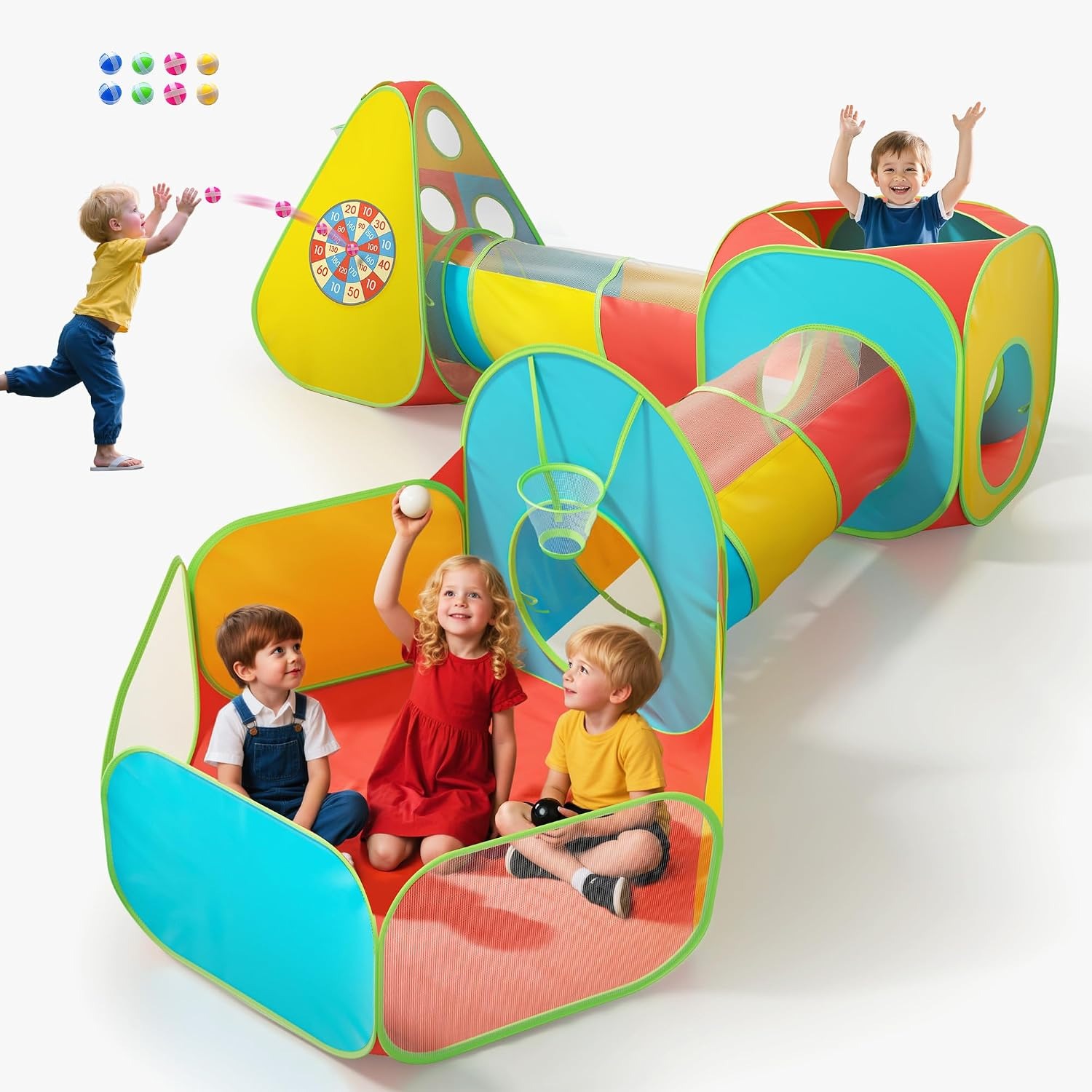
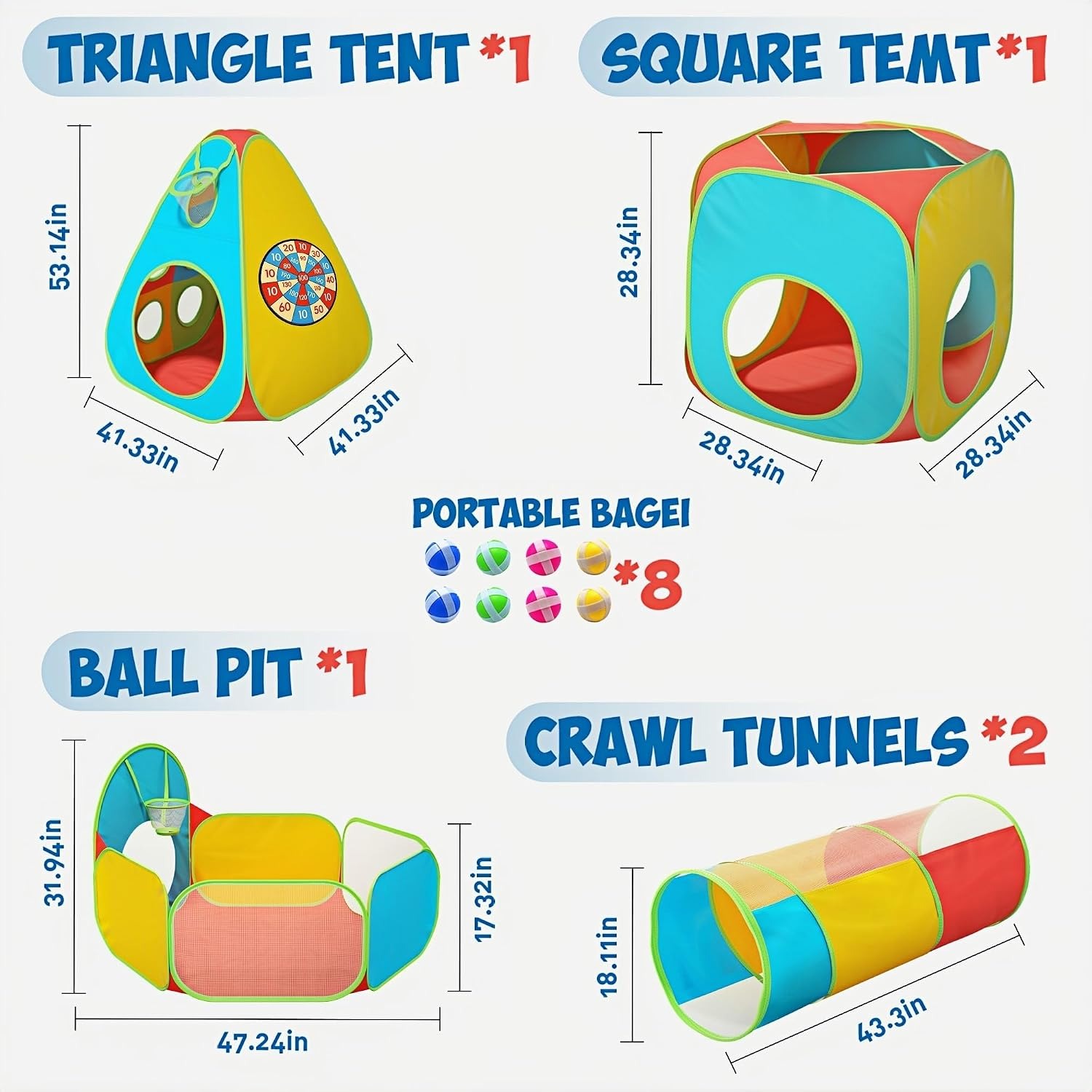
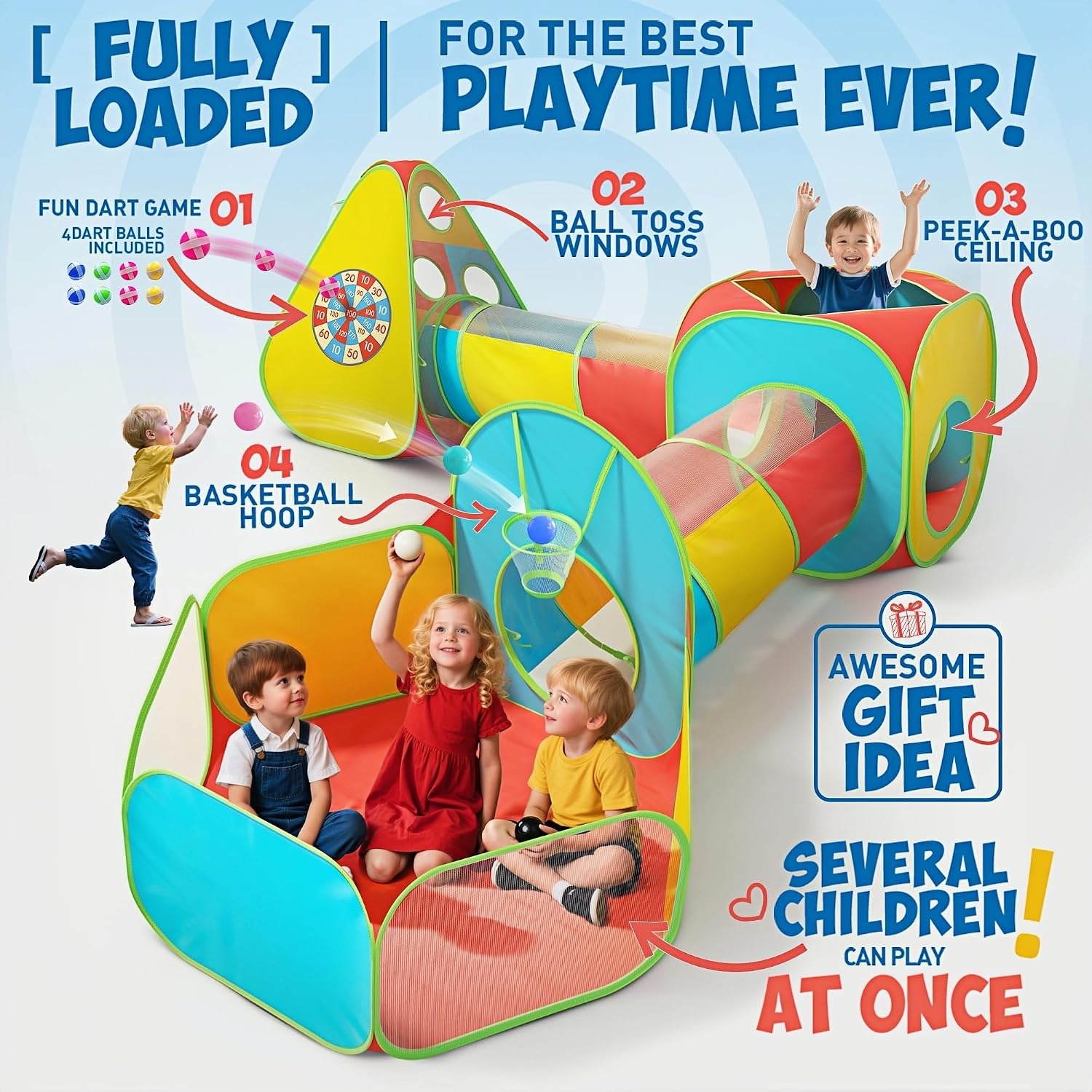
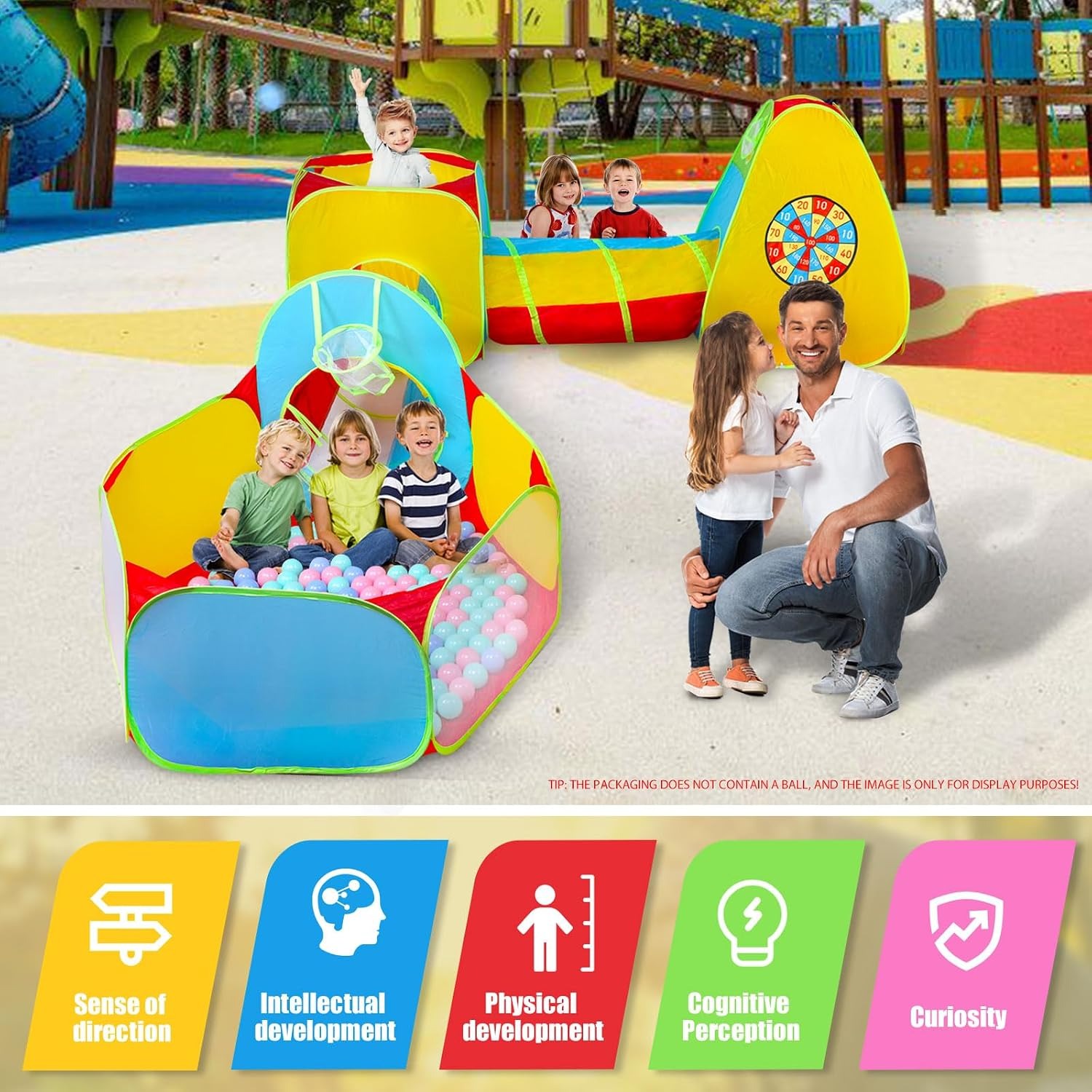
This five piece set uses that same mechanism across all its parts. There is a play tent, a ball pit, a triangular ball pit tent and two tunnels. The tunnels are the connectors. They join the other pieces together so kids crawl between spaces rather than just into them.
The whole set weighs 948 g and packs down to roughly 50 x 30 x 30 cm in its carry bag. The manufacturer gives a size figure of 200 cm x 200 cm x 200 cm for the set in use, which is a reasonable guide to how much room a full layout wants.
Who it suits
The recommended age is 36 months to 10 years, which is a wide span, and kids use it differently across it.
Three and four year olds mostly enjoy the basics. Crawling through, hiding, being found, doing it again. The enclosed feeling of a tunnel is genuinely appealing at that age. The tent becomes a den.
Five to seven is where the rearranging starts. Kids at this age notice the pieces come apart and go back together differently, and they start building their own setups. They will time each other through the course. They will declare rules nobody else understands.
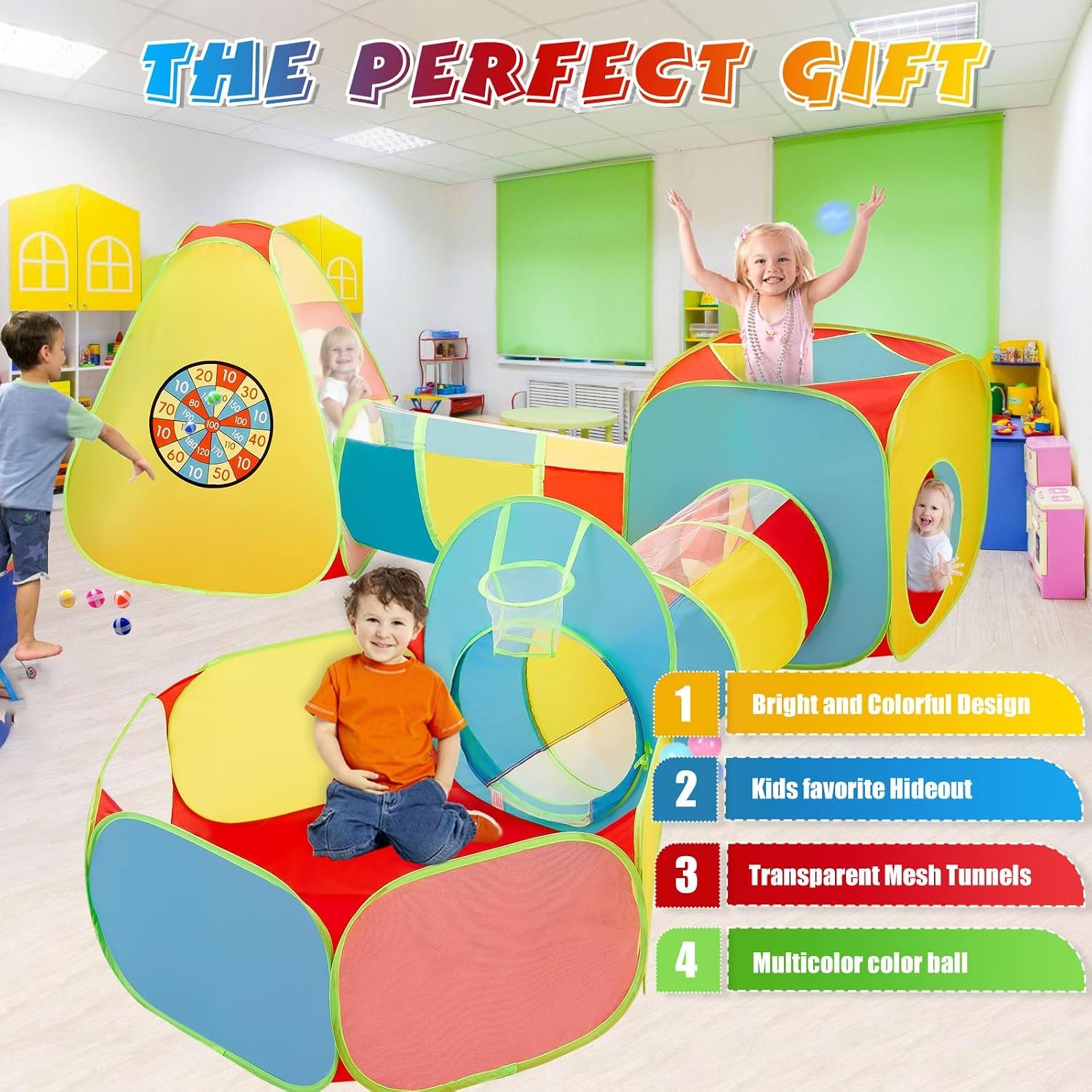
Eight to ten tends to be more occasional but still real. Older kids use it for obstacle courses, for games with younger siblings, or as a quiet spot to read. It also comes out at parties, where it gives a group of kids something to do that does not need an adult running it.
Families in apartments and smaller homes get on well with it because of the carry bag. You do not need to dedicate floor space permanently. It comes out, it goes away.
Picking a layout for your space
Start with the space you actually have, not the space you wish you had.
A hallway suits a straight run. Put a tent at one end, a tunnel in the middle, another piece at the far end, and you have a course that uses dead space nobody was using anyway. This is often the best option in a narrow home.
A lounge room or playroom works better as a loop or an L shape. Pushing the coffee table aside usually gives you enough room. A loop is good because kids can keep going round without a start and finish argument.
Outdoors, a flat patch of lawn gives you the most freedom. You can spread pieces out further and let the tunnels do the connecting. Check the ground first for sticks, stones and anything sharp. Light sets like this one can shift in wind, so pick a sheltered spot or save outdoor play for a calm day.
You do not have to use all five pieces at once. Two or three is often plenty for a smaller room, and holding pieces back means you can change things up later without buying anything.
What to look for in a play tunnel set
A few things matter more than the marketing suggests.
Fabric and frame come first. Polyester over alloy steel is the standard pairing for a reason. It is light, it holds shape, and it folds. Heavier materials make a sturdier tunnel but a worse toy, because kids cannot move it themselves.
Weight is worth checking. At 948 g, this set is light enough for a child to drag a tunnel across a room. If a parent has to reposition everything each time, it gets used less.
Pack size decides whether the toy survives long term. Anything that will not fit in a cupboard ends up in the garage, and things in the garage do not get played with. A set that folds to 50 x 30 x 30 cm clears that bar.
Number of pieces matters more than the size of any single one. Five connecting pieces give far more variety than one large tunnel, because the kids are the ones designing the layout. That is where the replay value comes from.
Finally, check whether extras like balls are included. For this set, the listed components are the bag and the play tunnel pieces, so if you want a filled ball pit you may need balls separately.
Looking after it
Care is not complicated, but a few habits make a real difference.
Wipe the fabric with a damp cloth and a little mild soap when it needs it, then let it dry fully before folding. Never put it in a washing machine. The sprung frame is not made for that and can bend out of shape.
Dry it properly after outdoor use. Polyester packed away damp develops a smell quickly, and the steel frame does not benefit from sitting in moisture either. Five minutes in the air beats a musty tunnel next month.
Keep it out of long spells of direct sun. UV fades colour and weakens fabric over time, so bring it in when play is done.
Check the frame channels and seams occasionally. If you feel a sharp point through the fabric or notice a tear, stop using that piece until it is repaired or replaced.
Store it in the carry bag somewhere dry. The bag is not just packaging. It is what keeps the five pieces together so none go missing between sessions.
The short version
This is a five piece pop-up play system made from polyester over an alloy steel frame, in blue, weighing 948 g and packing down to about 50 x 30 x 30 cm. It includes a play tent, a ball pit, a triangular tent and two tunnels, and it needs no assembly.
It suits kids from 36 months to 10 years, works indoors or outdoors, and can be arranged in different shapes to fit the space you have. Keep it dry, wipe it clean, fold it back into the bag, and it will keep coming out of the cupboard for years.
If you want help working out a layout for your room or yard, tell us the measurements and we will suggest one.