

The complete guide
Choosing a Play Tent with Tunnel and Ball Pit, A Parent's Buying Guide
The problem with wet weekends
Anyone with a three year old knows the pattern. It rains, nobody can go to the park, and by eleven in the morning the child is climbing the back of the couch. Screens buy you twenty minutes and then cost you an argument. What actually works is giving a small body somewhere to go, something to crawl into, and a reason to move.
That is the whole idea behind a play tent with tunnel and ball pit. It is not clever. It does not do anything electronic. It just creates a small, enclosed world on your lounge room floor, and children aged roughly three to six will fill it with their own games for far longer than you would expect from a fabric structure that costs less than a pair of school shoes.
How a three piece set works
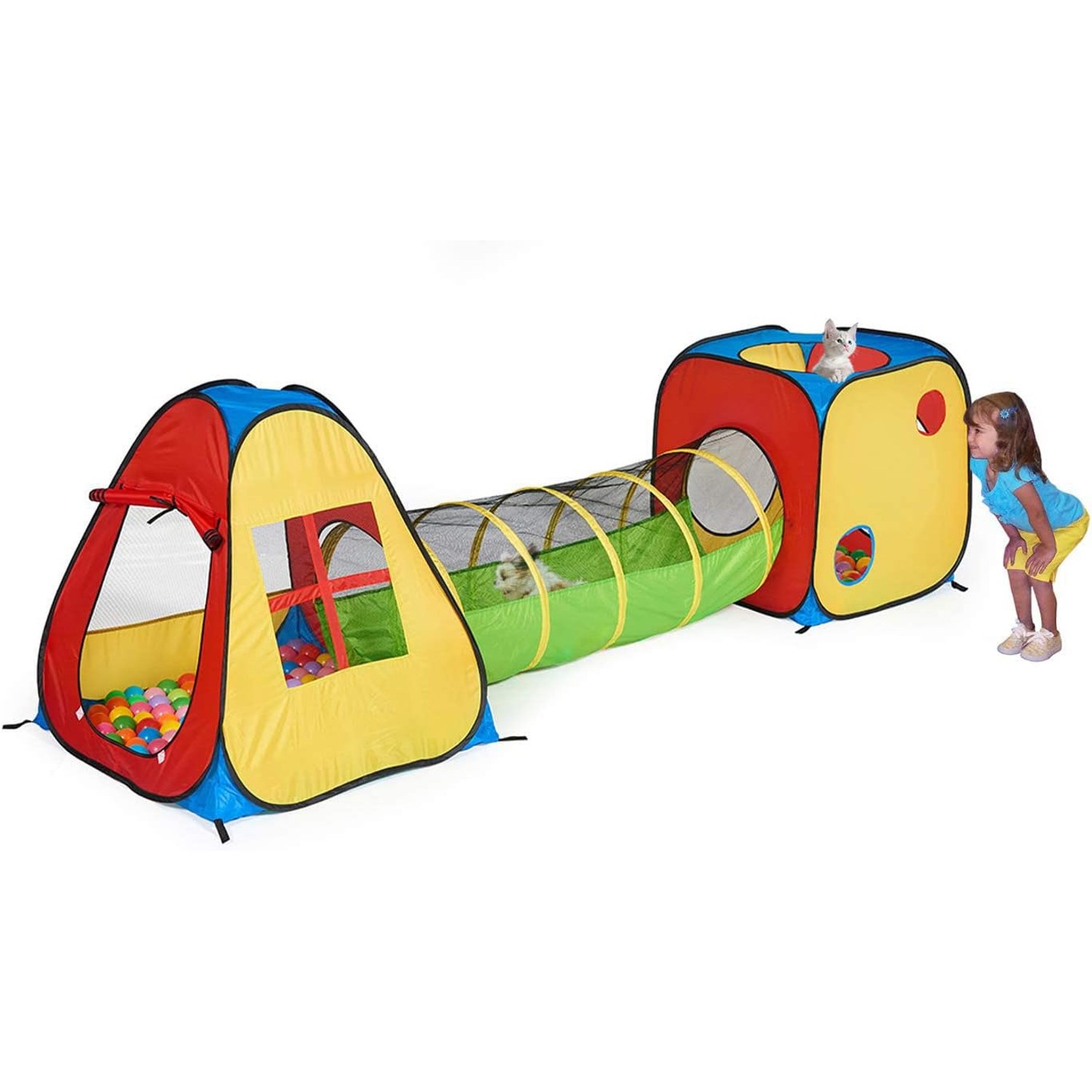
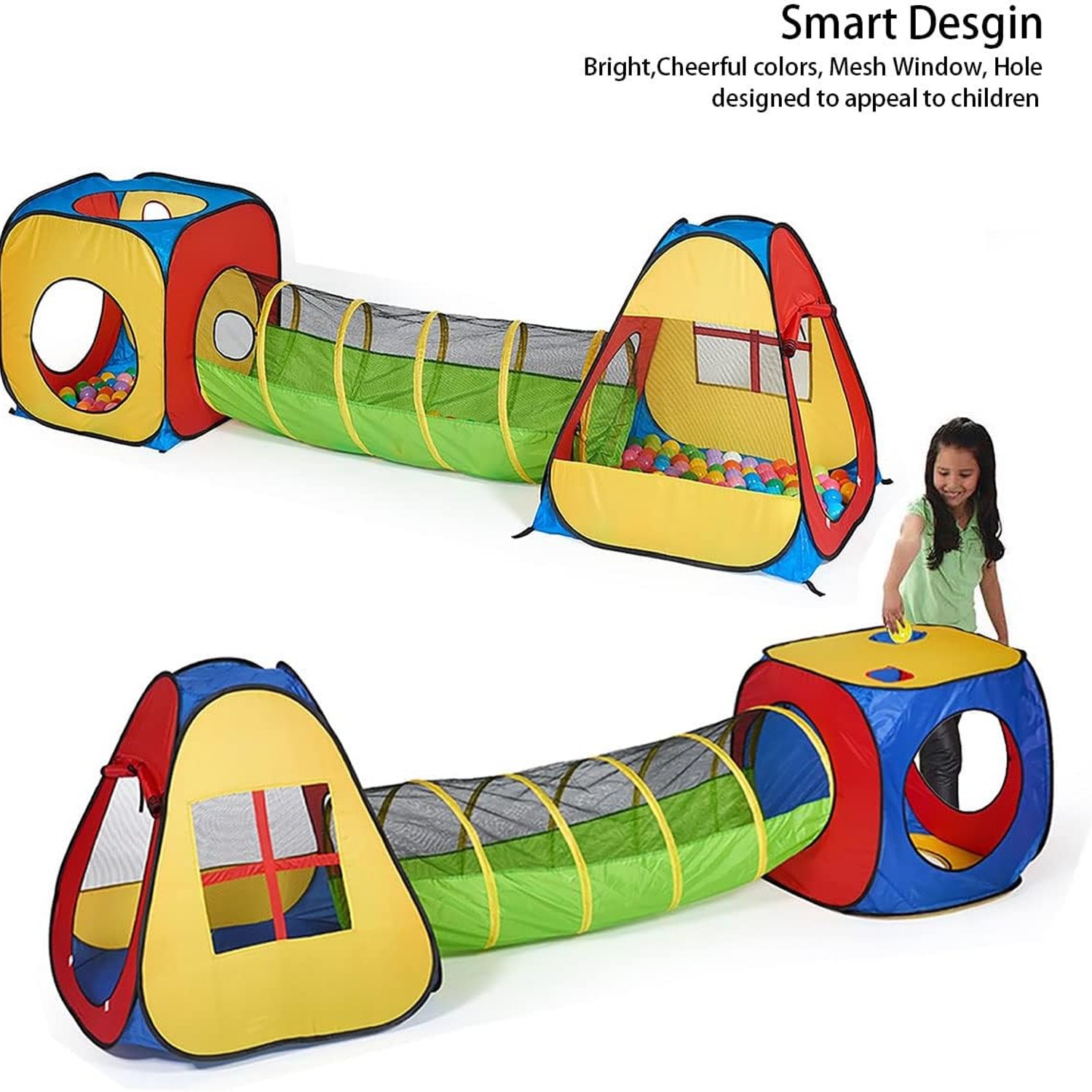
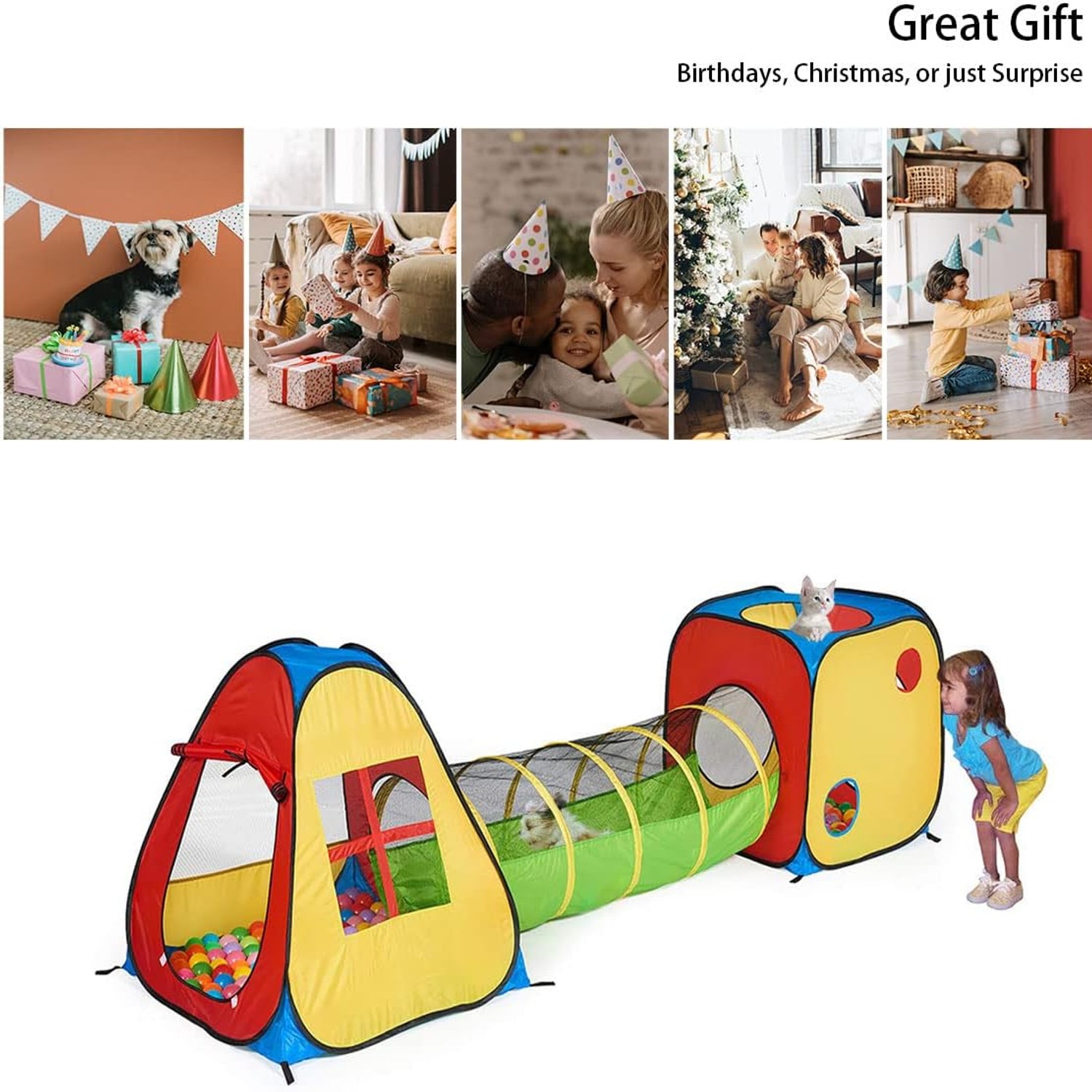
This set has three separate parts. There is a square tent house, which is the biggest enclosed section and the one most people use as the ball pit. There is a teepee, a smaller pointed hideout that works nicely as a reading nook. And there is a long tunnel that connects the two.
The pieces clip together so a child can crawl in one end, move through the tunnel, and pop out somewhere else. That transition is the part kids love. Crawling through a dark-ish tube and emerging into a different space is a tiny adventure, and they will repeat it dozens of times.
You can also break the set up. Keep the tunnel in the hallway and the teepee in the bedroom. Stack the tent in the cupboard until a friend comes over. A play tunnel set that can be split into three toys is more useful than one big piece that only works in one configuration.
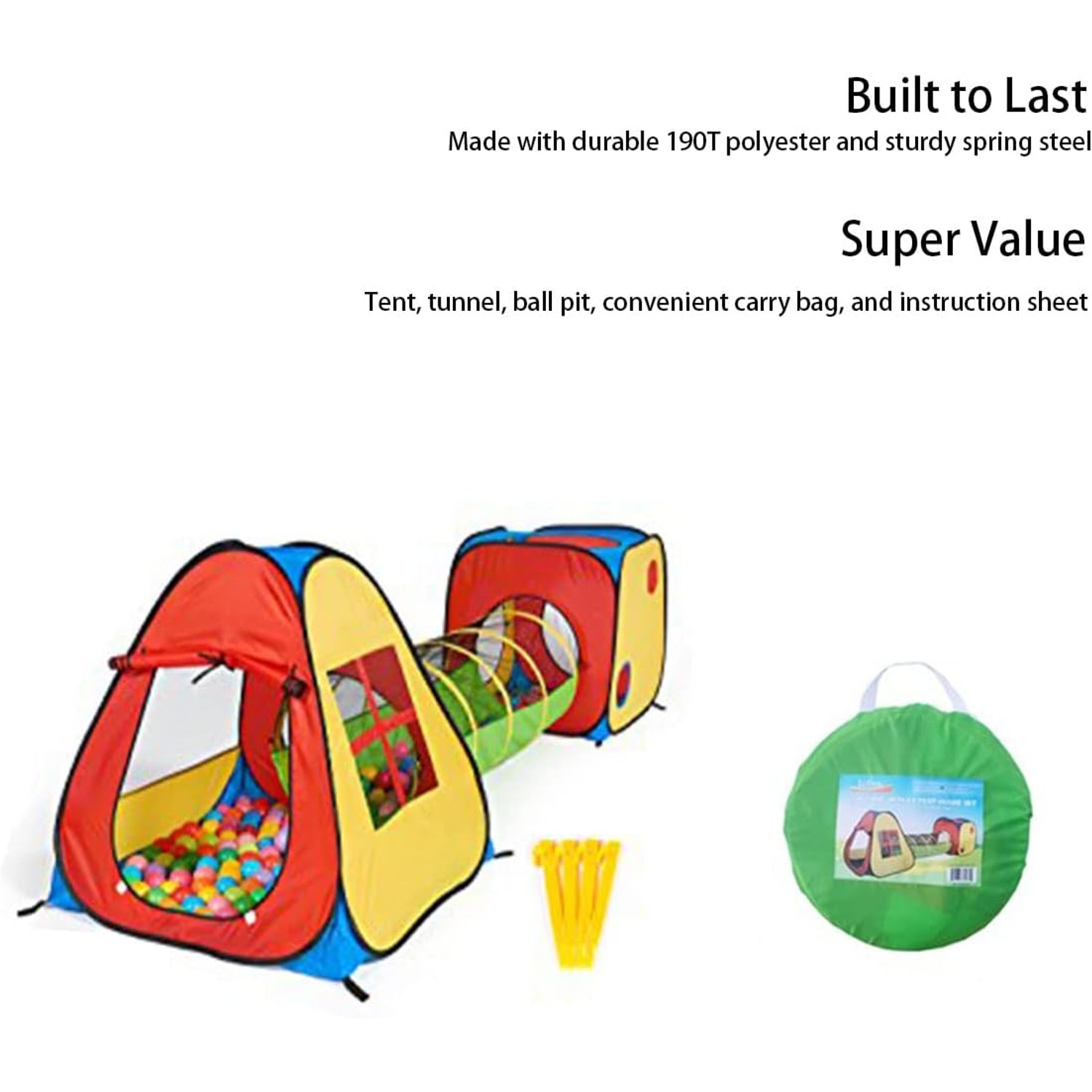
The frame is a sprung wire sewn into the polyester fabric. That is how a kids pop up tunnel opens by itself when you pull it from the bag. There is no pole to thread and no connector to lose, which is the main reason tool free assembly matters for toys that need to come out and go away several times a week.
What the mesh windows are actually for
Mesh panels look like a decorative detail. They are not. They do two practical jobs.
The first is airflow. A sealed fabric box with a young child inside gets warm and stuffy fast, especially in summer. Mesh lets air move through so the inside stays close to room temperature.
The second is sightlines. You want to be able to glance over from the kitchen and see that your child is sitting happily in the tent rather than silently redecorating the wall. Mesh gives you that without you having to open anything or interrupt the game. Children also use the windows for peek-a-boo, which becomes its own game for a good while.
There are also two small holes, one in the square tent and one in the tunnel. Kids use them to post toys through, to stick a hand out, or as a secret second door. Small details like this get used more than the main features.
Who it suits
The listed age range starts at 36 months. In practice, three to six is the sweet spot. Younger children enjoy the tunnel with a parent at the far end calling them through, but they need supervision. Children over about seven tend to outgrow the tunnel diameter, though they will still happily sit in the tent with a book.
It works well for:
- Families who want an indoor play tent that packs away rather than dominating the room permanently
- Grandparents who want something to pull out when the grandkids visit
- Daycare and playgroup settings where a daycare play tunnel sees heavy rotation
- Birthday parties, where laying the three pieces out as a circuit occupies a group of kids with zero instruction needed
It is less suited to anyone wanting a permanent fixed structure, or to outdoor use in exposed weather. At 1.36 kg it is a light thing, and light things move in wind.
How to choose between sets like this
A few things genuinely matter when comparing options.
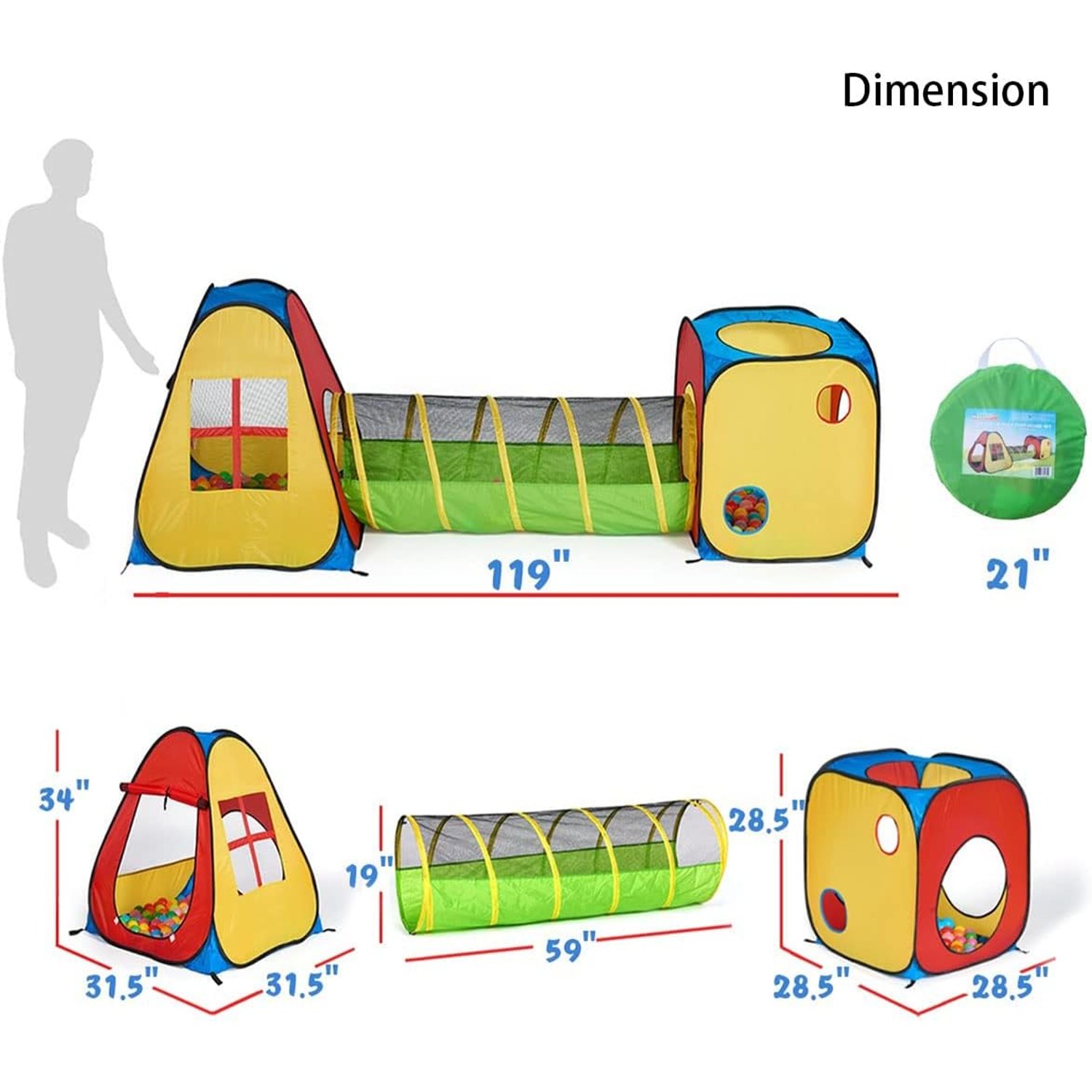
Measure first. The item dimensions for this set are 3.02 x 0.79 x 0.88 m. That long number is the full run with the tunnel attached. If your lounge room cannot take three metres along one wall, plan to use the pieces separately or set the tunnel at an angle.
Check whether balls are included. They are not with this set. It is worth knowing upfront, because a ball pit tent for kids without balls is just a tent. Budget for a bag of pit balls if the ball pit is the part your child is excited about.
Look at how it folds. Everything pops up. Not everything folds down easily. Sprung frames need a twist-and-tuck motion, and the first attempt is always awkward. Watch one video and practise twice and you will be fine. If a set is a struggle to pack away, it ends up living in the corner of the room forever.
Think about fabric. Polyester is the standard here because it is light, it takes bright colours well, and it wipes clean. It is not a heavy canvas and it should not be treated like one.
Count the pieces. A three in one play tent gives you more layouts and more years of use than a single tent. The ability to reconfigure is what keeps a toy interesting after month two.
Care that actually keeps it looking good
Spot clean with a damp cloth and a bit of mild soap. That handles almost everything a young child throws at it. Let it dry fully before folding, because fabric folded while damp develops a smell that is hard to shift.
Do not machine wash it. The sprung frame is sewn into the panels and a wash cycle will bend it out of shape. The same goes for tumble drying.
Shake crumbs out of the tunnel after indoor sessions. A quick wipe through the inside with a dry cloth takes ten seconds and stops dust building up in the seams.
Keep it out of long stretches of direct sun. Polyester holds colour well but any bright dye fades eventually under UV. Bringing a garden play tent inside at the end of the day doubles its good looks.
Store it folded flat in the carry bag somewhere dry. Under a bed is ideal.
Getting more out of it
A few things that work well in real homes.
Use it as a circuit rather than a static toy. Lay the tent at one end, the tunnel in the middle and the teepee at the other, then give the child a task, like carrying a soft toy from one end to the other. That turns a play structure into a game with rules, and rules are what stretch play from ten minutes to forty.
Put a blanket and a cushion in the teepee and it becomes a quiet corner. Some children use it to calm down, which is genuinely useful on busy days.
Take it to the park. At 1.36 kg in a bag, a portable play tent set is easy to bring to a picnic or a holiday house, and it gives small children a familiar base in an unfamiliar place.
The short version
This is a simple, light, three piece fabric play set. It pops open without tools, folds into a carry bag, and gives a young child or preschooler somewhere to crawl, hide and burn energy indoors. The mesh windows keep it airy and keep your child in view. Balls are not included, so add your own if the ball pit is the main draw.
If you want one toy that reliably buys you an hour on a rainy Saturday and then disappears into a cupboard, this does that job well. Measure your floor space, practise the fold once, and it will earn its keep.