
The complete guide
How to Choose a Kids Play Tent That Actually Gets Used
The problem with most play tents
Plenty of play tents get opened on a birthday, used hard for a fortnight, then quietly end up in the garage. It usually comes down to three things. The tent is too small for a child to sit up in. It is a nuisance to put up and take down. Or it looks like a plain fabric box, so there is nothing about it that pulls a child back in.
A tent that lasts has to clear all three hurdles. Enough room to be comfortable, quick enough to set up that you do not dread it, and interesting enough that your child wants to be inside. That is the bar worth measuring any kids playhouse tent against before you spend money.
What size actually means in practice
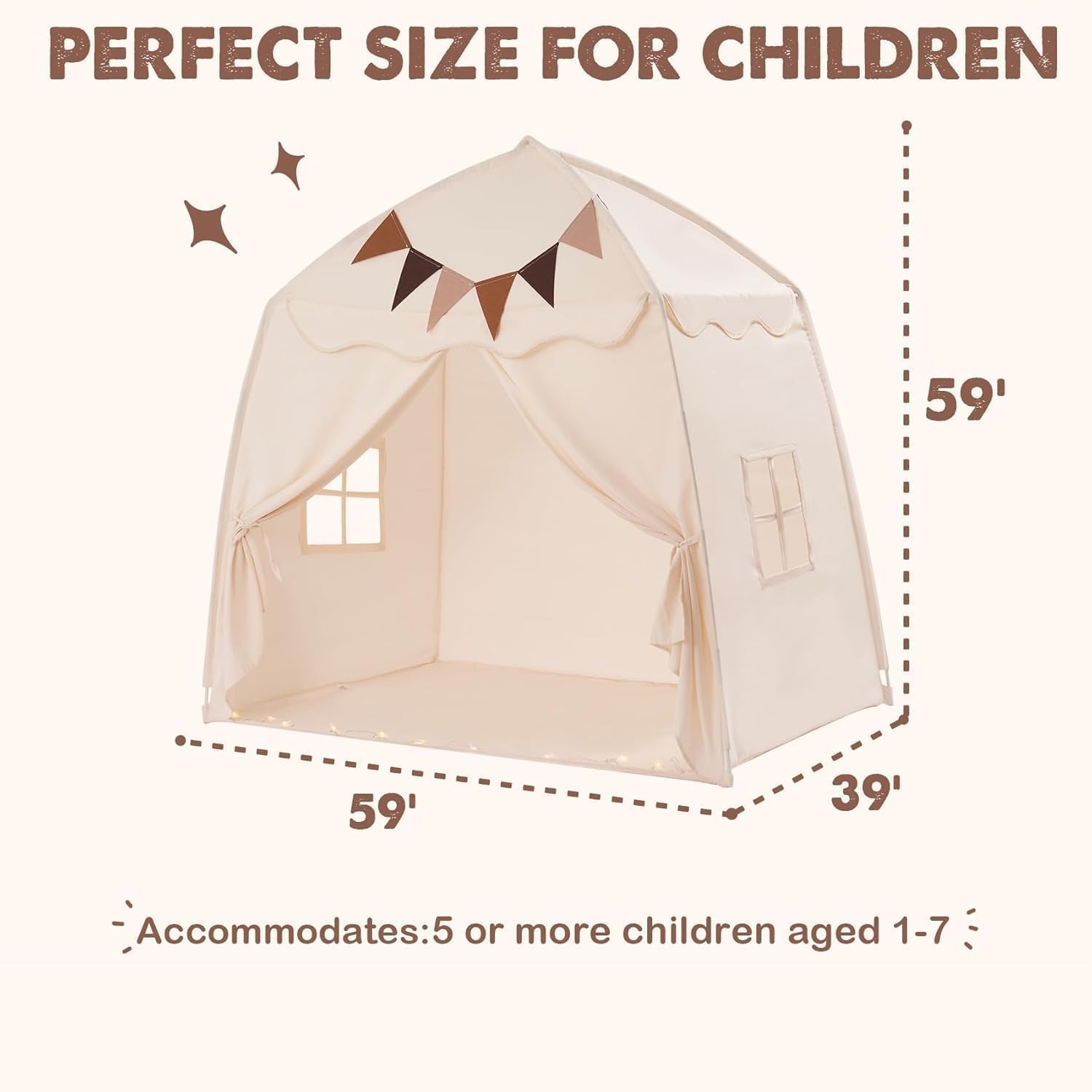
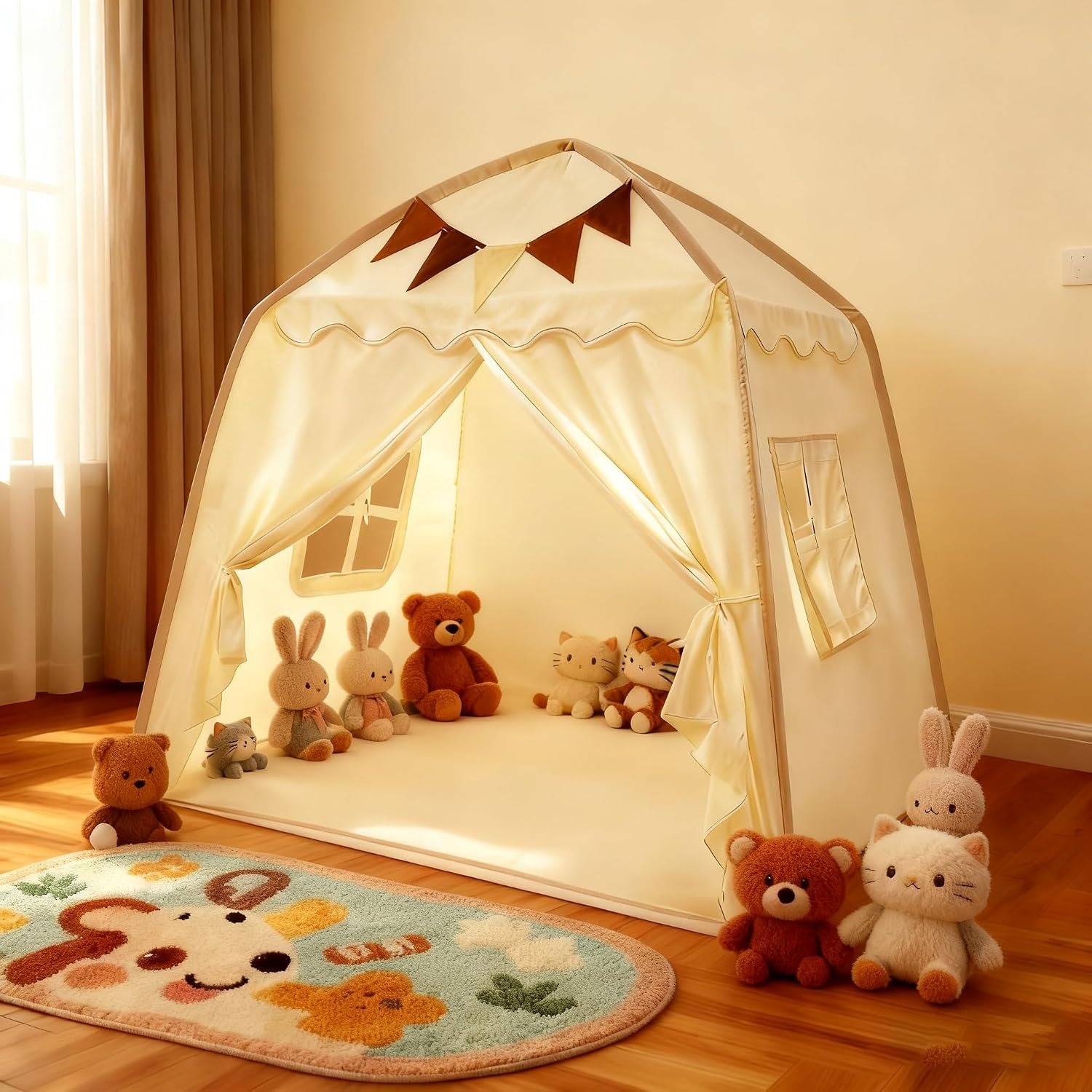
This tent measures 130 cm long, 100 cm wide and 130 cm high. Numbers on a page are easy to skim past, so here is what they mean in a room. The height lets a child sit upright with space above their head rather than hunching. The floor is roughly the footprint of a small single bed, which fits one child comfortably stretched out, or two sitting shoulder to shoulder for a shared game.
That matters more than it sounds. A tent a child has to crawl into and then crouch inside gets abandoned fast. One where they can sit up, spread out a few toys and still have elbow room becomes a place they go on their own, without being sent there.
Before you order, take a tape measure to the corner you have in mind. Allow a little extra beyond 130 x 100 cm so the fabric walls are not pressed against a radiator or wardrobe. If your floor space is tight, remember this one folds flat, so a weekend setup and weekday pack down is a perfectly reasonable way to live with it.
How it is built, and why that matters
The tent body is cotton and the frame is PVC pole. That combination is deliberate. Cotton has a softer hand and a more natural look than slick synthetic fabrics, so it sits better in a bedroom. PVC poles keep the weight down, which means you can shift the tent or carry the parts outside without help.
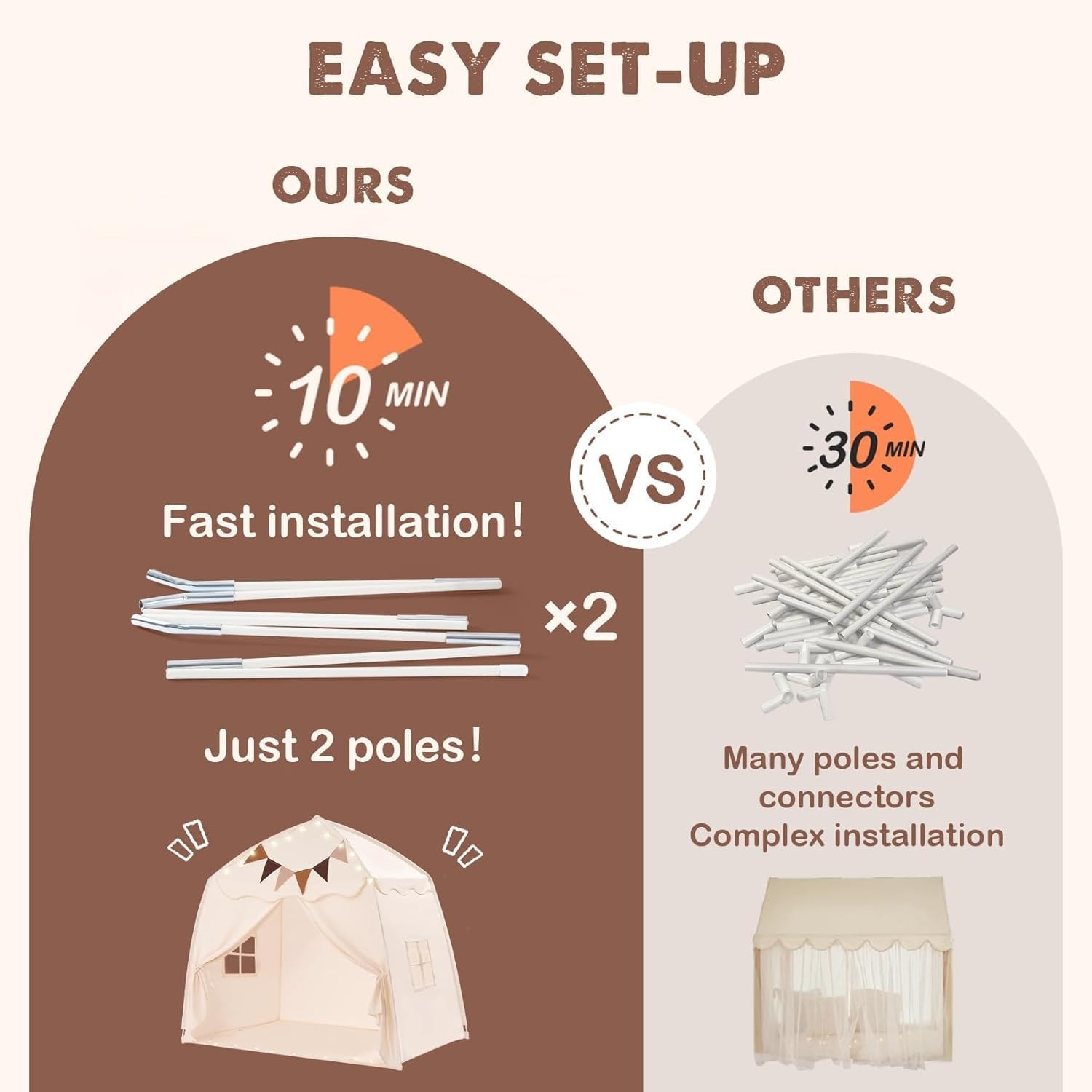
Assembly is required. The poles thread through channels in the fabric and join together, and an instruction guide comes in the box. The first build takes a bit of attention. Every one after that is a short job, and most children are keen to help once they have watched you do it once.
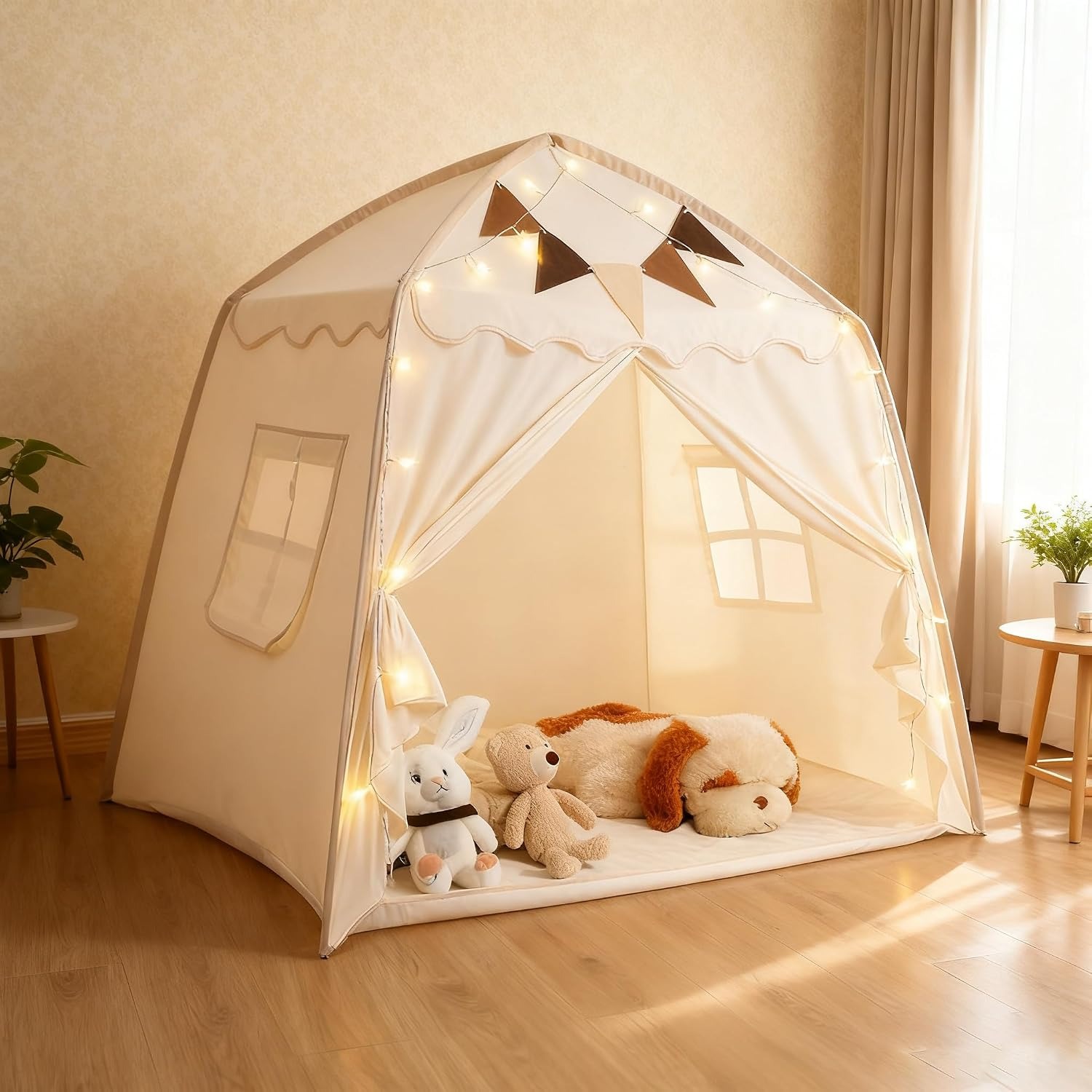
The mesh windows deserve a mention. They have curtains that open and close, so your child chooses between an open, airy space and a properly closed hideaway. Airflow keeps the inside pleasant during longer play, and the windows let you glance over from the sofa without opening anything up. For a lot of parents, that bit of visibility is the difference between relaxed and hovering.
The extras that change how a tent feels
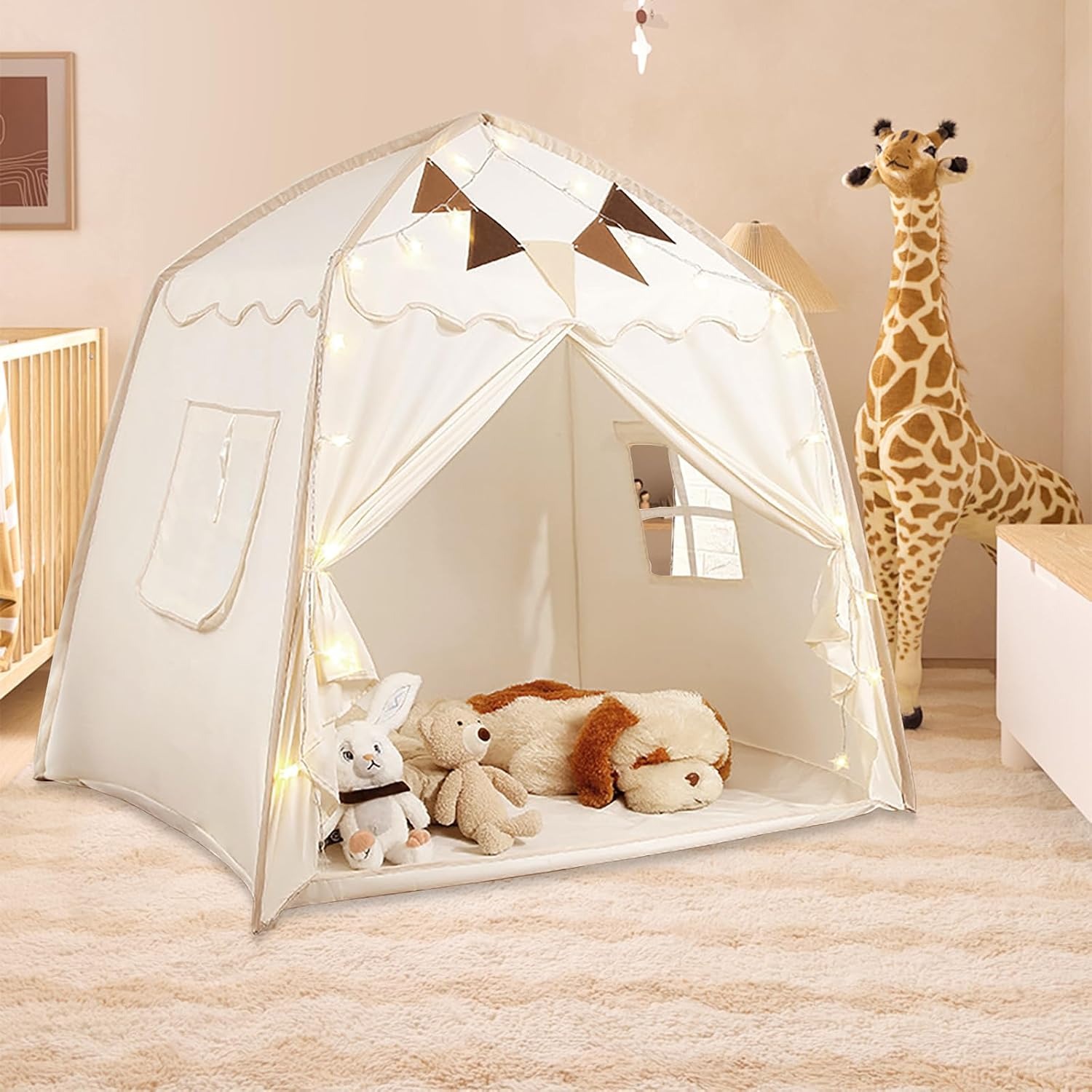
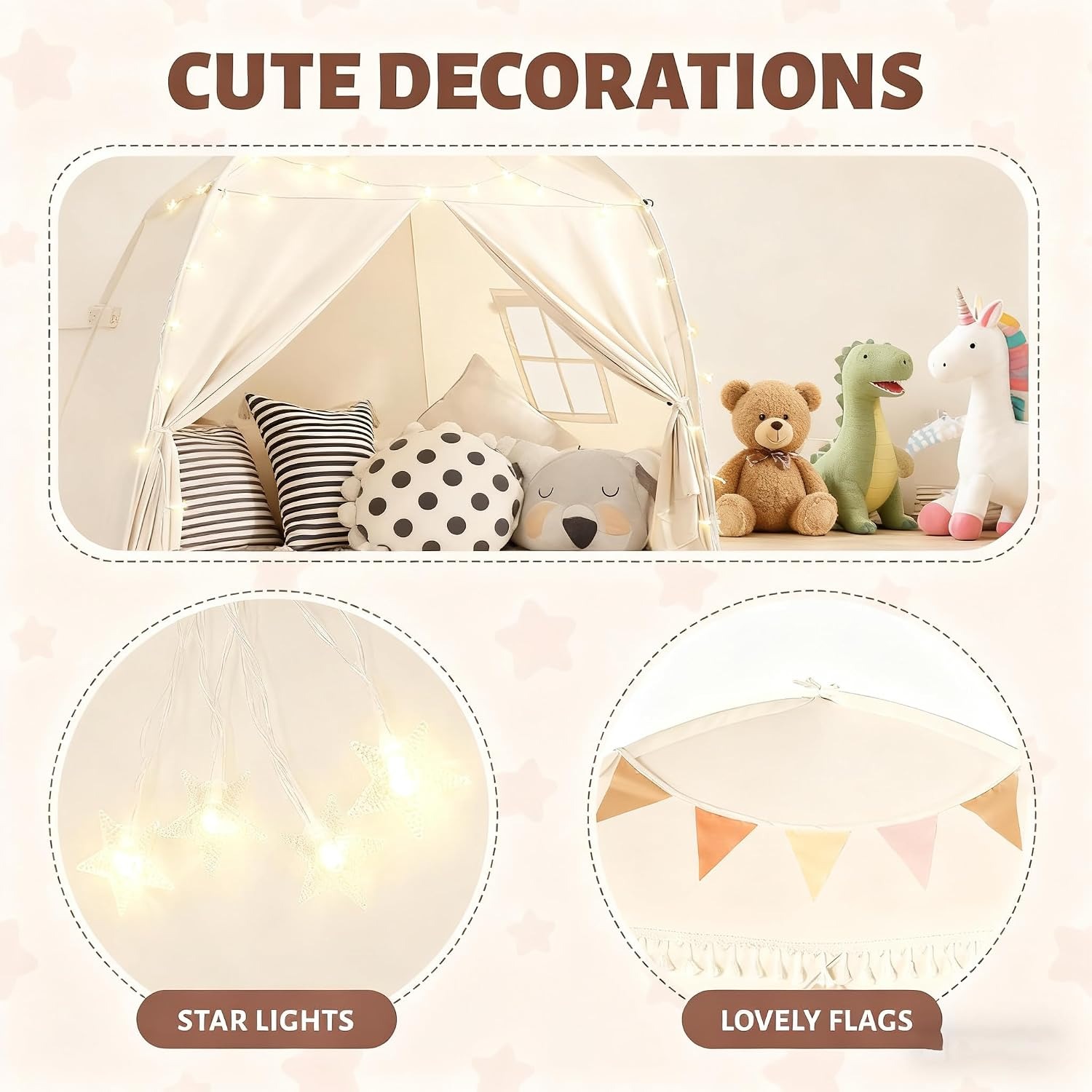
The set includes a mat, decorative flags and a string light. These are not just padding on a product listing. The mat gives a softer surface to sit on, which matters a great deal on floorboards or tiles. The flags turn a plain structure into something that looks like a party. The light gives the inside a glow, which is what makes a child want to be in there after dusk.
One practical note. The string light runs on 2 AAA batteries and they are not included. Buy a pack before the tent arrives so the first switch on happens on the first night rather than three days later.
If you want a plainer look for everyday, the flags and light come off easily. Some families keep the trimmings for birthdays and sleepovers and run it plain the rest of the time. The tent works either way.
Who it suits
The manufacturer recommends ages 24 months and up. In real homes, a tent like this tends to get the most use from young children through early primary school. Younger children treat it as a den and a place to drag soft toys. Older ones use it as a reading corner, a base for games with a friend, or somewhere to go when the rest of the house is loud.
That last point is worth sitting with. A lot of children need a way to step out of a busy room without leaving it entirely. Fabric walls do a surprising amount of work there. If you have a child who gets overwhelmed in open, noisy spaces, one of the best bedroom play tent setups can become a daily tool rather than just a toy.
It also travels well between rooms and out to the garden. Pick level, shaded ground outdoors, and bring it in before rain. This is a play tent, not a camping shelter, and no waterproof rating is listed for it.
How to choose between options
If you are comparing a few tents, use a short checklist.
Start with height. Anything under about 110 cm forces most children over three to stoop, and stooping ends play. Then look at the floor plan and be honest about your room.
Next, check what is included. A tent on its own costs less at the till, then you buy a mat, then string lights, then something to make it look less bare. A set that arrives with a mat, flags and a light is usually better value once you add it all up, and it looks finished the day it goes up.
Then think about storage. If it does not fold flat, it will live in one spot forever, and in a small home that spot is always in the way. Finally, consider the fabric. Cotton feels better against skin and against a bedroom's general look than a shiny synthetic. If you are after the best cotton play tent for a child's room, that material note is worth weighing.
Keeping it in good shape
Care is simple. Spot clean marks with a damp cloth and a little mild soap, then let the fabric dry completely in the air before folding. Never pack it away damp, which is how musty smells start. Wipe the poles with a dry cloth each time you take it down and have a quick look at the joints while you are there.
Keep it out of strong direct sun for long stretches if you can, since sun fades fabric over time. If the tent is going into storage for a season, take the batteries out of the light string first. That one small habit prevents the most common avoidable damage.
Teach children the house rules early. Sitting and lying inside is fine, climbing on the frame is not. The poles are built to hold the tent shape, not a child's weight on top of them.
The short version
This is a 130 x 100 x 130 cm cotton play tent on a light PVC frame, supplied with a mat, flags and a battery string light. It needs assembly, comes with a guide, has mesh windows for airflow and visibility, and folds flat when you are done. The recommended age is 24 months and up.
It suits families who want to give a child their own corner without rearranging a room permanently. Measure your space, grab two AAA batteries, and build it once with your child watching. After that, they will mostly handle the rest themselves.