
The complete guide
How to Choose a Kids Playhouse Tent That Actually Gets Used
The problem with most play spaces
Children do not get much say over where they are. The lounge belongs to everyone, the bedroom belongs to whoever decided on the curtains, and the kitchen table gets cleared at six. A play tent solves a surprisingly real problem. It gives a child a defined, enclosed spot that is theirs, with a door they control and walls they can see.
That matters more than it sounds. Plenty of parents notice their child gets calmer in a small enclosed space, especially after a busy day or a noisy afternoon. Having somewhere to retreat is not hiding, it is self-regulation, and children work this out on their own long before anyone explains it to them.
The second problem is floor comfort. Most play tents are just a fabric shell on a frame. The child crawls in, sits on bare floorboards or scratchy carpet, and ten minutes later they are out again because it is not actually a nice place to be. That is why the padded mat on this one is worth paying attention to.
How this tent is put together
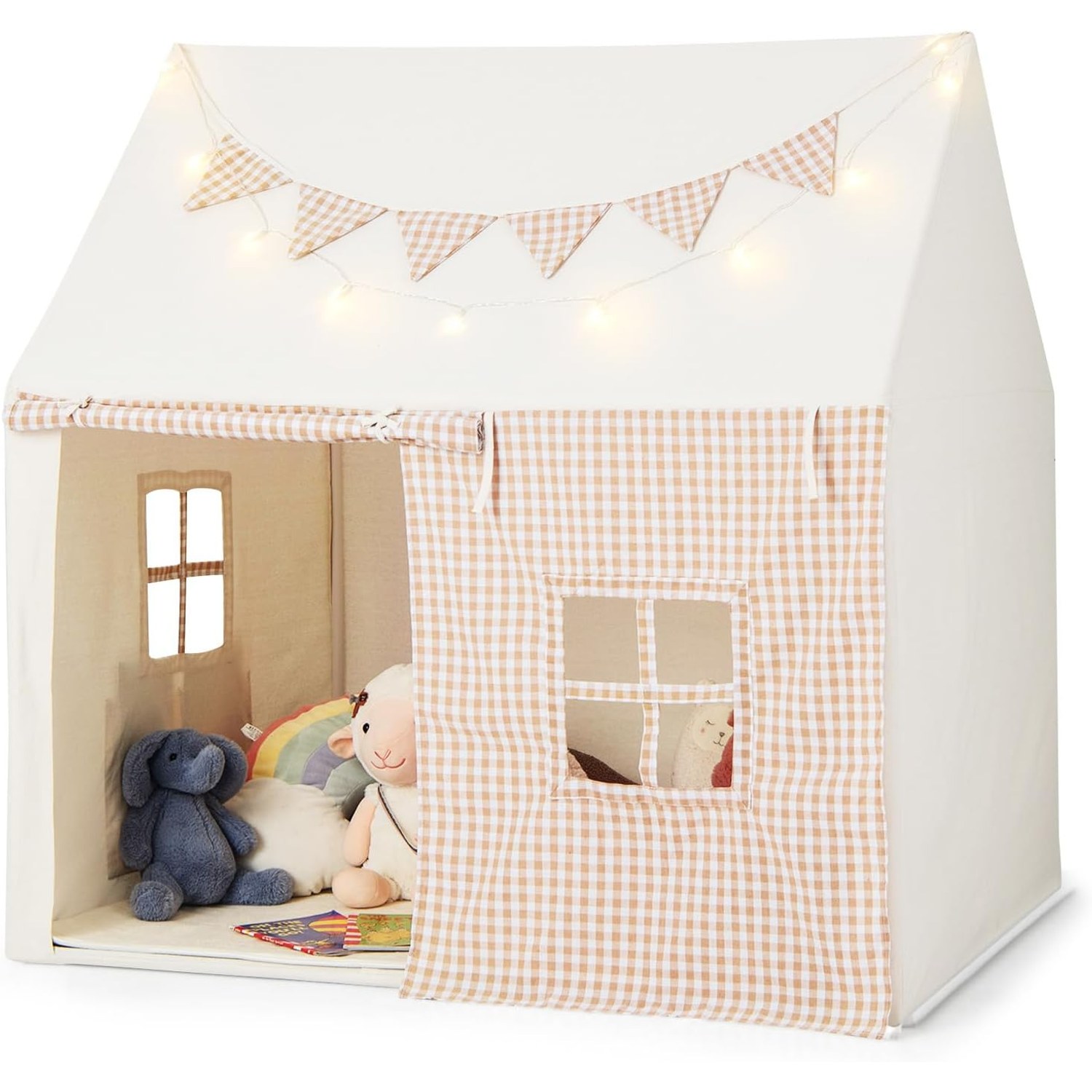
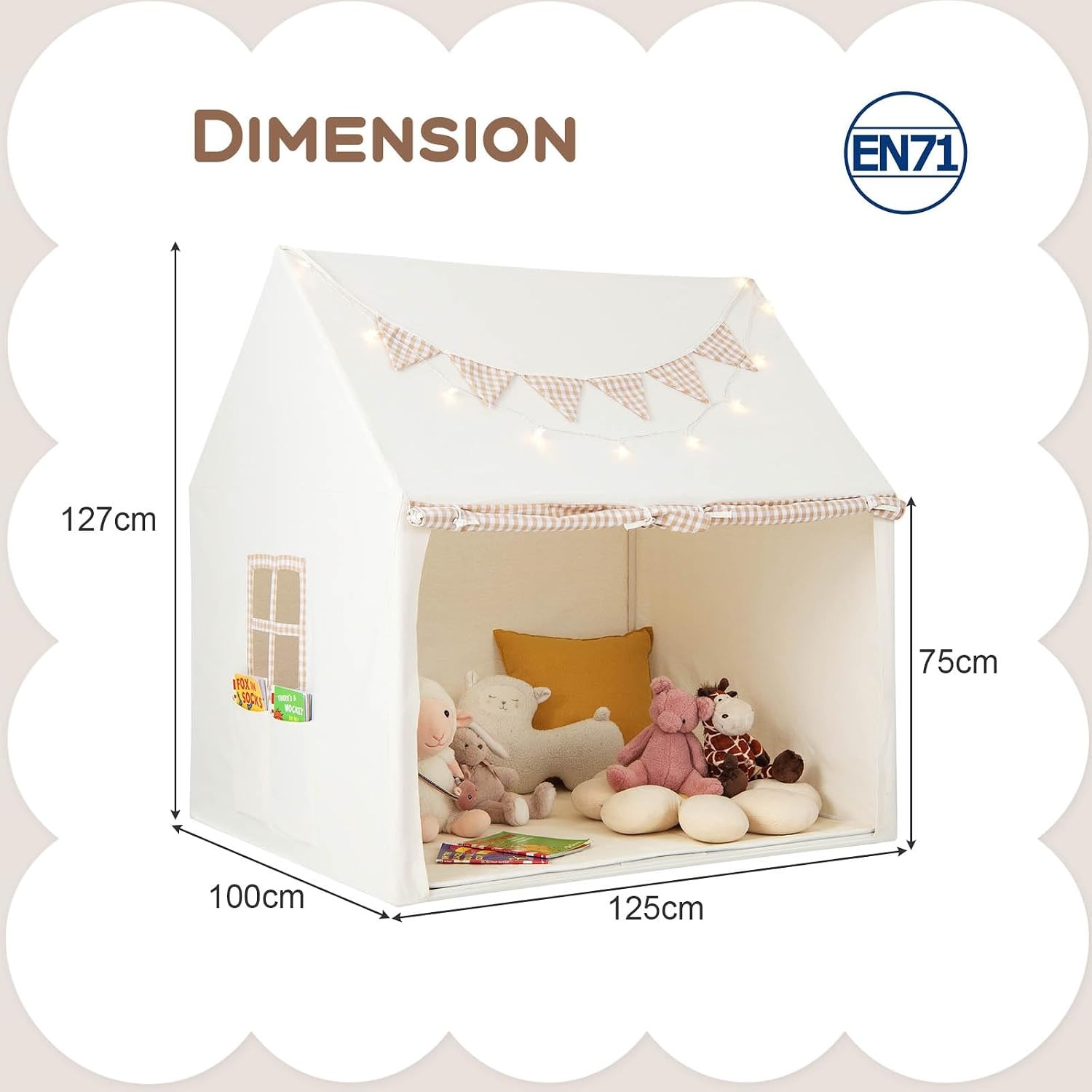
The structure is simple. PVC tubes push together into a house-shaped frame, and a polyester cotton cover goes over the top, held with hook and loop fastenings. Assembled, it stands 127 cm tall with a 125 cm by 100 cm footprint. The whole thing weighs 4 kg, so one adult can move it between rooms without much effort.
PVC tubing is a sensible choice for indoor kids furniture. It is light, it does not splinter, and it will not rust if someone spills a drink. The joints are what keep the frame from wobbling, so push them fully home during assembly and give them a check every few weeks if the tent gets heavy use.
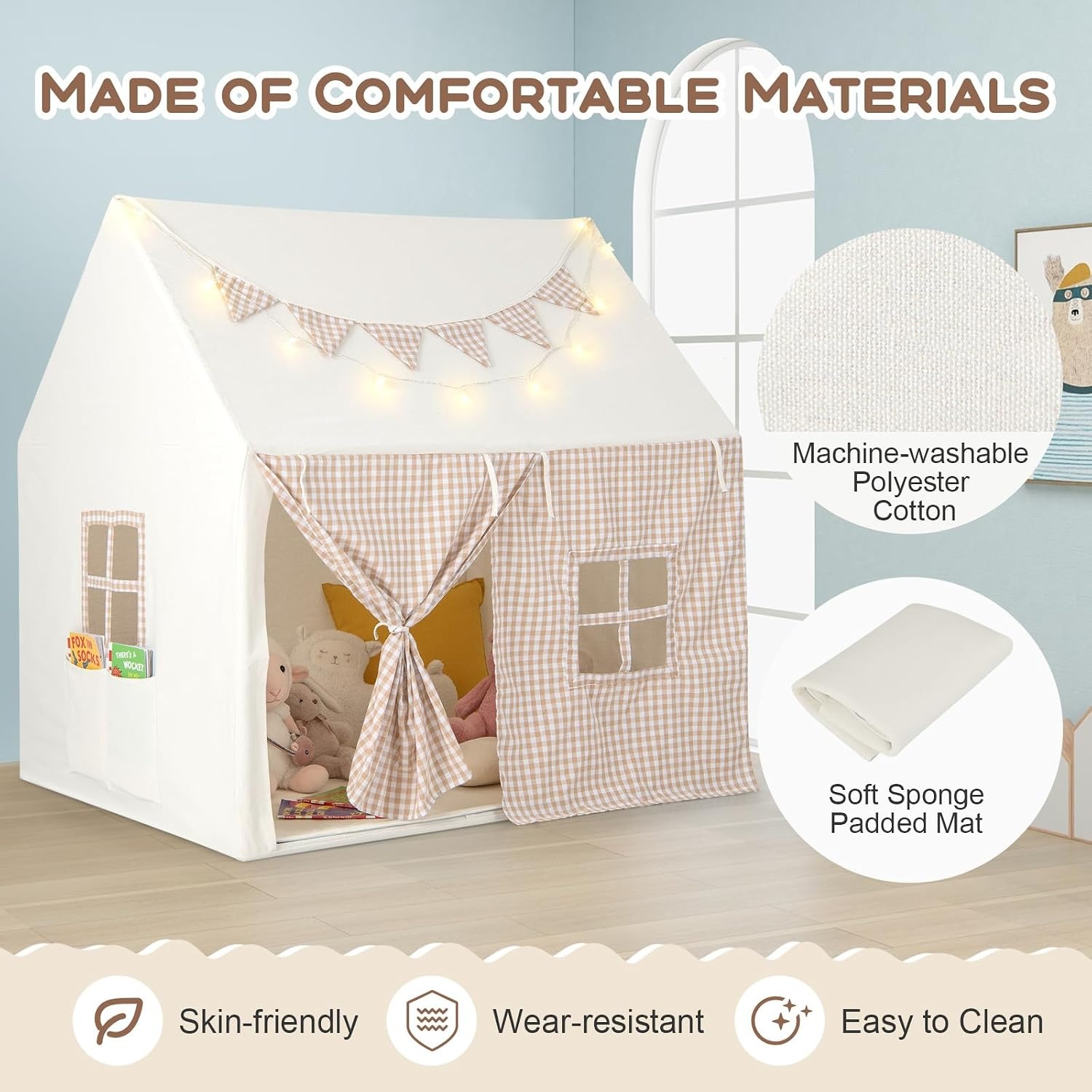
The cover is polyester cotton. That blend sits in a useful middle ground. Cotton on its own is soft but creases and shrinks; polyester on its own is tough but can feel plasticky. Together you get something soft against skin, breathable, and able to go through a washing machine without falling apart. Given that children eat, draw and occasionally leak inside these things, washability is not a nice-to-have.
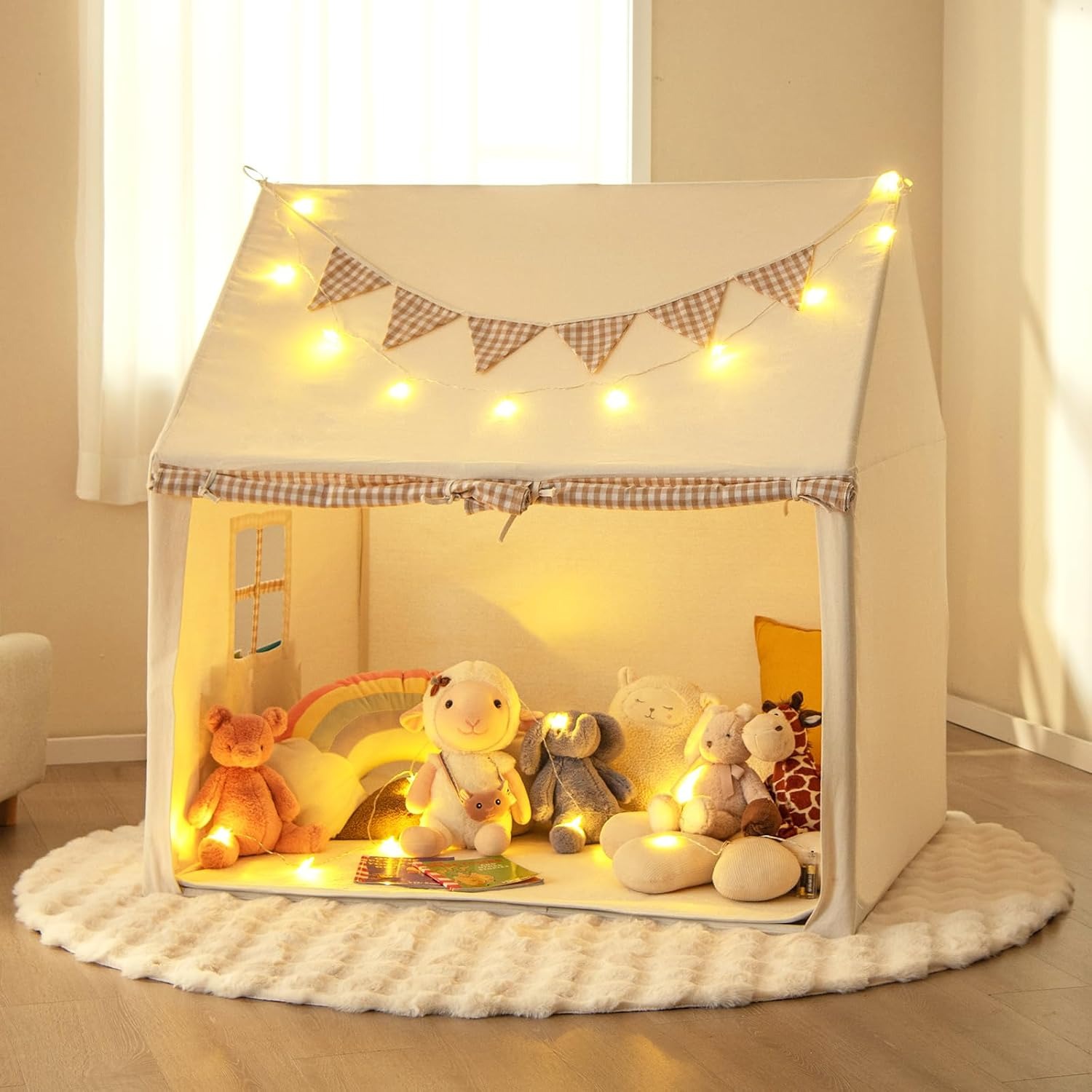
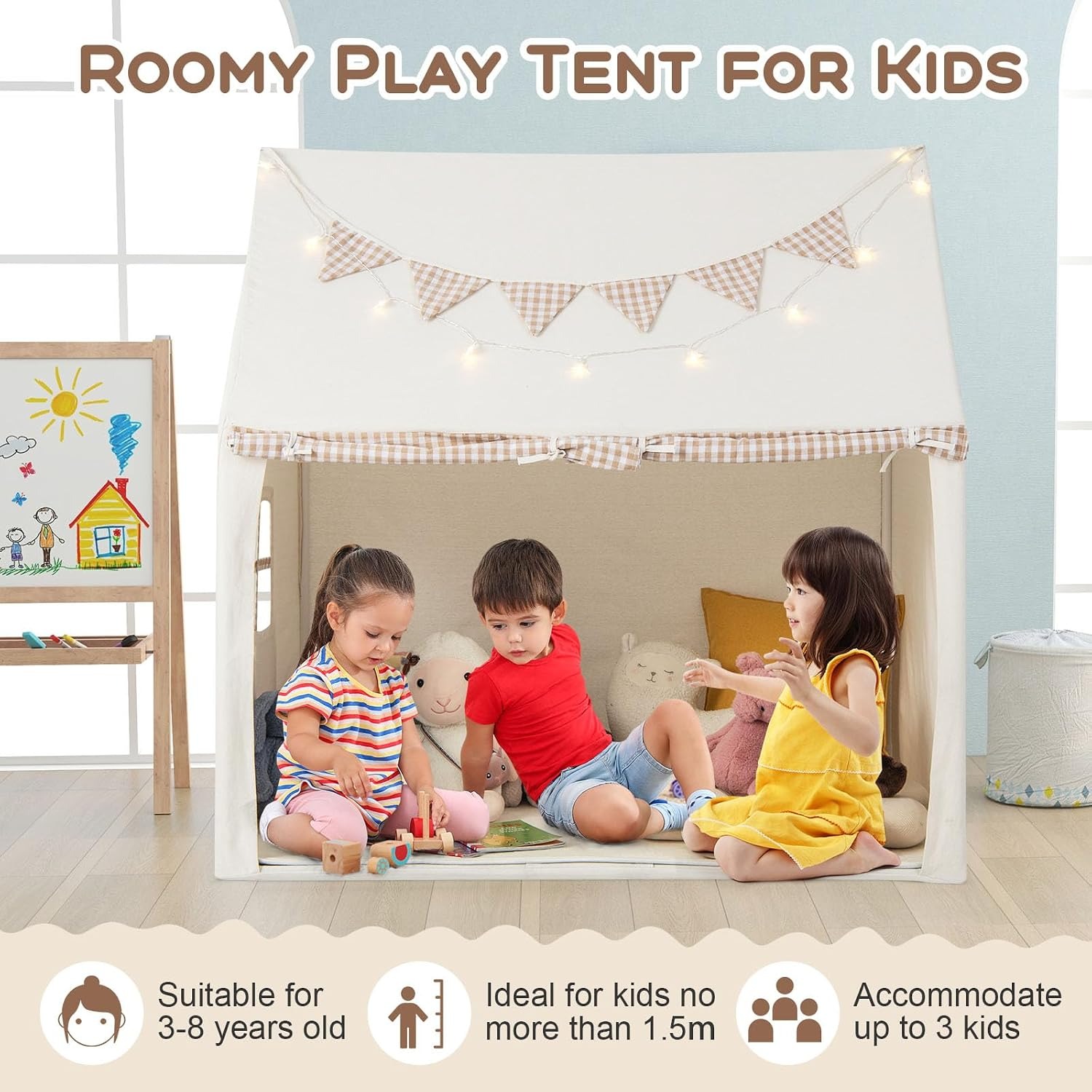
Inside there is the sponge padded mat. It covers the floor area so your child is not sitting on a cold surface, and it makes the difference between a tent that gets used for five minutes and one that becomes a regular spot.
The details that make it liveable
Two windows run through the side panels. They are there for airflow first, because a sealed fabric box gets warm and stuffy fast with a child inside. They also give parents a way to glance in without the whole ritual of opening the door and interrupting whatever game is underway.
Two pockets are sewn into the inner walls. This is a small thing that works out of proportion to its size. Children accumulate stuff, and in a bare tent all of it ends up underfoot. Pockets mean the torch, the two favourite books and the handful of small animals have a home, and the floor stays clear enough to lie on.
The door curtains roll down. When a child wants to be properly hidden they can close up, and when they want to see what is happening they tie them back. Giving a child the choice is the whole point.
Then there are the extras. A flag banner goes across the front and ten star lights clip on, which turns it from a fabric box into something that looks a bit magical in a dim room. You do need two AA batteries for the lights and they are not supplied, so grab some when you order.
Who this suits
The age guidance is 3 to 8 years. That range is about right. A three-year-old can get in and out safely and understands the idea of a den. By eight, most children are starting to want a bigger space, though plenty keep using one as a reading corner for longer.
It works well for an only child who wants a retreat, and equally well for siblings, since three can sit inside together. It is also a good option when you have a shared bedroom and one child needs somewhere to go that is not simply "the other side of the room".
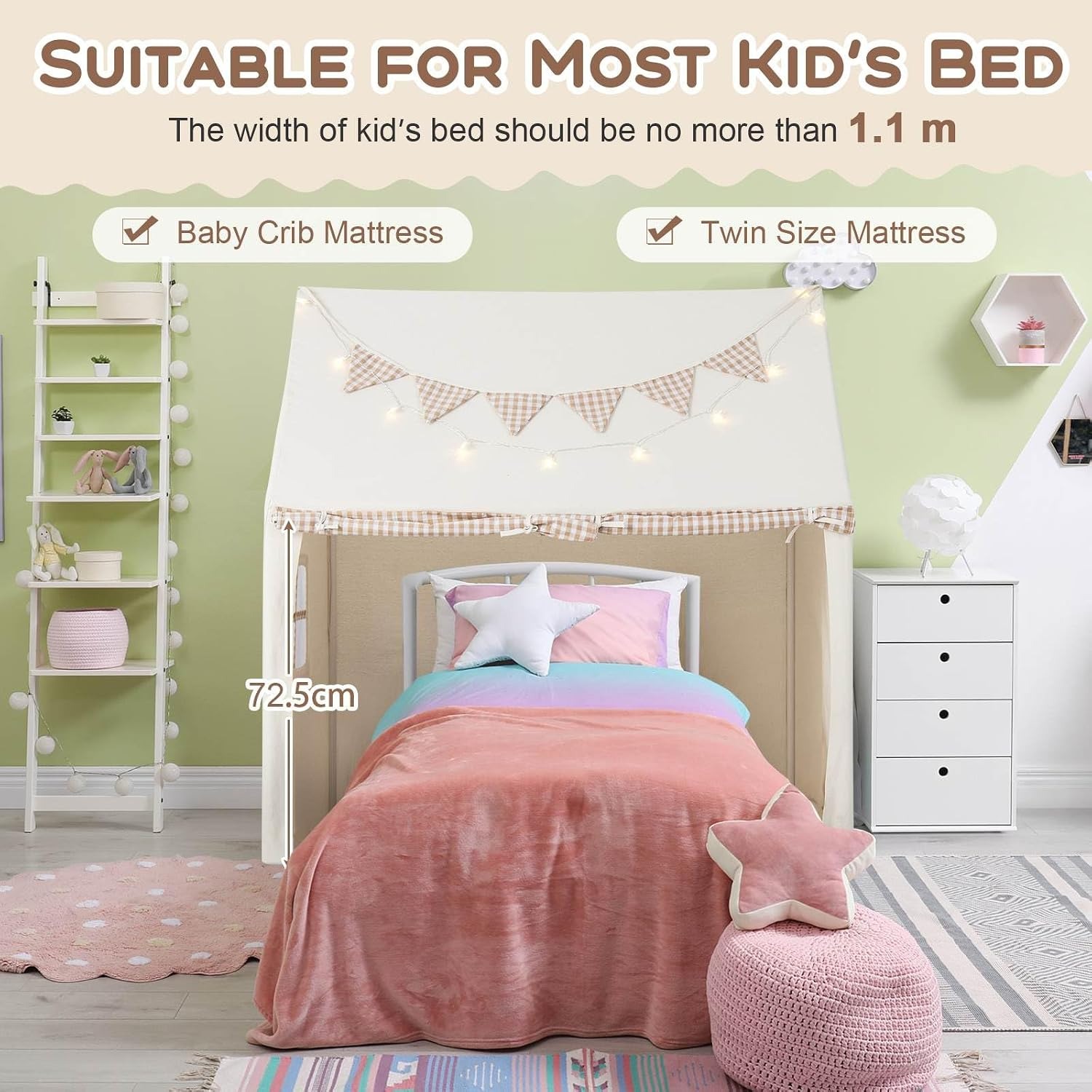
Think about floor space honestly before you buy. You need a clear 125 cm by 100 cm, plus a bit of room around the edges so the fabric is not pressed against furniture. In a small bedroom that is a real chunk of the floor. The good news is that it comes apart easily, so it does not have to be permanent.
The beige plaid helps here too. A neutral indoor tent for kids bedroom use blends into the room instead of dominating it, which makes the decision to leave it up a lot easier.
How to choose between tents
A few things separate the ones that get used from the ones that end up in the garage.
Height matters more than you expect. A tent a child has to crawl into and stay crouched in will not hold their interest. At 127 cm this one lets most children in the target age range stand or at least kneel up comfortably.
Ask what the floor situation is. If there is no mat, factor in buying one, and check whether anything you own is the right shape. A tent with the mat included saves that hassle.
Check whether the cover comes off. If it is stitched permanently to the frame, you are limited to spot cleaning forever. A removable, machine-washable cover extends the useful life by years.
Look at the fastening system. Hook and loop is quick for both assembly and take-down, which matters if you expect to move the tent between rooms or pack it away during the week.
And consider the look. You will be living with this. A tent that suits your room is one you will not be quietly resenting by month three.
Looking after it
Washing the cover is straightforward. Take it off the frame first, run a gentle cold cycle with a mild detergent, and air dry it completely before putting it back on. Heat from a tumble dryer can shrink the fabric enough that refitting becomes a wrestling match, so skip it.
The padded mat gets spot cleaned rather than washed. Warm water, a little mild soap, blot rather than scrub, then air dry flat. Sponge holds water, so give it proper time.
Wipe the frame poles down with a damp cloth every so often and dry them off. While you are there, check the joints are still fully seated.
Pull the batteries out of the star lights if the tent is going into storage, or if you are washing the cover. Leaking cells will ruin the light string and can stain fabric.
Keep the tent out of strong, direct sunlight for long stretches. Plaid fades like any patterned fabric, and a spot near a south-facing window will dull the colour faster than anything else.
The short version
This is a roomy, well-finished indoor play tent for children aged 3 to 8. You get 125 by 100 by 127 cm of space, a sponge padded mat so the floor is actually comfortable, two breathable windows, two storage pockets, a flag banner and ten star lights. The polyester cotton cover washes in a machine and the PVC frame assembles without tools.
If you have the floor space and a child who wants a corner of the world to themselves, it does the job properly rather than half-heartedly. Measure the spot, order a pair of AA batteries at the same time, and set aside half an hour for the build.