
The complete guide
Princess Castle Play Tents, A Buyer's Guide For Parents
The problem a play tent actually solves
Most homes do not have a spare room for a child's imagination. What they have is a corner of a bedroom, a bit of lounge floor, or a patch of lawn. A castle tent takes that leftover space and turns it into somewhere a child recognises as theirs. That small shift matters more than it sounds. Children behave differently inside a defined space. They settle. They stay put with a book longer. They invent longer, more detailed games than they do on an open floor.
Parents usually buy one for a specific reason. Rainy weekends. A child who struggles to wind down. A birthday coming up fast. A sibling who needs somewhere to go when the house gets loud. A princess castle play tent handles all of those without taking up permanent space, because it folds away when you are done with it.
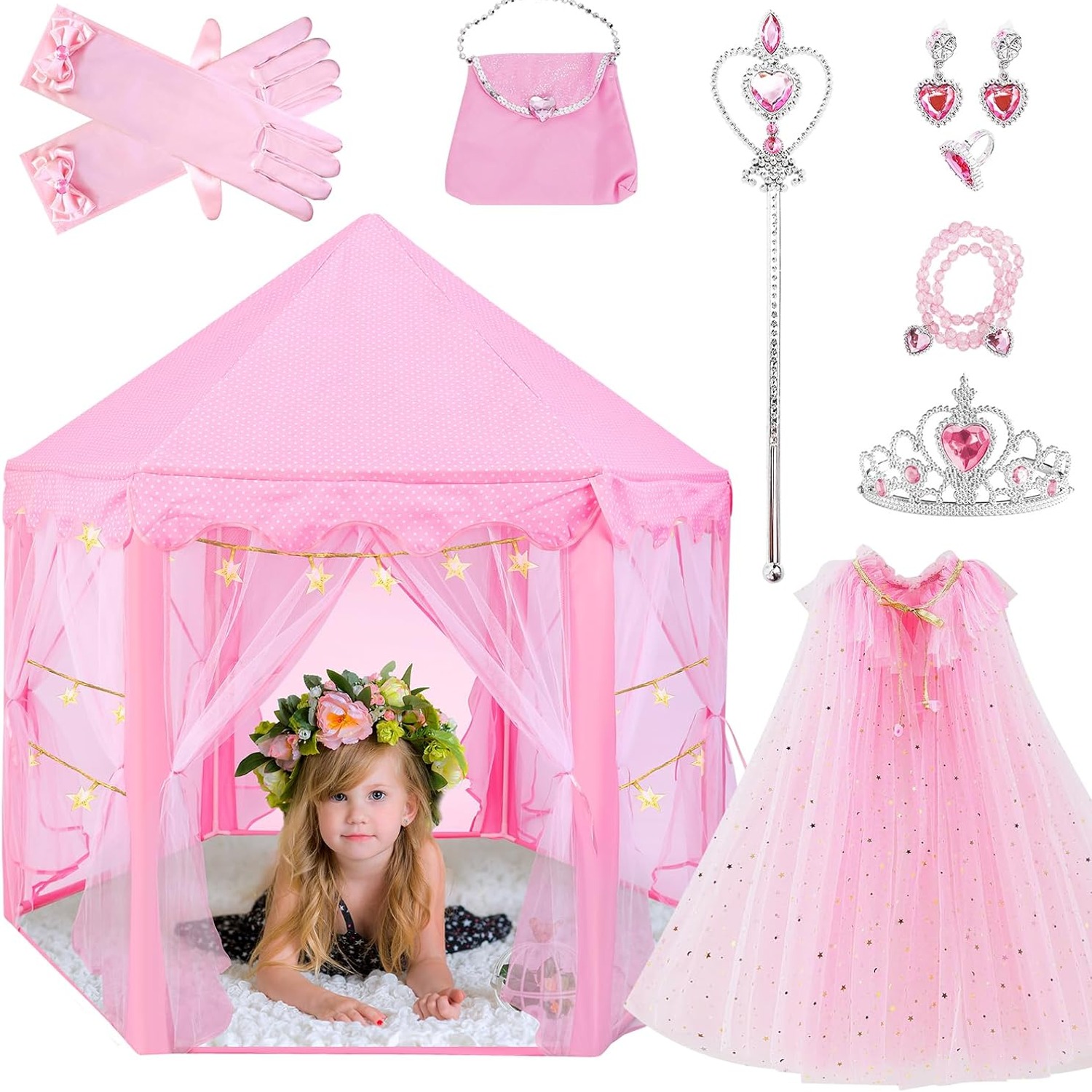
The other common reason is pretend play. Dress up and den building naturally go together. A child who pulls a cape on behaves like a different character, and the tent gives that character somewhere to live. Buying both at once, as this set does, saves you hunting for costume pieces separately.
How this one is built
The structure uses hard plastic poles that slot into connectors. You build the frame first, then slide the fabric cover over it. The joints on this model have been strengthened, which is the part that matters most, since connectors are usually the first thing to give way on a cheap play tent.
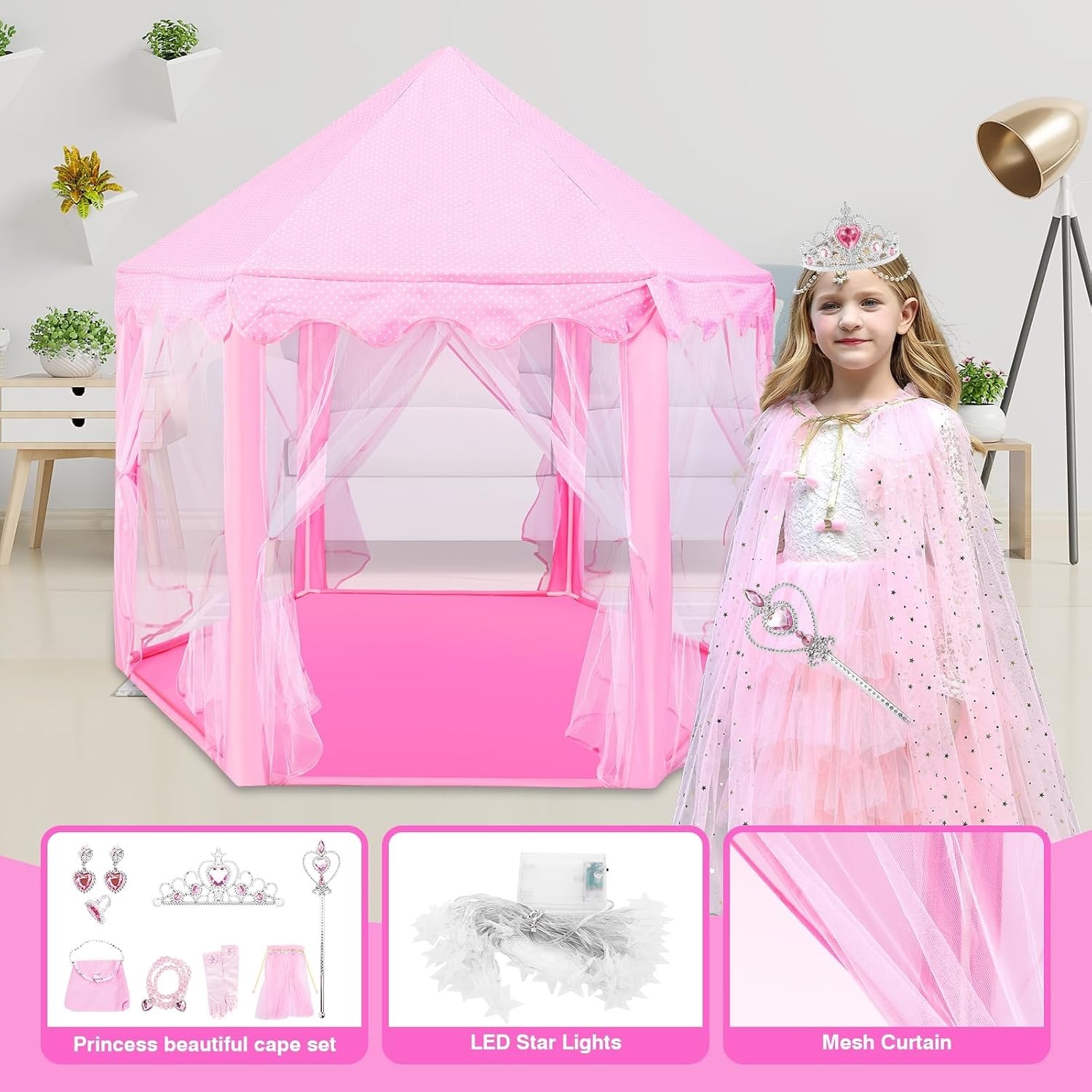
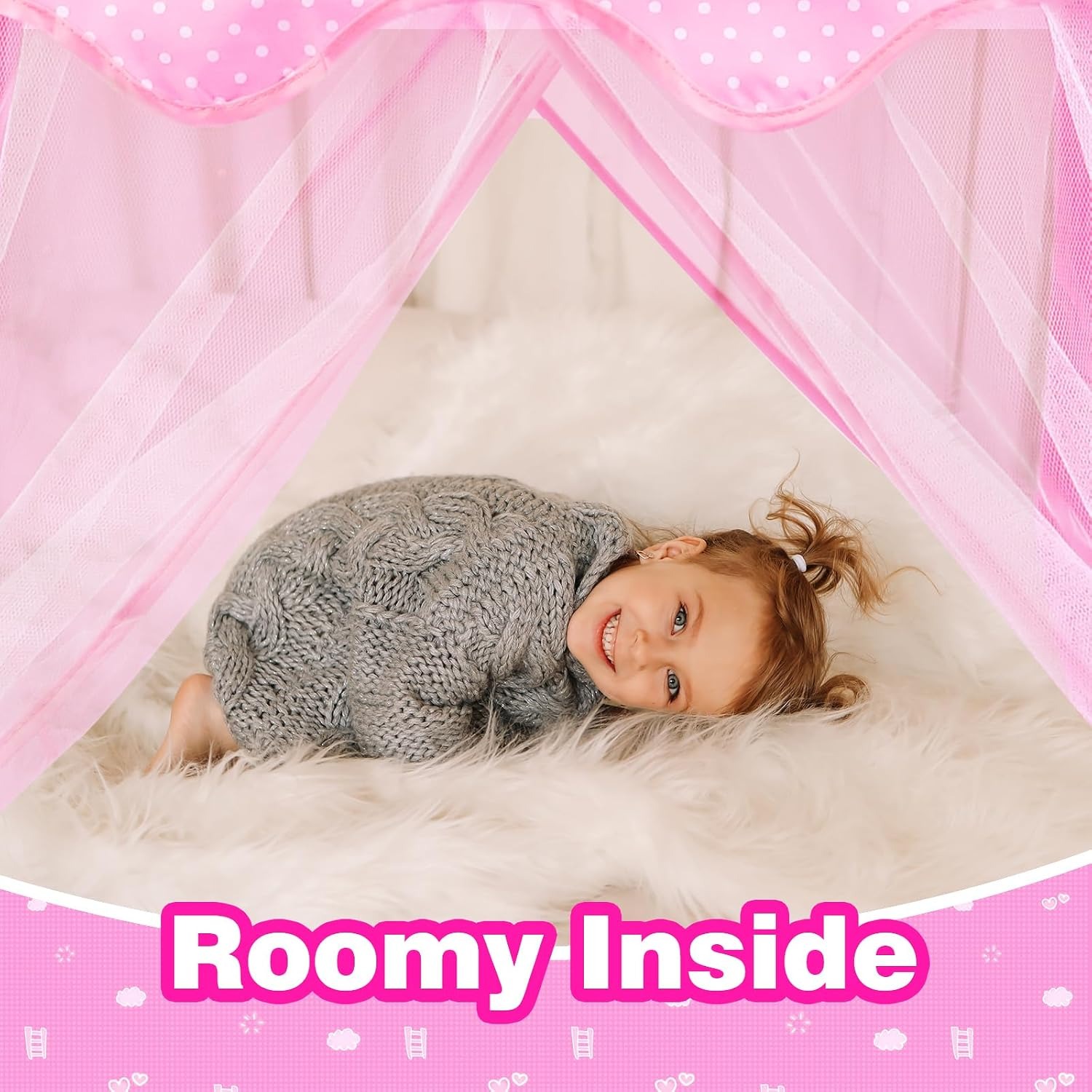
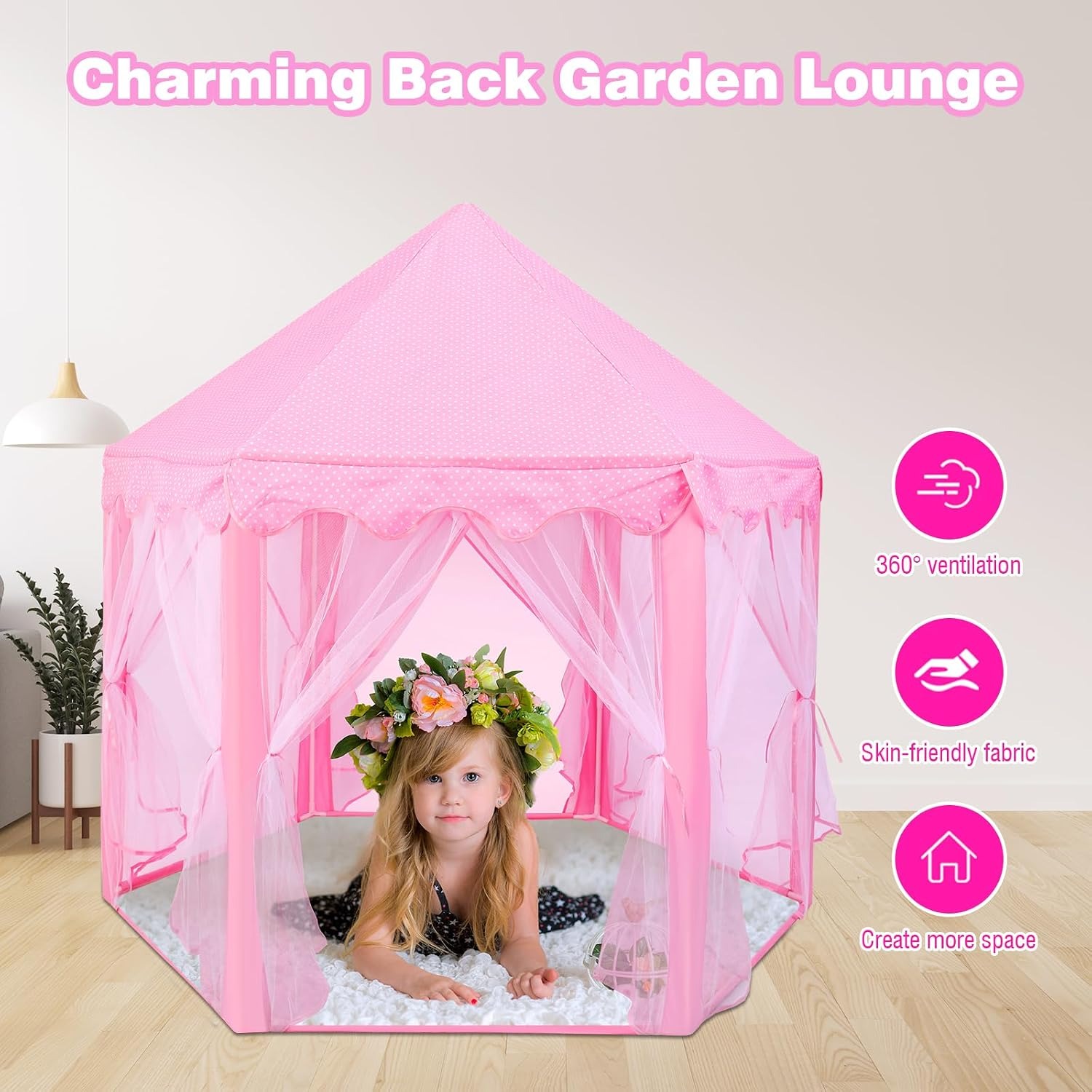
The cover is polyester with mesh panels. Polyester is the standard choice for kids tents because it handles tugging, does not crease badly, and wipes clean. The mesh does two jobs. It keeps air moving so the inside does not get stuffy, and it lets you glance over and see what is happening without crawling in.
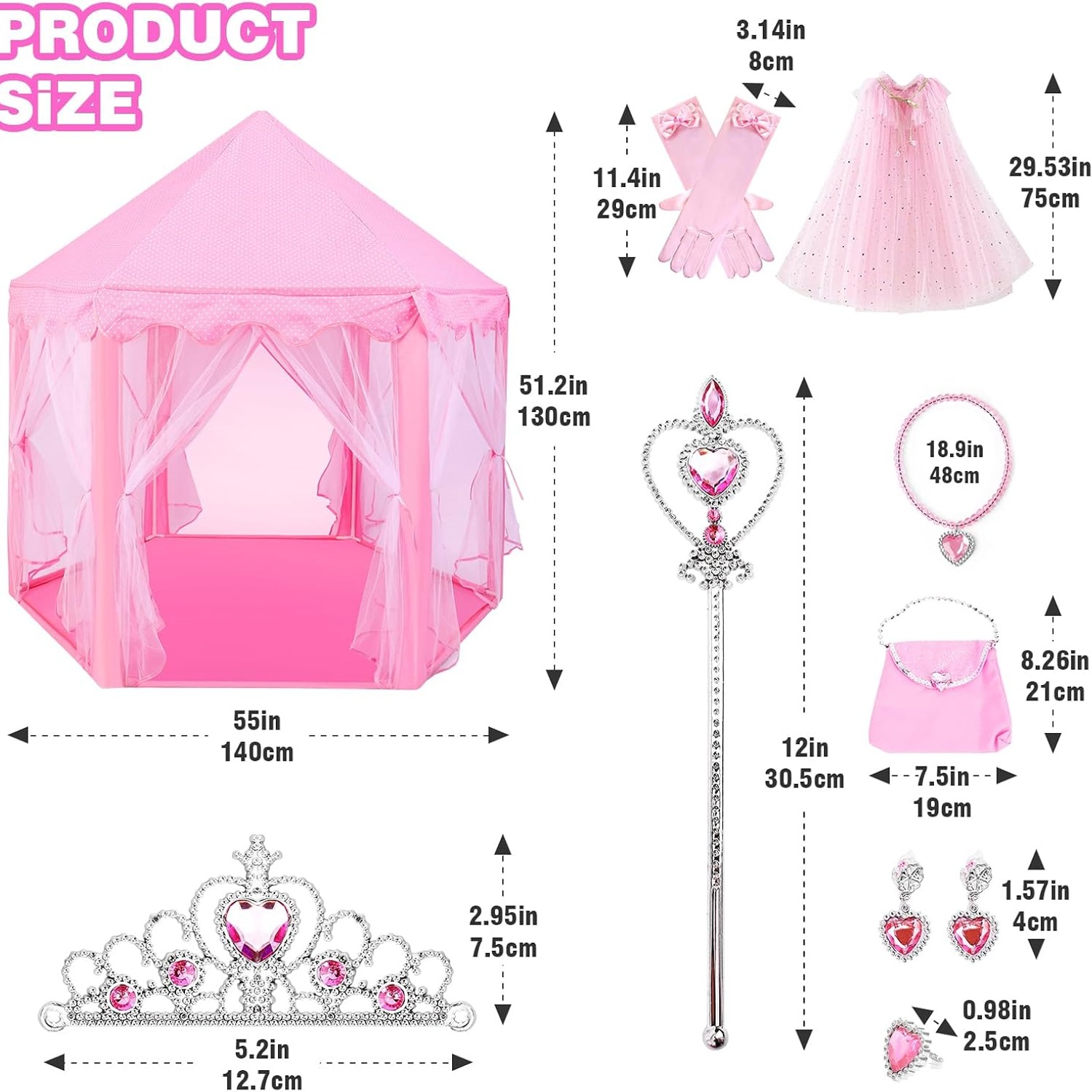
Set up, the castle measures about 140 cm wide, 140 cm deep and 135 cm tall. In practical terms that is a square roughly the size of a small rug, with enough headroom for a child to sit up comfortably. It is a sitting and lying space, not a standing one, which is normal for this style.
Assembly is required. The first build takes a bit of reading and a bit of fiddling with pole order. After that, most people can put it up in a few minutes. Taking it down is faster again, and everything goes back into the supplied handbag.
What comes with it
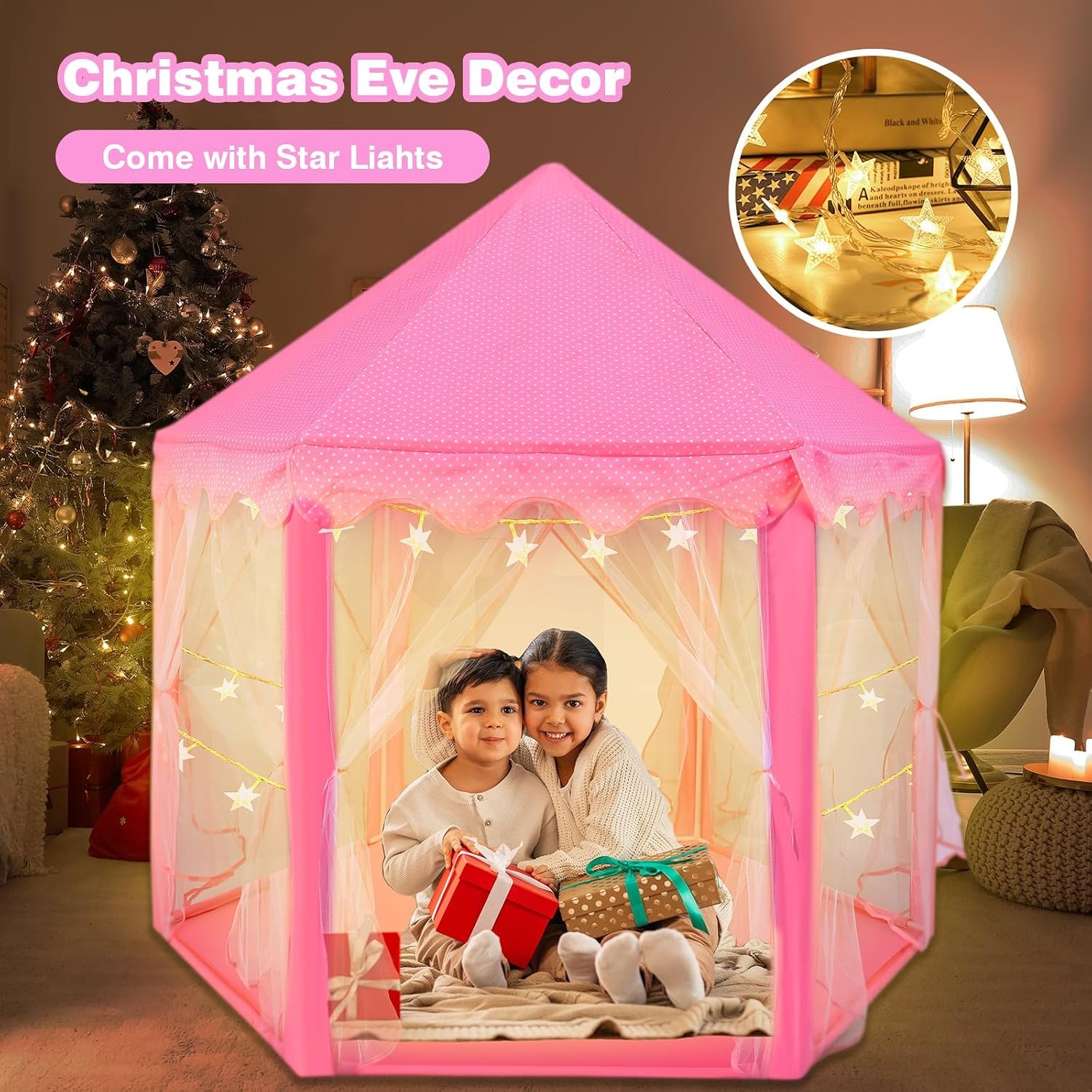
The dress up set is ten pieces. There is a pink cape printed with stars and a moon, a crown, a wand, a necklace, a bracelet, a ring, earrings, gloves and a small purse. A string of star LED lights is included for the tent itself, which runs on 3 x AA batteries that are not supplied. Grab a pack before the big reveal if you want the lights glowing on day one.
The accessories are the bit children reach for first. If you have ever watched a kid open a tent and then immediately ask where the costume is, you will understand why a bundle like this works. It is also why many shoppers searching for the best princess cape for kids end up looking at full sets instead of single items.
Who it suits
The recommended age is three years and up. That age makes sense. Three-year-olds are old enough to crawl in and out without pulling the frame over, and old enough to enjoy pretend play with props. Older children, roughly up to seven or eight, usually get the most from it, because they build whole storylines around the castle.
It suits a child who likes quiet corners as much as one who likes noisy games. Plenty of families use it as a reading nook or a calm-down space rather than a toy. If that is your plan, add a rug, a cushion and a small basket of books inside and it becomes the best reading nook tent in the house without any extra spend.
It is less suited to very young young children left alone, and to children who climb on everything. Play tents are not climbing frames. A bit of supervision goes a long way, especially in the first week while a child learns how it behaves.
How to choose between tent styles
If you are comparing options, a few things separate them.
Pole frames versus pop ups. Pop ups spring open in seconds but often feel flimsy and never fold back as neatly as you hope. Pole frames like this one take longer to build and hold their shape better. If you plan to leave the tent up for weeks at a time, the pole style is usually the better call.
Size versus space. A 140 cm square is generous for one child. Before you order, mark the footprint on the floor with tape and see how it feels in the room. Lots of returns happen simply because nobody measured.
Bundle or separate. Buying the tent and costume together costs less than buying both apart, and it means one gift rather than two half-gifts. If you already own a drawer full of dress up gear, a plain kids castle tent might suit you better.
Indoor or outdoor use. This one works on a lawn or patio for picnics and garden games, but it is not weatherproof. Treat it like an indoor item that visits the garden on nice days. The best outdoor play tent for kids in wet climates is a different category altogether.
Setting it up well
Pick a flat surface. Carpet is kind to the frame and to knees. On hard floors, put a rug or quilt underneath for comfort. Keep the tent clear of heaters, radiators and open windows with blind cords.
Give the inside a reason to be used. An empty tent gets explored once and forgotten. A tent with cushions, a soft toy, a torch and a few books gets used daily. The star lights help here too, since they make the inside feel like a proper den rather than a fabric box.
If the tent will live in a bedroom, think about light. Keep it out of hours of hard direct sun and the pink will stay pink for longer.
Looking after it
Spot clean the fabric with a damp cloth and mild soap, then let it dry fully in the air. Do not soak it or put it through a machine. Wipe the poles and connectors with a dry cloth, and check now and then that nothing has worked loose.
Hand wash the cape in cool water and dry it flat. Wipe the crown, wand and jewellery rather than submerging them. Keep the star lights away from water, and pull the batteries out if the tent is going into storage for a while.
When packing away, fold the cover loosely instead of cramming it in. It goes back into the handbag easily enough and comes out with fewer creases next time.
A note on safety
Keep the small accessories away from children under three and from pets who chew. Supervise play, especially with more than one child inside. Set the tent up away from stairs, heaters and furniture that could tip. None of this is unusual for a play structure, but it is worth saying plainly.
The short version
This is a roomy pink castle tent with a sturdy plastic frame, polyester fabric with mesh panels, and a ten-piece dress up set that lets the pretend play start immediately. It measures about 140 x 140 x 135 cm, needs assembly, and packs into its own bag when you are done. Recommended for ages three and up.
If you want one purchase that gives a child both a private space and a costume to wear in it, this covers both. Measure your corner, grab some AA batteries for the lights, and let the stories begin.