
The complete guide
How To Choose A Christmas Cabin Play Tent That Kids Actually Use
The problem with most kids' gifts
Plenty of Christmas presents get opened, played with for twenty minutes, and then join the pile under the bed. The ones that last tend to have something in common. They are open-ended, they give a child somewhere to be rather than something to operate, and they do not need an adult to make them work.
A play tent sits firmly in that category. It is not a toy with a single function. It is a space. Once a child has a door they can close and a roof that is theirs, the games take care of themselves. One day it is a cabin in the snow, the next it is a shop, a spaceship, or the only acceptable place to eat a sandwich.
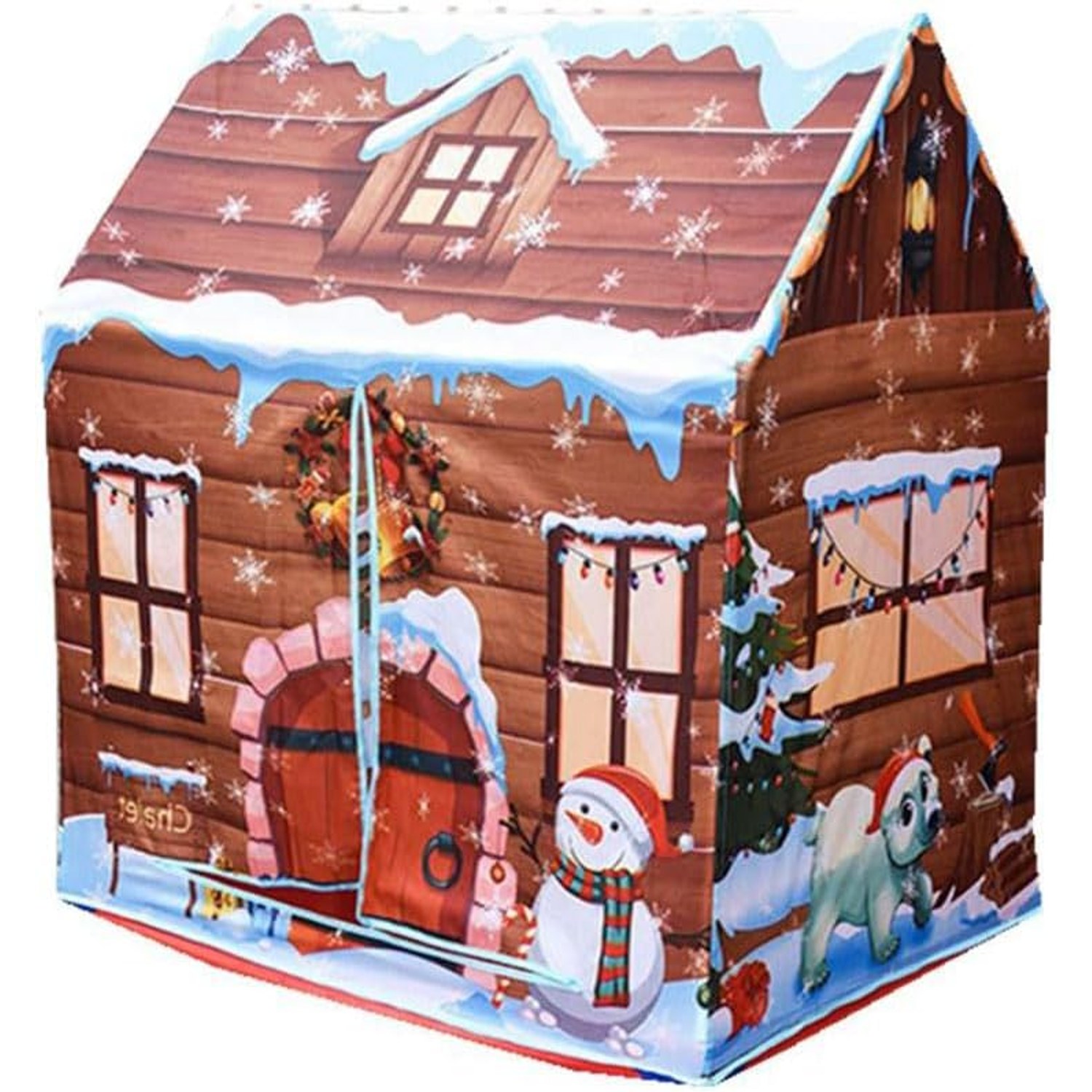
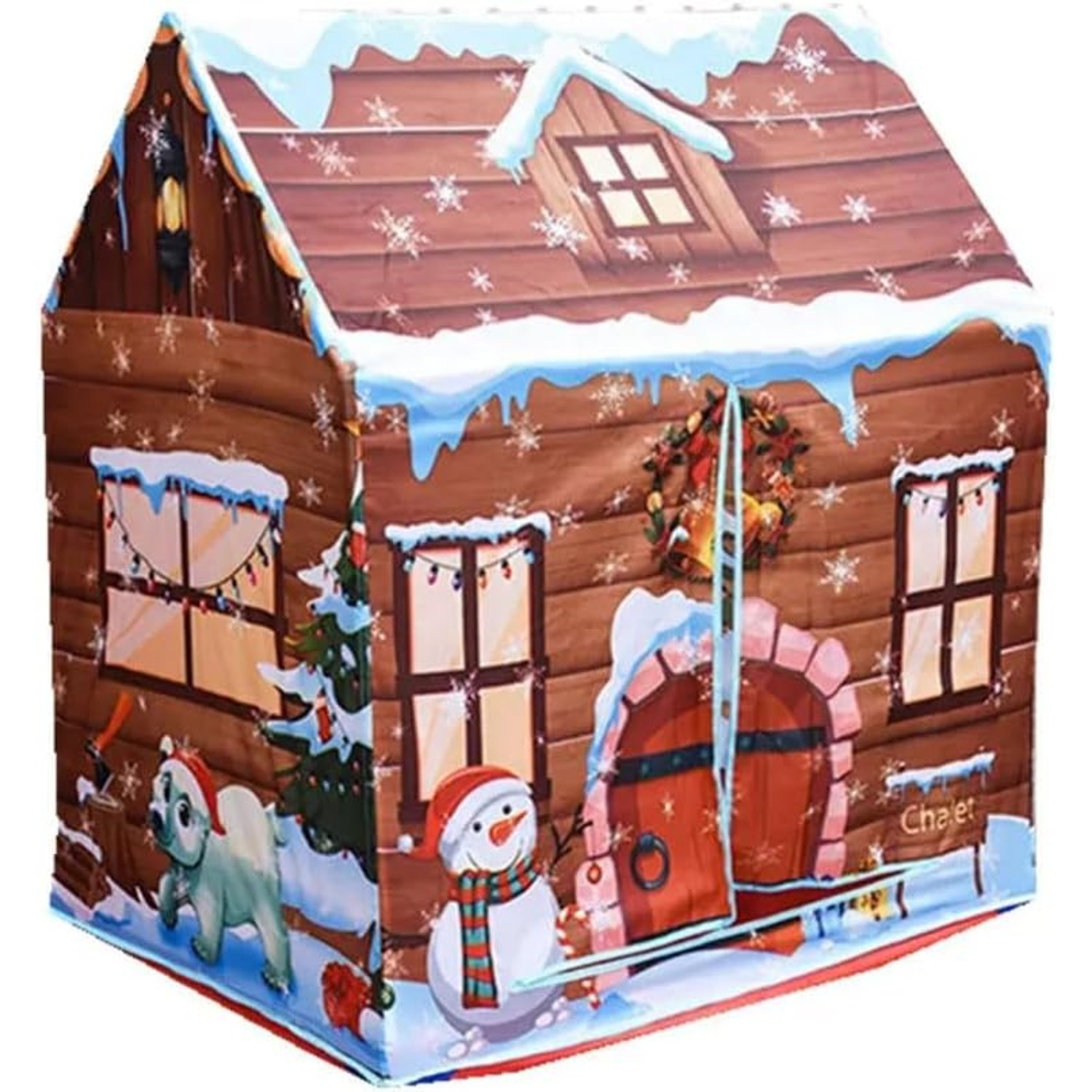
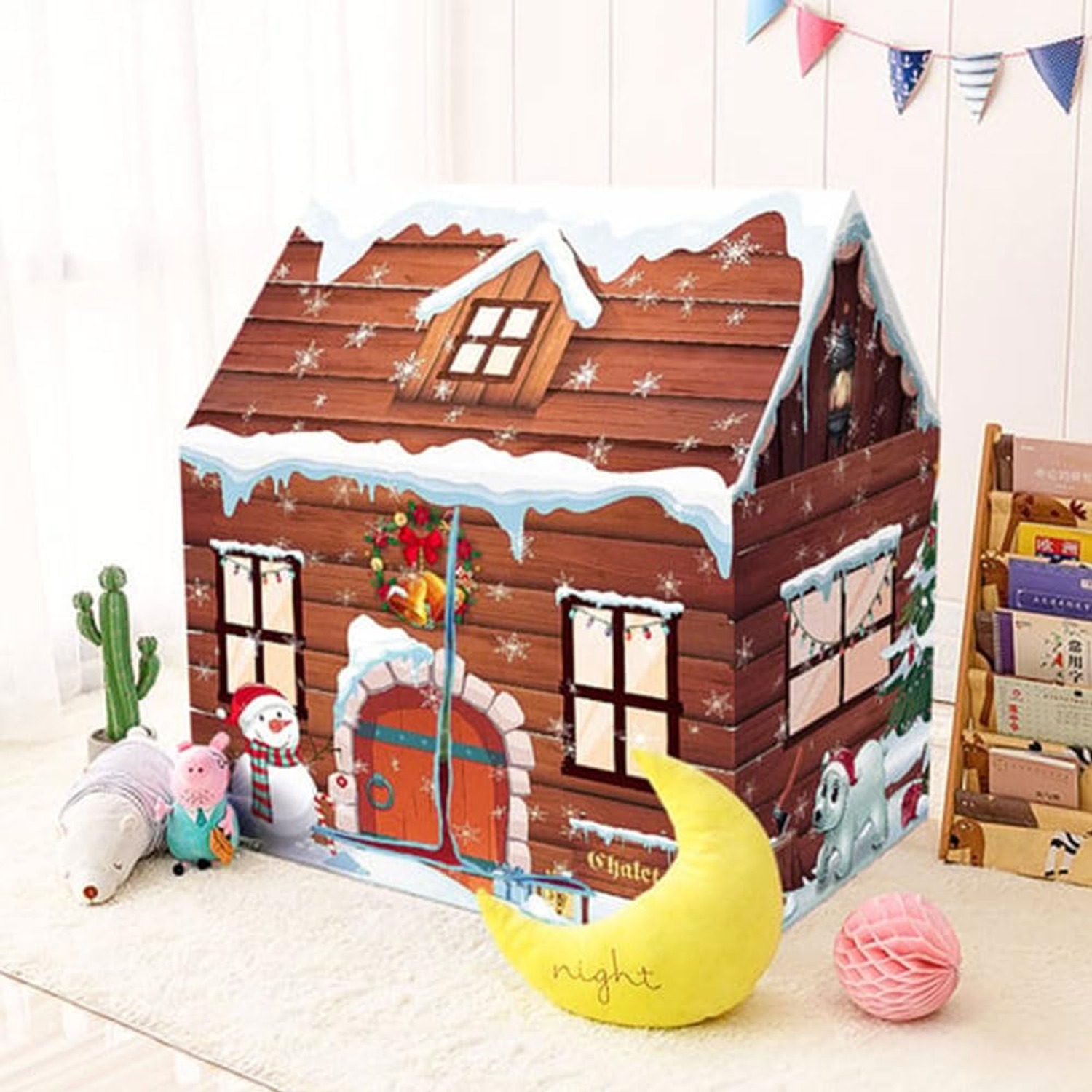
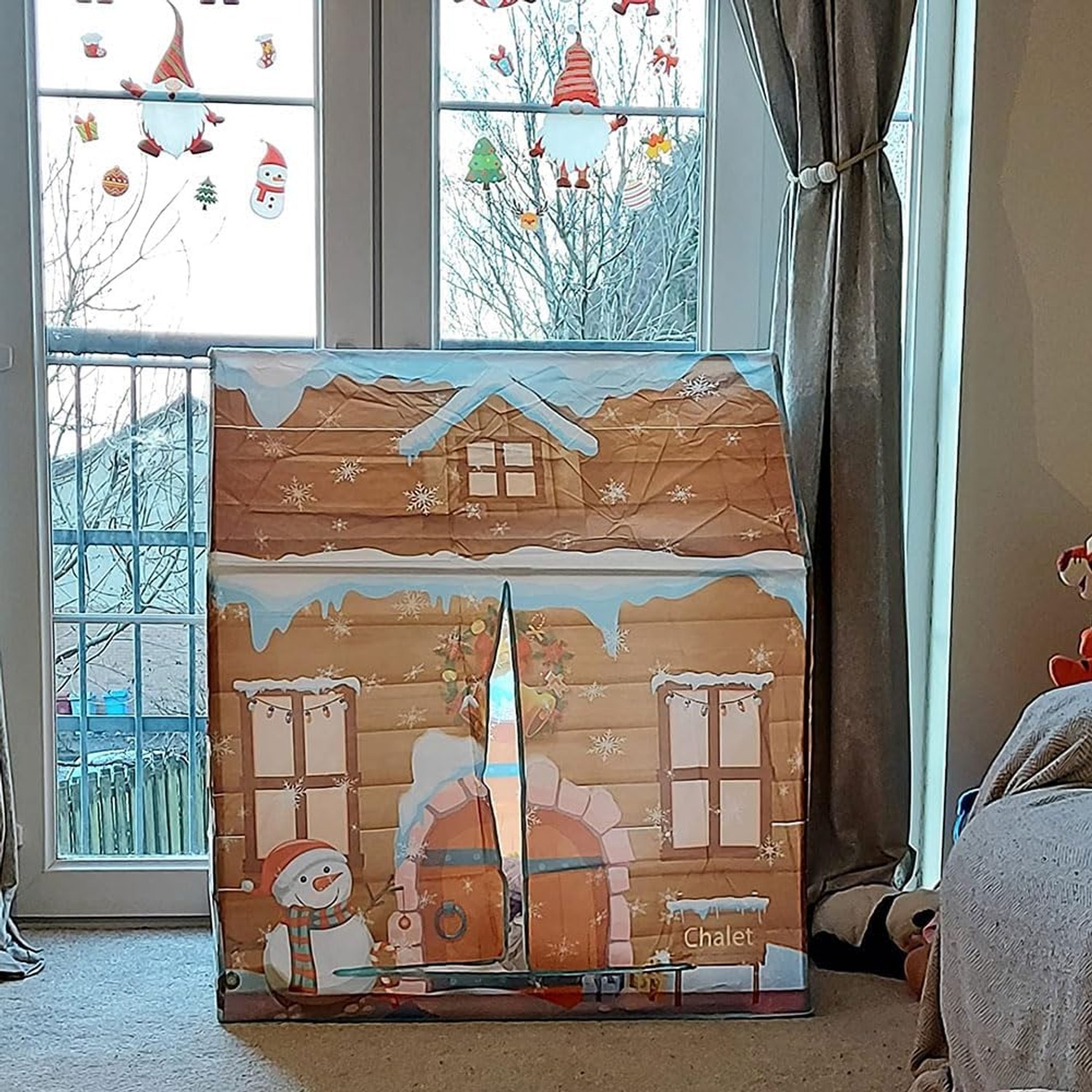
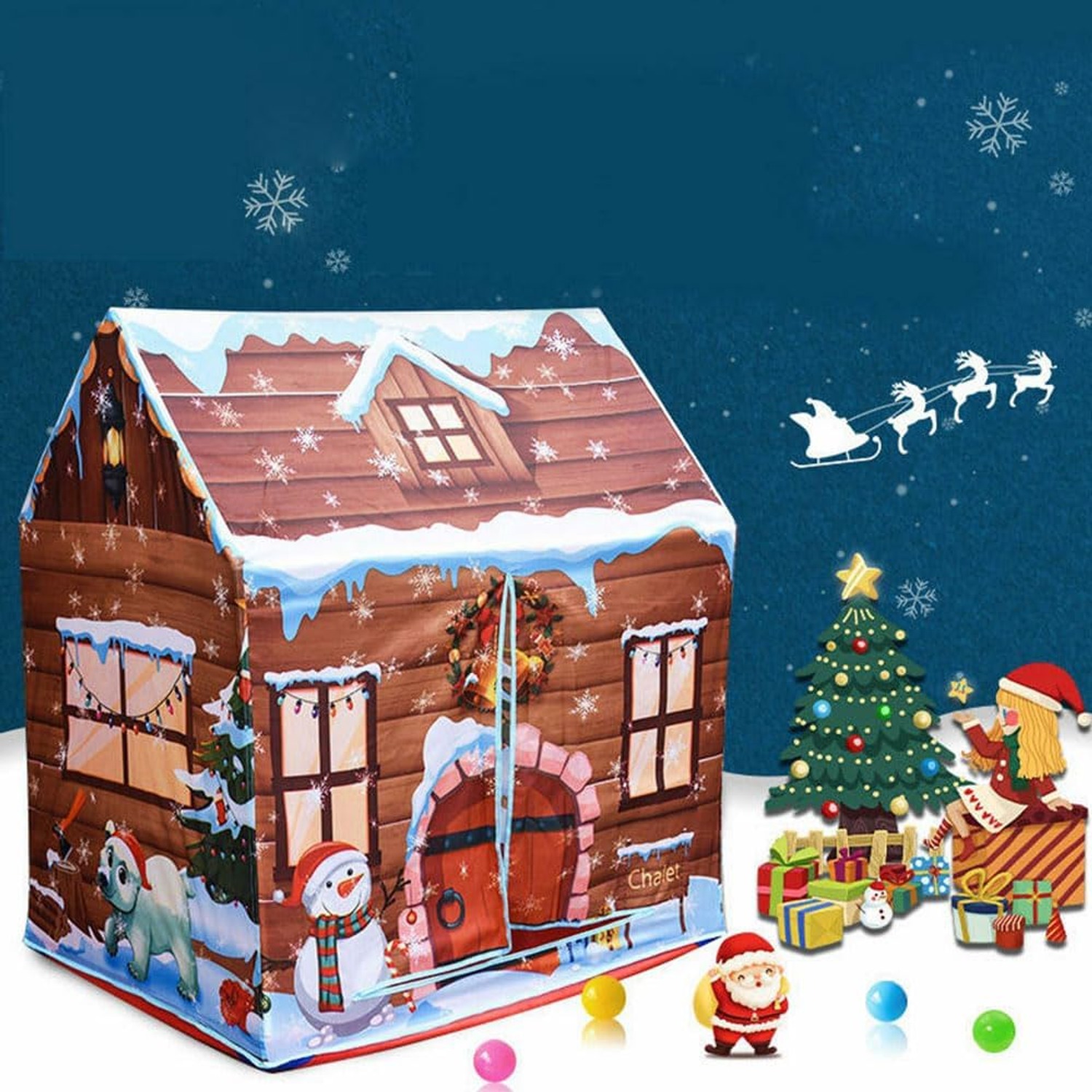
The Christmas Cabin Play Tent leans into that with a brown timber-cabin print and winter wonderland styling. It fits the house in December and keeps working in March, because most children read it as a hut rather than a decoration.
How this tent works
The construction is about as simple as it gets. A bracket frame goes together first, then the polyester shell fits over it. That is the whole job. No tools are listed, and the pieces are small and light enough that one adult can manage the build while a child supervises from a short distance.
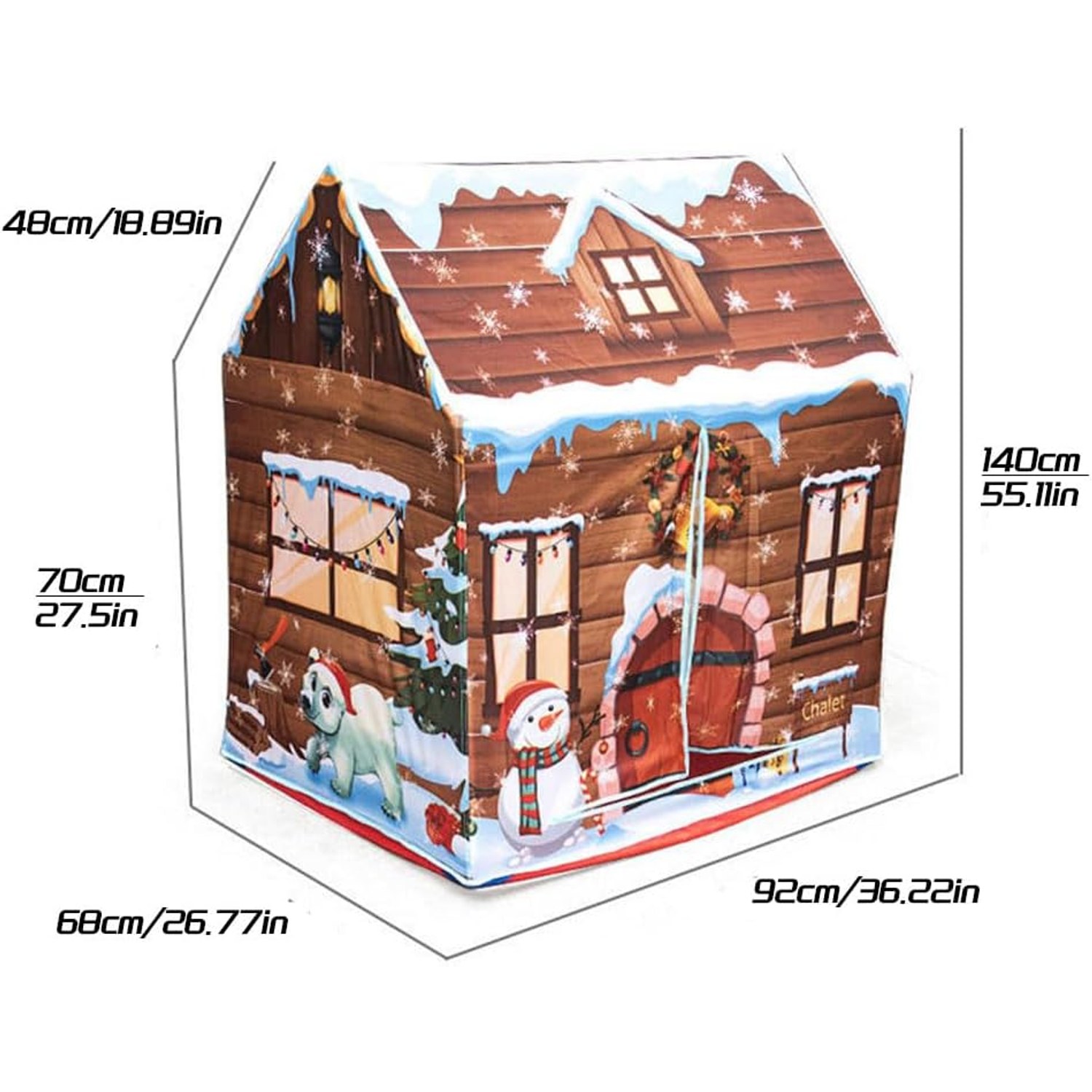
Set up, it stands 140 cm tall with a 92 cm by 68 cm footprint. The height matters more than people expect. At 140 cm, most children under about seven can walk in through the opening rather than crawling on their knees. That changes how they use it. A tent you stoop into is a hiding spot. A tent you walk into is a room.
The floor area gives two kids space to sit facing each other with a few toys between them. Three can cram in for a game of hide and seek, but it gets bumpy and the frame takes more knocks than it should.
The whole assembly weighs 499 g. For context, that is lighter than a one-litre bottle of water. You can move it with one hand, which is why it tends to migrate around the house. When you want it gone, it folds flat into the supplied storage bag.
Who it suits
The manufacturer recommends ages 3 and up. That matches what the tent is physically suited to. By three, most children understand not to barge the frame and have the coordination to get in and out without pulling the whole thing over.
It fits best in households where floor space is at a premium but a dedicated playroom is not on the cards. Under a square metre of footprint is a corner, not a conversion project. Families in apartments often find the best pop up play tent style products are the ones that disappear into a bag when guests come over, and this one does exactly that.
It also suits grandparents' houses, holiday rentals and anywhere a child needs a familiar spot in an unfamiliar room. Pack it, carry it, put it up in five minutes.
It is less suited to very boisterous older kids. A lightweight polyester shell on a bracket frame is for playing inside, not for climbing on or wrestling against.
How to choose between play tents
A few things separate a tent that gets used from one that gets ignored.
Height. Look for standing room appropriate to your child's age. A tent they outgrow in six months is not good value. At 140 cm this one covers a decent age range.
Pack-down. If it does not fold flat and come with a bag, it will end up permanently assembled or permanently in the way. A storage bag is a small detail that decides whether the tent survives past one season.
Weight. Heavy tents stay where you put them, and then stop getting used when that room is busy. At 499 g this is light enough to move daily if that is what the household needs.
Theme. Strongly themed tents can date quickly. Something like a cabin reads broadly, which is why parents hunting for the best winter wonderland playhouse often end up keeping it up well past the holidays. Ask yourself whether your child will still like the print in June.
Assembly honesty. Every fabric tent needs some build. The question is whether it is a five-minute job or a forty-minute wrestle. Fabric-over-bracket systems like this one are at the quick end.
Setting it up well
Pick a flat surface. Carpet, a rug, or a smooth floor all work. Avoid putting it half on and half off a rug edge, because the uneven base makes the frame twist.
Leave a bit of clearance around the sides so the fabric is not pressed against a wall or a chair. The tent holds its shape better when nothing is leaning on it.
If the floor is hard, lay a folded blanket or a soft rug inside. It makes the space more inviting and stops grit wearing the fabric from underneath. A cushion and a couple of books inside the first time will usually be enough to get a child settled.
Keep it away from heaters, fireplaces, candles and anything hot. Polyester and heat sources do not belong in the same corner. If you want a glow inside, use battery LED string lights, which stay cool.
Looking after it
Cleaning is simple. A damp cloth with a little mild soap handles most marks on polyester. Work gently, then let the fabric air dry completely before you fold it.
Do not machine wash it, bleach it, tumble dry it or iron it. All four can distort the panels or damage the printed detail, and none of them are needed for the kind of mess a play tent collects.
Deal with spills while they are fresh. A juice mark wiped in the first hour disappears. The same mark found three weeks later in the storage bag does not.
When you pack it away, dryness is the whole game. Any trapped moisture in a sealed bag leads to musty fabric and possibly mildew. Open the tent, let it sit for an hour, then fold and bag it. Store the bracket pieces with the fabric so you are not hunting for poles next December.
Check the frame joints occasionally. If a section feels loose, reseat it rather than forcing play to continue around it.
Getting more out of it
A few cheap additions turn a tent into a proper nook. A sheepskin or a thick rug on the floor. Two cushions. A small basket of books. Battery lights clipped around the opening.
Some families use it as a wind-down spot rather than purely a play space, which works surprisingly well. A quiet corner with soft light and no screens is a useful thing to have in a busy house.
If you are buying it as the best christmas play tent under the tree, consider wrapping a book or a soft toy to go inside it. Giving a child something to immediately put in their new space helps the idea land.
The short version
This is a lightweight polyester play tent styled as a Christmas cabin, standing 92 cm deep by 68 cm wide by 140 cm high and weighing 499 g. It comes with a bracket frame and a storage bag, needs a short assembly, and is recommended for children aged 3 and up. Two kids fit comfortably.
It suits homes with limited space because it folds flat and moves easily. It works as a holiday piece and keeps earning its place afterwards as a general cabin or fort. Treat it as supervised play equipment, keep it away from heat, wipe it clean rather than washing it, and store it dry.
If you want one gift that gives a child somewhere to go rather than something to hold, this is a straightforward way to do it.