

The complete guide
Choosing a Pop Up Princess Castle Tent, A Practical Buyer's Guide
The problem a castle tent actually solves
Children share almost everything. They share the lounge, the back seat of the car, the bathroom, often a bedroom. What they rarely get is a patch of floor that is theirs alone, with a wall around it and a door they decide to open or close.
That is the real job of a play tent. The castle print is the hook, and it is a good one, but the reason these things stay in use for years is simpler. A child crawls in, pulls a few toys after them, and the noise level in the house drops. Parents notice it within the first week.
A pop up princess castle tent also solves a smaller, more boring problem. Toys spread. A tent gives soft things a home. Cushions, a blanket, a stack of picture books, three favourite soft toys. They go in the tent and they stay there, and the rest of the room stays walkable.
What you are getting with this one
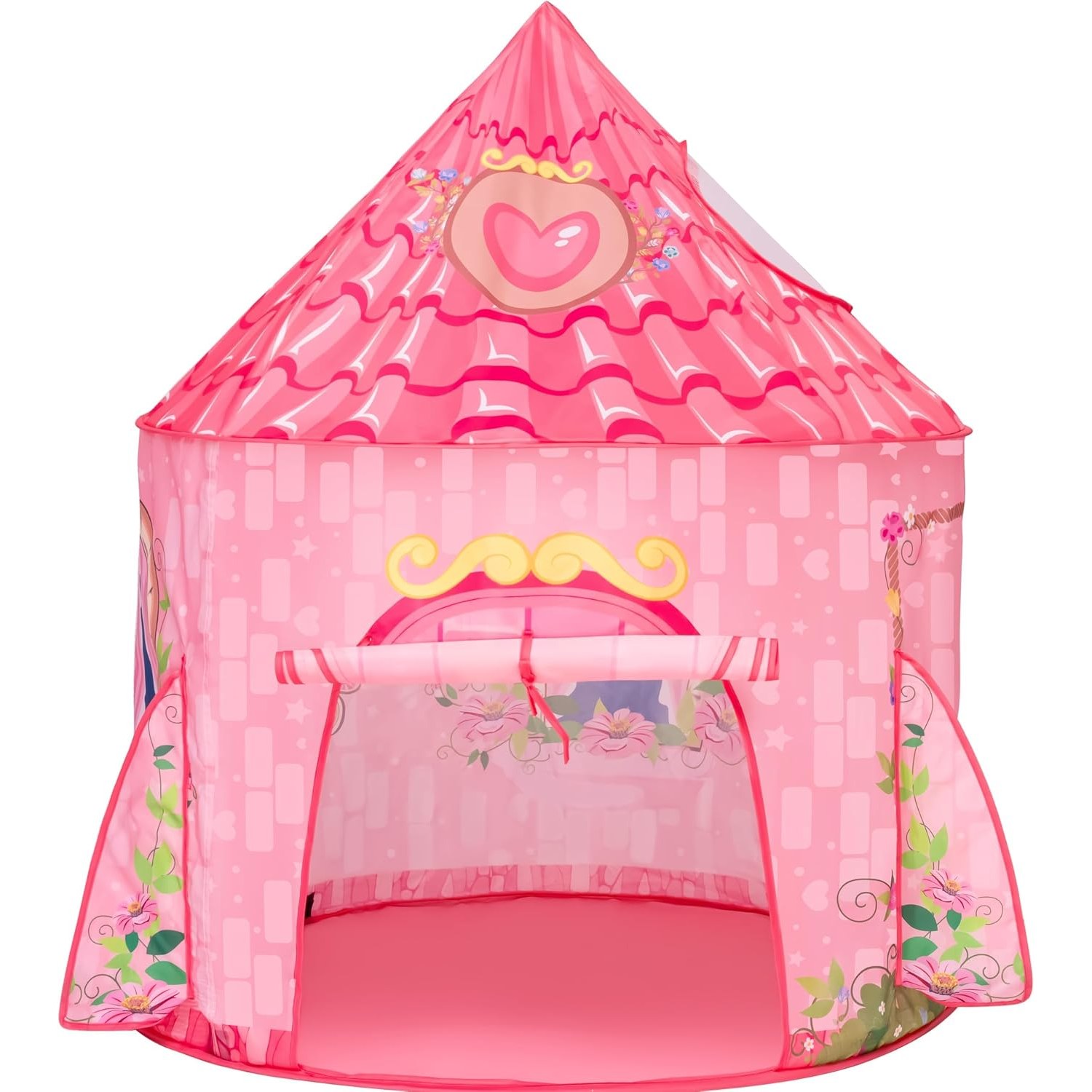
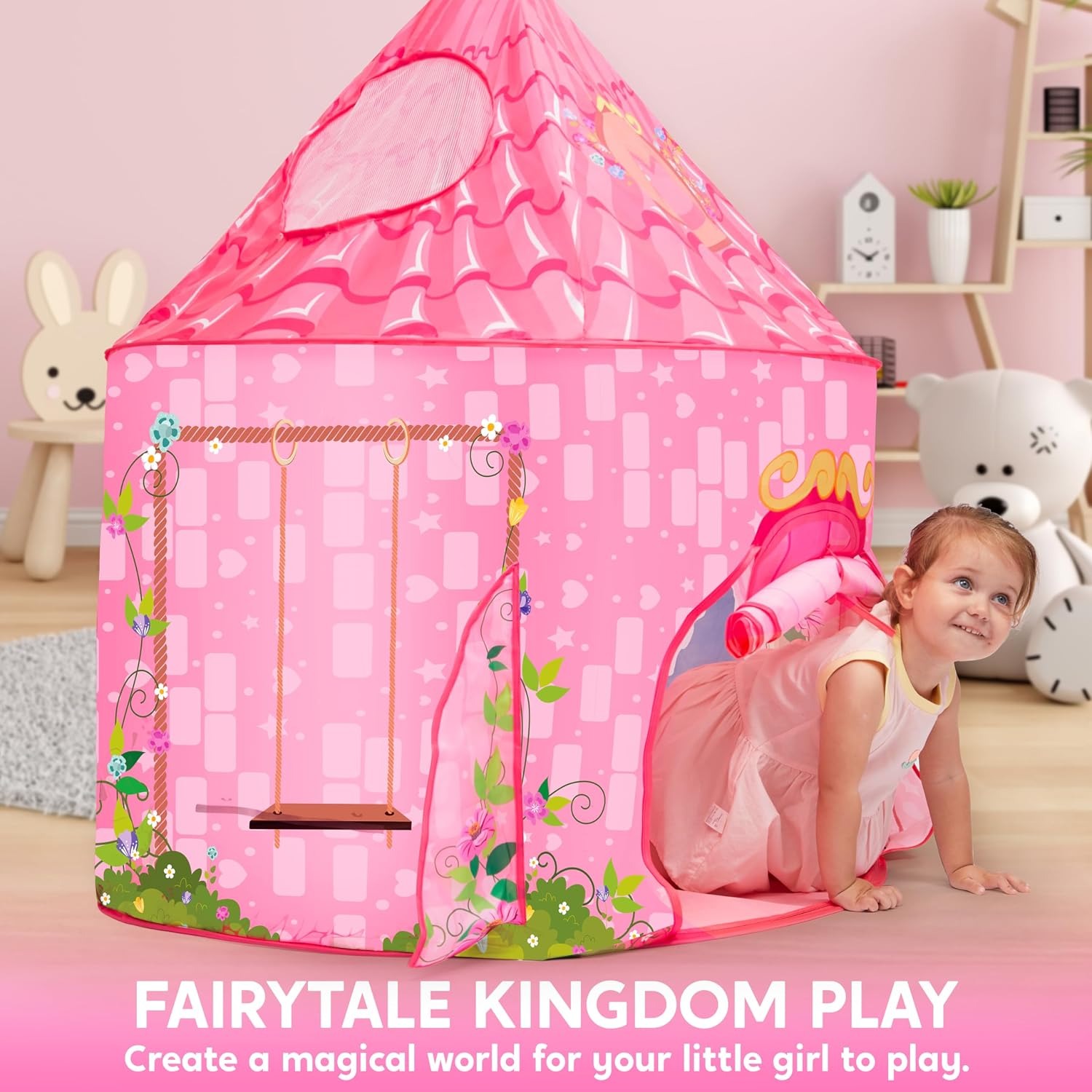
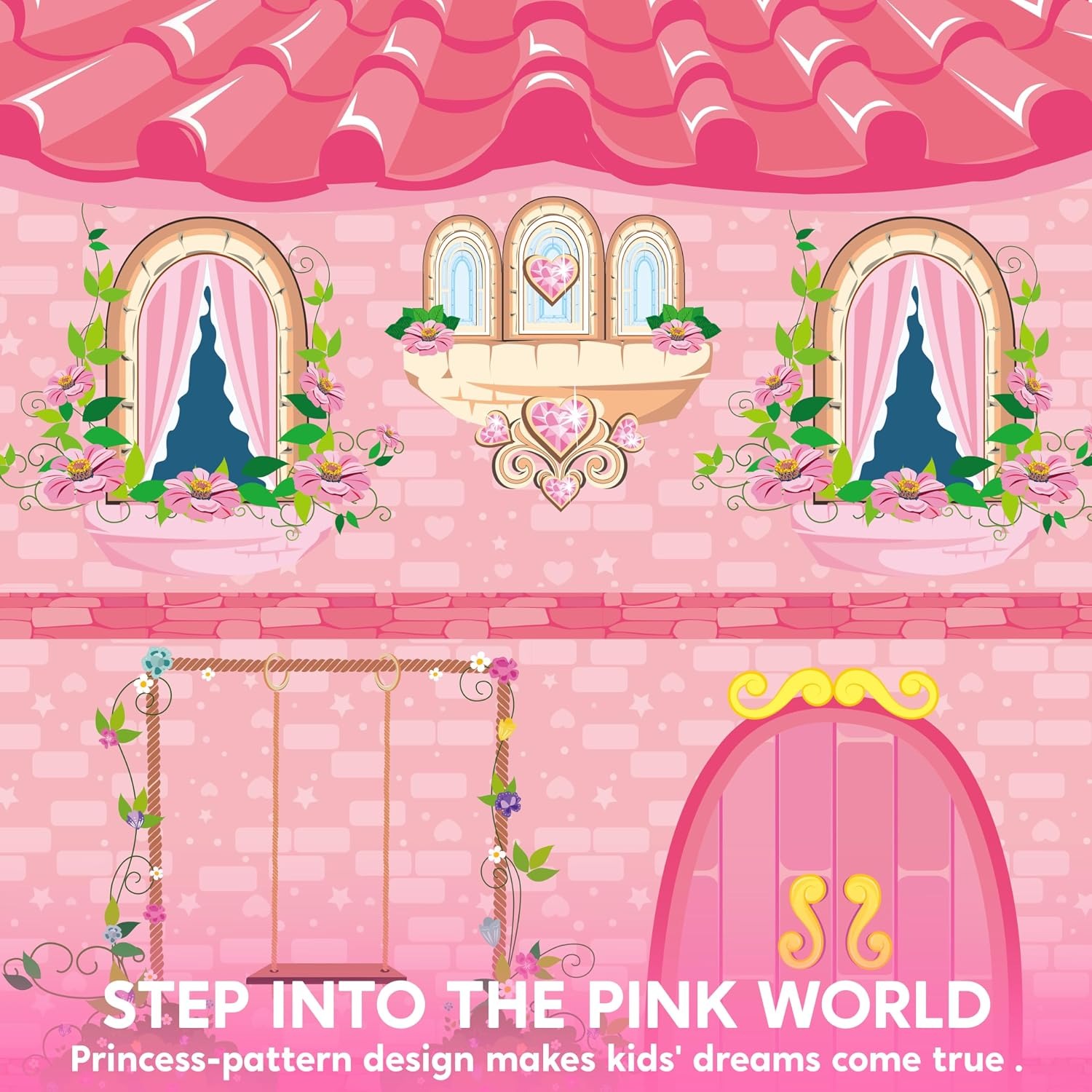
The the maker set is complete out of the box. There is the tent itself, printed with castle towers and royal motifs across pink polyester, four poles, roof anchors, floor anchors and a carry tote. No extra hardware, no trip to the shops for pegs.
Assembly is required. That is worth saying plainly, because "pop up" in product names sometimes means a spring frame that unfolds by itself. This one does not. You slot the poles through, secure the top, secure the base. It takes a few minutes the first time and less after that.
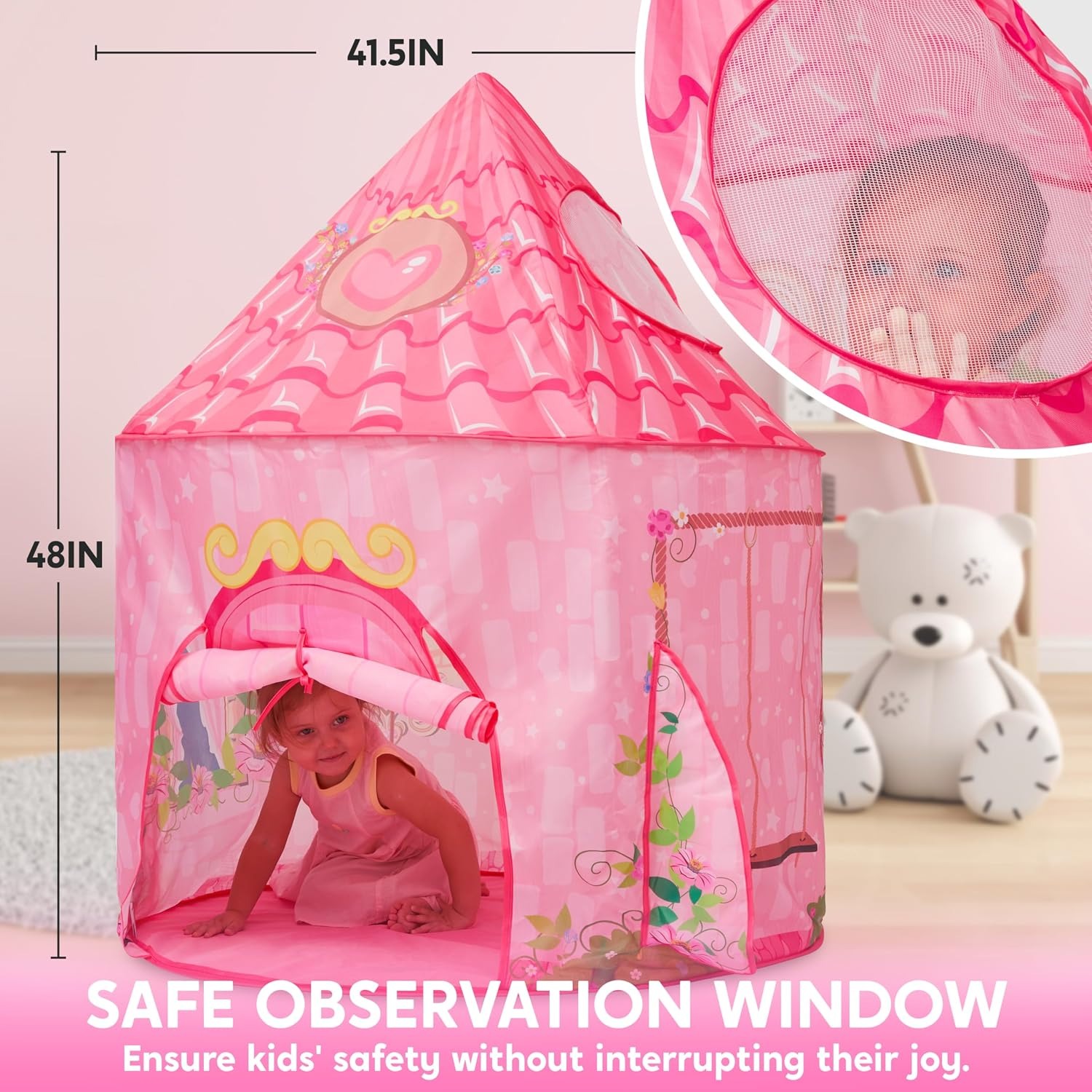
The finished tent measures 105 cm deep by 105 cm wide and 120 cm tall. The maker lists it as size Large, and against other children's play tents that is fair. The 120 cm height is the number that matters most day to day, because it is the difference between a child kneeling comfortably and a child lying flat to fit.
Recommended age is 3 years and up.
How the structure works
Fabric play tents all rely on the same idea. A flexible frame holds tension against the fabric, and anchors stop the whole thing shifting when a child bumps into a wall.
Here the four poles do the lifting. They run through sleeves in the panels and give the tent its square shape and vertical walls. Vertical walls are quietly important. A cone-shaped teepee of the same floor area gives you far less usable room, because the space near the edges is too low to sit in. A square tent with upright sides uses nearly all of its footprint.
Roof anchors hold the top together so the peak keeps its shape. Floor anchors secure the base. On grass they push into the ground and hold the tent firmly. Indoors on carpet or hard floor they still keep the base aligned, though the tent will slide if a child shoves it hard. Putting a rug or play mat underneath both softens the floor and adds grip.
Who it suits
The sweet spot is a child between three and about seven who is deep into pretend play. At that age a castle is a castle, and it will be a shop, a spaceship and a hospital by the end of the month.
It also suits a few less obvious situations. Children who get overwhelmed in busy houses often use a tent as a calm-down spot, and the enclosed walls help more than you would expect. Reluctant readers sometimes read happily inside one with a book light when they would not sit on the couch with the same book. Grandparents who want something for visits like that it folds into a tote and lives in a cupboard between times.
It is less suited to very small rooms where a metre square of floor is already spoken for, and it is not a camping tent. There is no weatherproofing claim here, and it is not built for overnight use.
Choosing between play tents
A few things separate a tent that gets used from one that gets folded away in March.
Size first. Look at height, not just floor area. A tent under about a metre tall becomes a crawl-in box fast, and children lose interest. At 120 cm, this one stays comfortable as a child grows through the early school years.
Then look at what is included. A tent sold without poles, anchors or a storage bag means fiddling about later. The best kids playhouse tent packages arrive ready to assemble, which is exactly what this set does.
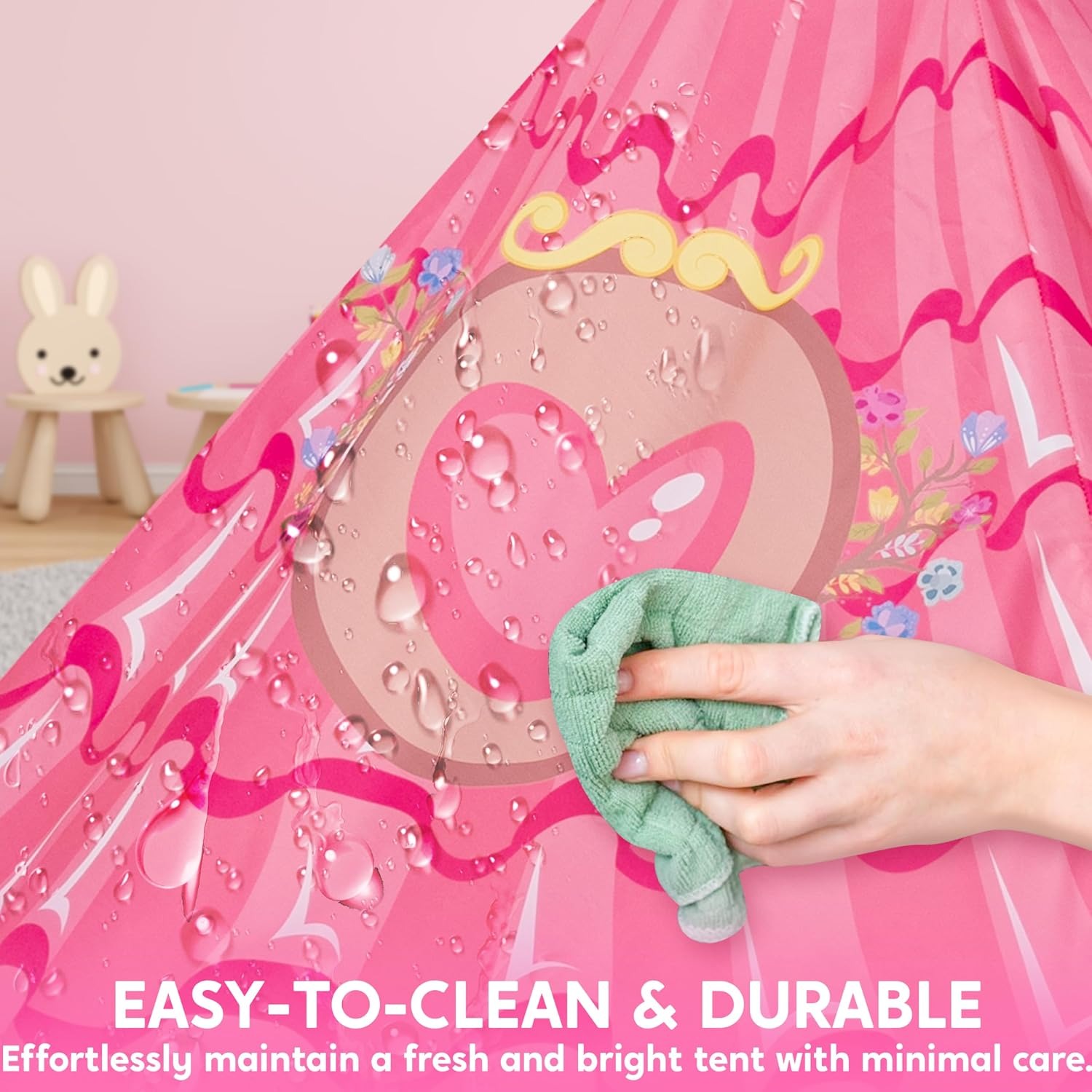
Material matters for cleaning more than anything else. Polyester wipes down, dries fast and tolerates being dragged outside and back. Cotton canvas looks lovely and is heavier to move and slower to dry.
Finally, think about storage honestly. If a tent cannot pack down small, it ends up permanently up, and then it ends up in the way. The carry tote here is doing a real job.
Setting it up well
Pick the corner before you build it. Two walls behind the tent make it feel more enclosed and stop it being knocked from behind. Keep it away from heaters, lamps and power points, and clear of a door swing.
Indoors, lay a rug or foam mat down first. It is more comfortable, it reduces noise, and it stops the base shifting. Outdoors, use the floor anchors properly in soft ground and choose a level spot with some shade.
Then let the child furnish it. A cushion, a small blanket, a basket of books. Resist filling it yourself. The ownership is half the point, and a tent a child has arranged themselves gets used far more than one that arrives styled.
Looking after it
Care is straightforward. Wipe the fabric with a damp cloth and a little mild soap when it needs it, and let it air dry completely. Skip the washing machine and the dryer.
The one rule that matters is dryness before storage. A tent folded away even slightly damp will smell by the time it comes out again. If it has been on wet grass, stand it up indoors overnight first.
Give the poles a quick look each time you build it. Small bends are normal and usually harmless, but a cracked pole should be replaced rather than forced. Teaching children to crawl in rather than lean on the walls does more for the tent's lifespan than anything else.
Moving it around
Because the set packs into its tote, it travels. A park picnic, a beach day with shade, a week at a holiday house, a cousin's birthday. One adult can carry it with a bag of other things.
If you are taking it to a hard surface where the floor anchors will not bite, plan to use it somewhere sheltered from wind. A light fabric tent with nothing pinning the base will move in a breeze.
The short version
This is a complete, roomy castle-themed play tent in pink polyester, 105 x 105 x 120 cm, for ages three and up. It needs a short assembly rather than popping up on its own, and everything required comes in the box including a carry tote.
If you have a free corner about a metre square with clear headroom, and a child who likes building worlds, it earns its spot. It wipes clean, folds away, and it moves house or holiday without a fuss.