
The complete guide
How to Choose a Kids Teepee Tent That Actually Gets Used
The problem with "somewhere of their own"
Children ask for a space that belongs to them long before they can explain why. It shows up as the blanket pulled over two dining chairs, the gap behind the sofa, the cupboard they keep disappearing into. Adults usually read this as a game. It is partly that, but it is also a child testing out the idea of having a boundary they control.
Most homes cannot supply a spare room on demand. What they can supply is about a metre and a bit of floor in a corner. That is the whole case for a teepee. It converts floor space you already have into a room-within-a-room, and it does it without builders, brackets or a permanent commitment.
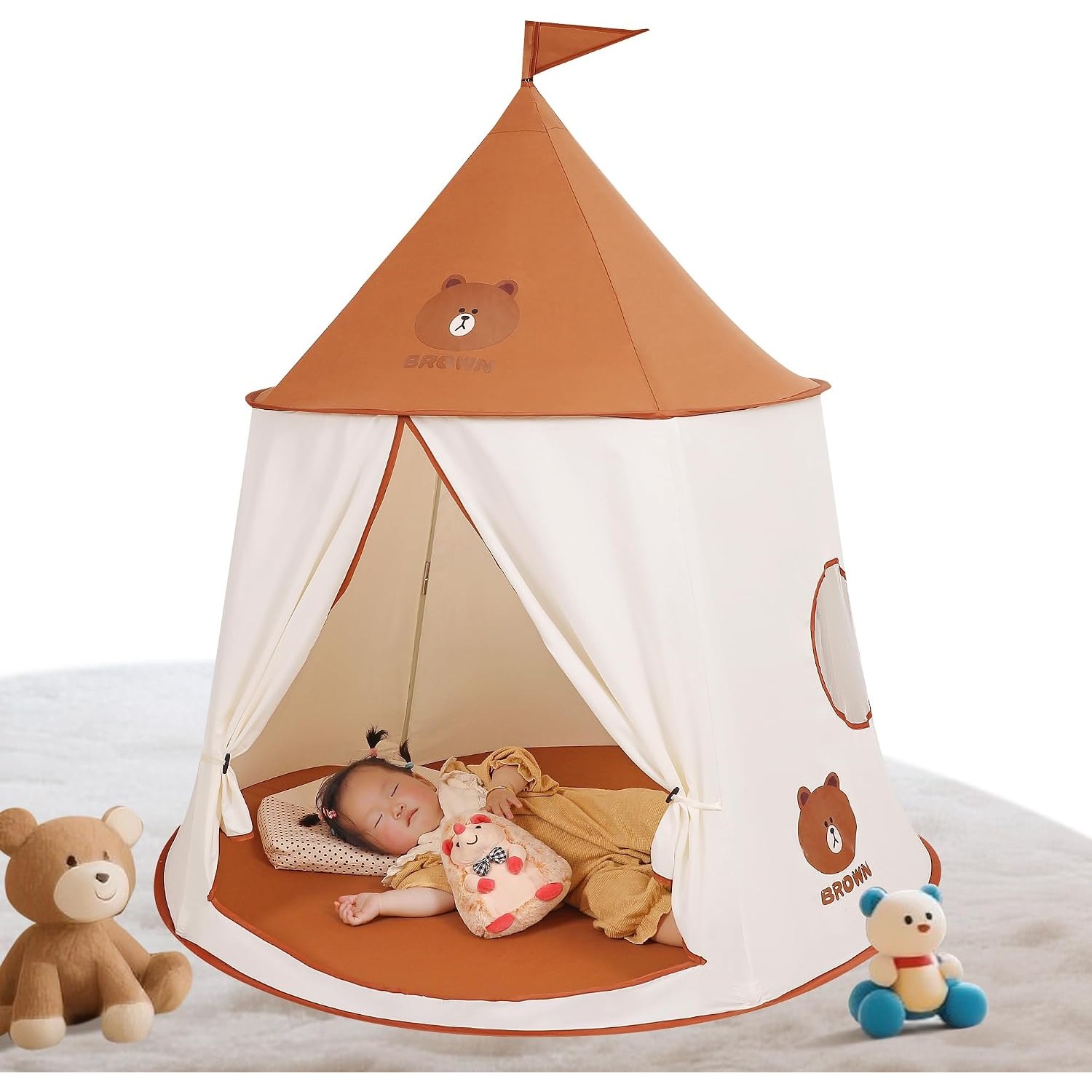
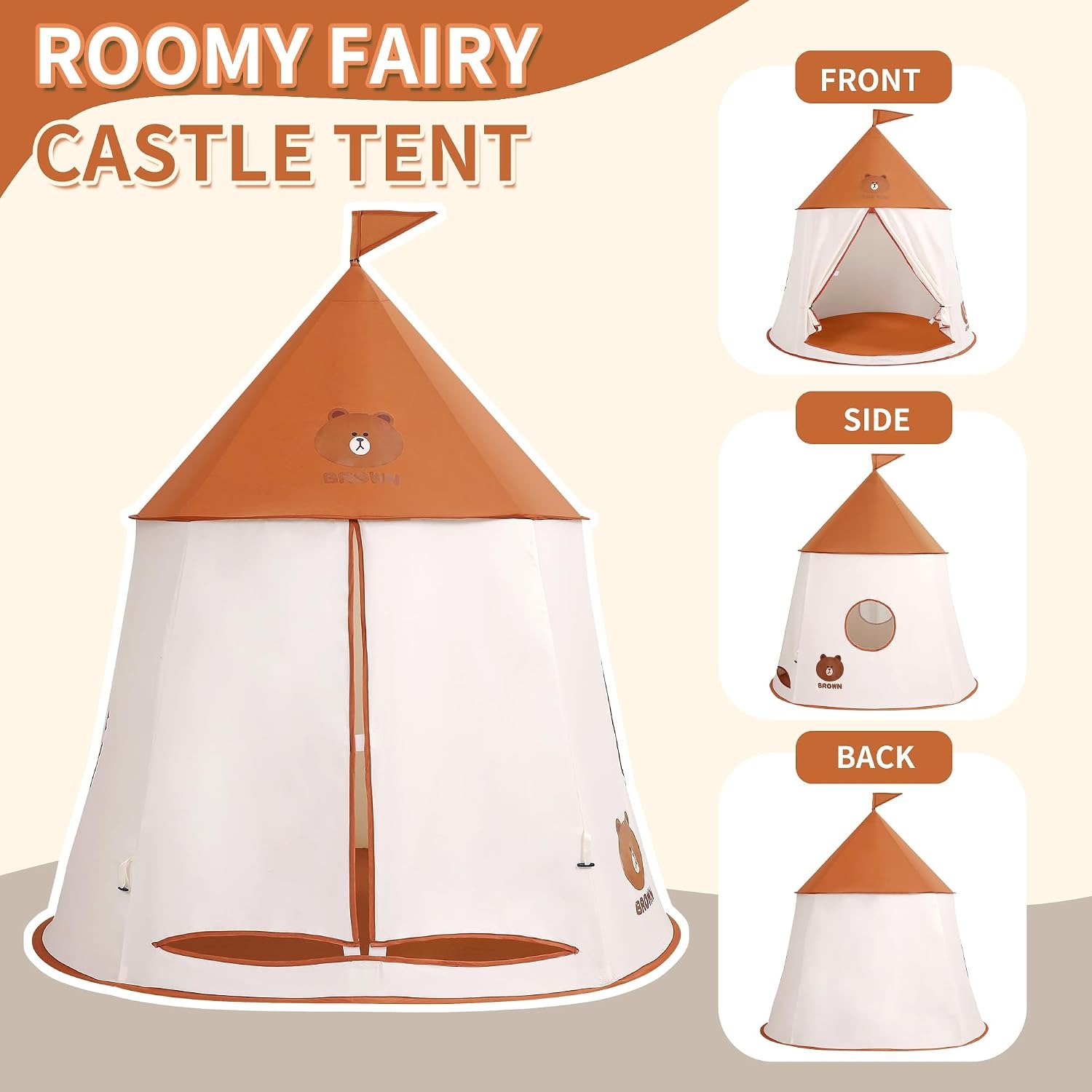
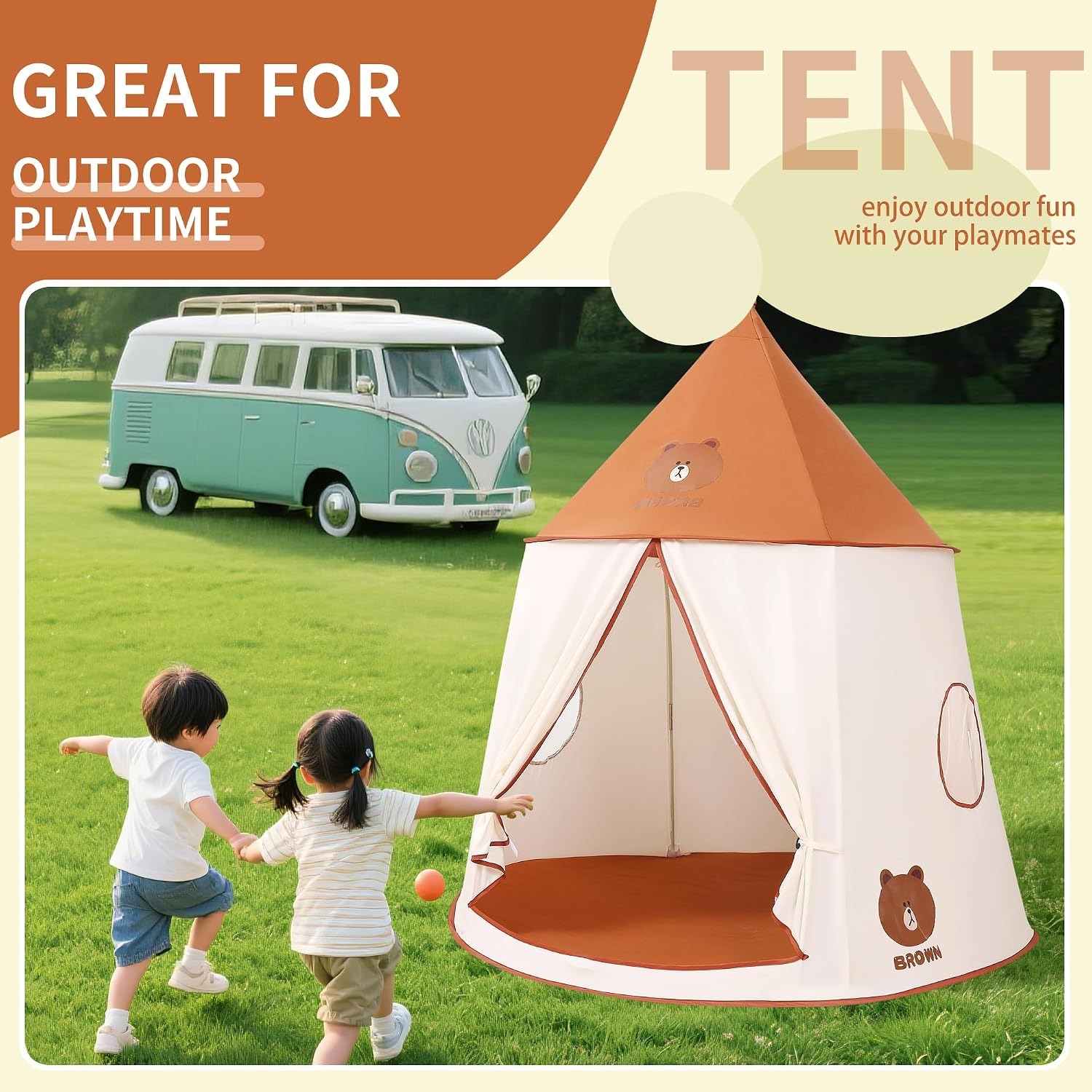
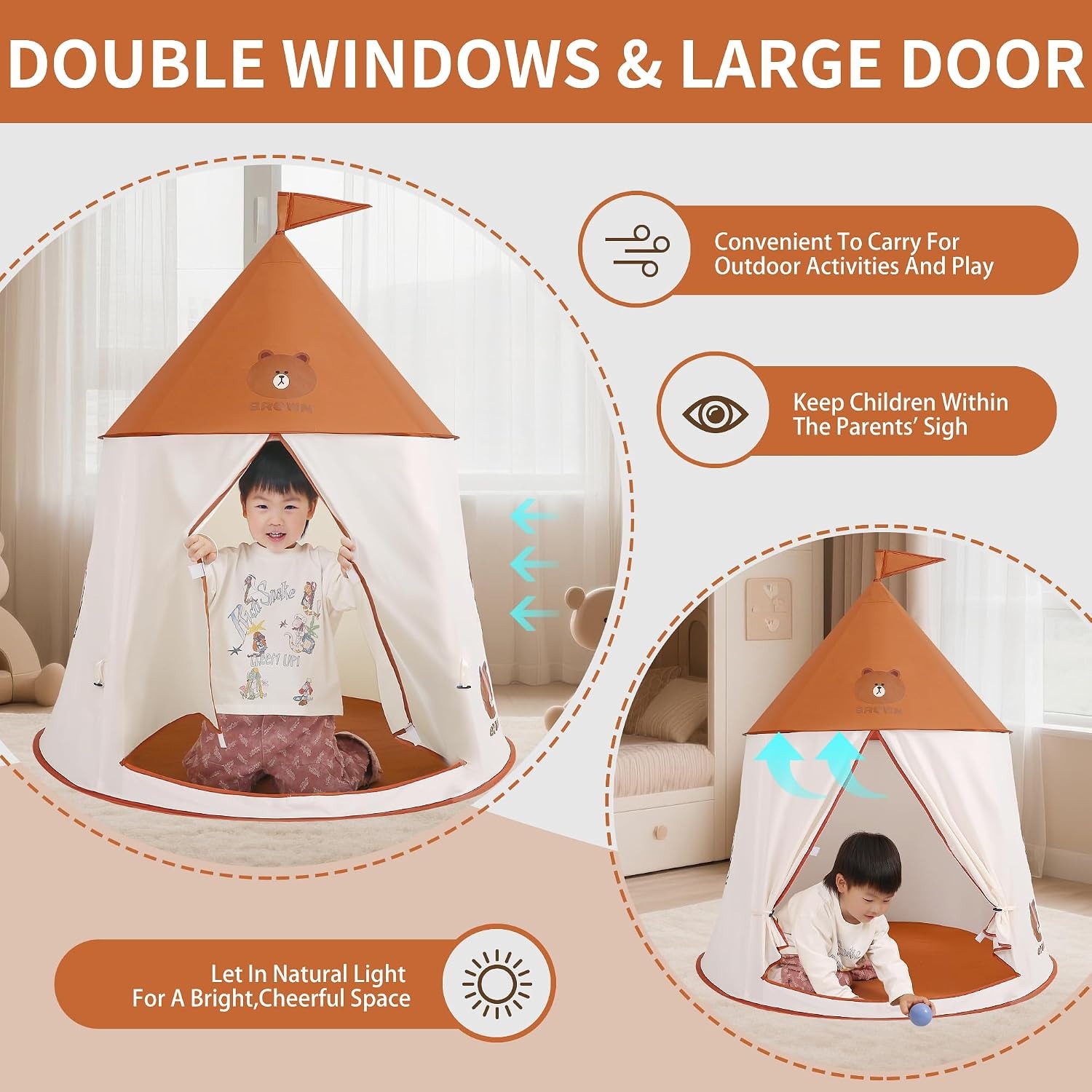
The bear teepee play tent is a straightforward version of that idea. Cotton cover, four rods, 116 cm square at the base, 123 cm to the peak. It does not do anything clever. It just stands up, stays up and gives a child somewhere to be.
How a teepee actually works
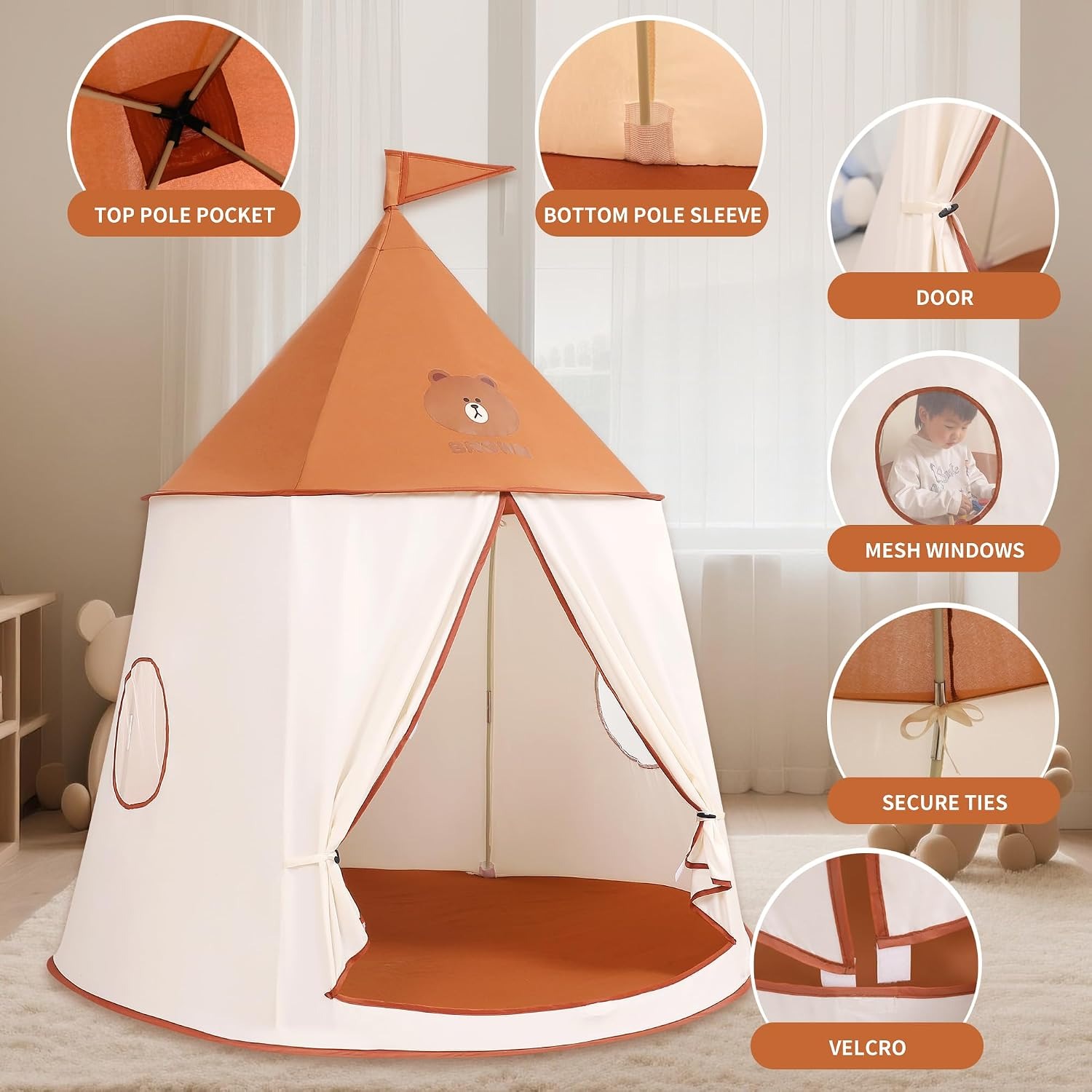
The structure is simple enough that it is worth understanding before you buy. Four rods join together and lean inward so their tops cross. That crossing point is what holds the shape. The fabric cover slips over the frame and the tension between the cover and the splayed rods is what keeps everything standing.
Because the load spreads across four points on a wide base, the structure is reasonably stable on a flat floor. It is not bolted to anything, so a determined child can still bring it down by swinging on it. That is true of every teepee on the market, regardless of price.
Setup takes a couple of minutes once you have done it once. The four rods go together, the cone goes up, the cover drops on. There are no tools, no screws and nothing to lose under the sofa. Taking it down is the same process backwards, and the packed tent weighs 1 kg, which is light enough to carry in one hand.
Who it suits
The manufacturer recommends ages 3 and up. That is a sensible floor. Children around three to eight get the most from a teepee because they are deep into imaginative play and they understand the difference between inside the tent and outside it.
Older children still use them, usually for reading or for hiding from siblings. Younger children will enjoy crawling in and out, but they need an adult nearby, and the age guidance exists because a fabric structure is not a cot.
The base size matters here. At 116 cm across, this is not a one-child-only tent. Three or four can sit in it, which changes what it gets used for. Siblings negotiate space inside it. Friends come over and the tent becomes the destination. If you have more than one child, a wider base is worth paying attention to.
Parents with a child who gets overwhelmed often find a teepee useful for a different reason. A small enclosed space with soft sides is a reliable place to decompress. No one is claiming it is therapy. It is just a quiet spot with a door, and sometimes that is enough.
What to look at when choosing
Footprint before anything else. Measure the corner you have in mind. A 116 cm square sounds small until it is sitting in a bedroom that also contains a bed and a chest of drawers. Lay out newspaper or masking tape in that shape and live with it for a day.
Height at the peak. 123 cm means a child stands comfortably inside and an adult sits. Shorter teepees look fine in photographs and feel cramped in person. Peak height is the number that decides whether a parent can join in for a bedtime story.
Fabric. Cotton breathes and feels pleasant to sit against, which matters when a child is in there for an hour. Thin synthetic covers tend to feel colder and show creases more. This one is listed as cotton.
Setup and breakdown. If putting the tent up is a chore, it will live in the garage. Tool-free assembly in a couple of minutes is the difference between a tent that gets used and a tent that gets regretted. The carry bag included here matters more than it sounds, because a tent that folds into a bag can be packed away each evening without a fight.
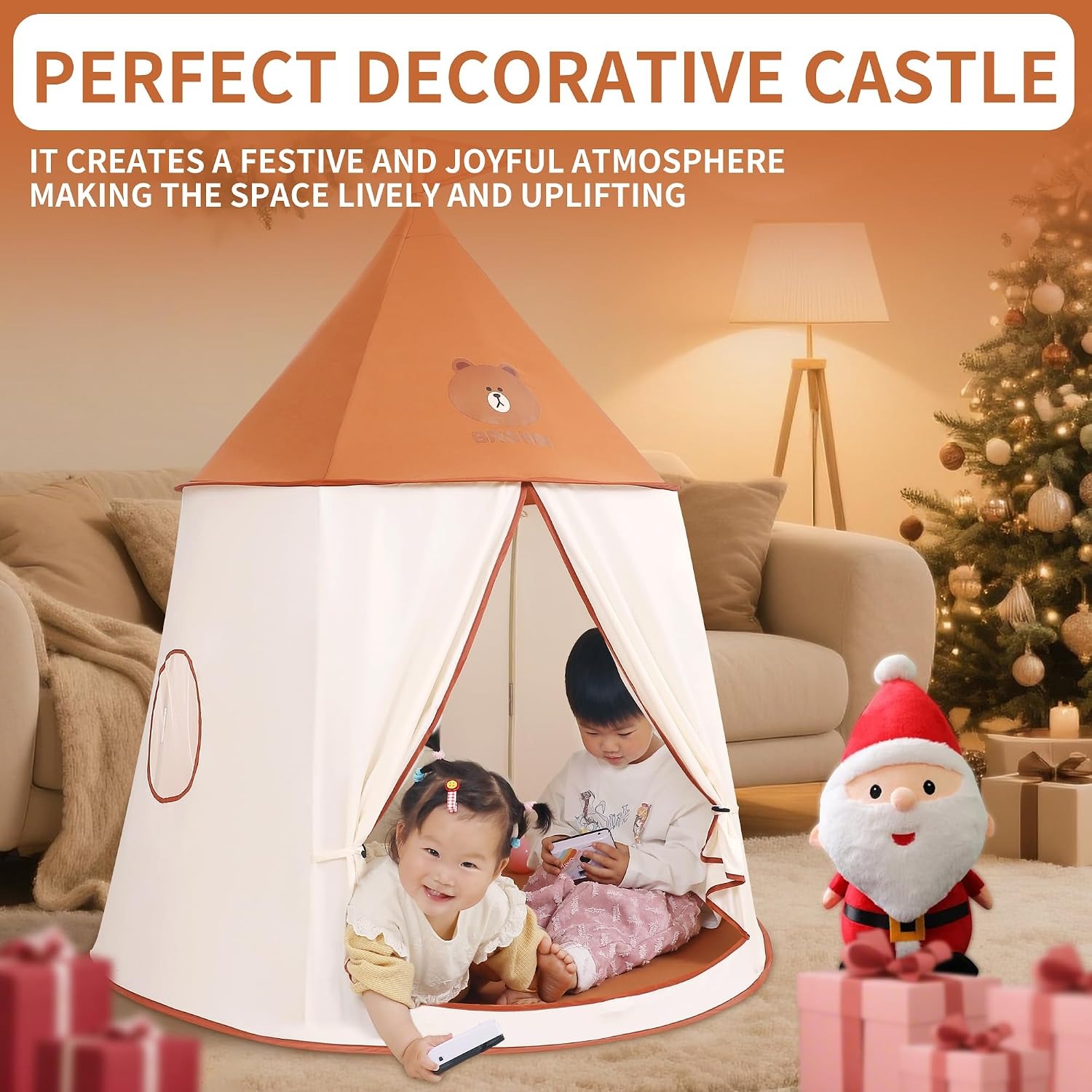
Design restraint. Bright cartoon prints date fast and clash with the rest of a room. The brown bear design on this one is quiet enough to sit in a nursery, a shared bedroom or a corner of the lounge without taking over. If you are after a best bedroom play tent rather than a playroom centrepiece, understated wins.
Setting it up well
Pick a flat surface. Carpet is kinder than floorboards both for stability and for small knees. Keep it clear of stairs, radiators, heaters and anything with a cord.
Make the inside worth staying in. A folded quilt or a small rug on the floor, one or two cushions, a soft toy and a few books is the standard formula and it works. Resist the urge to fill it. Half the appeal is that it is a space the child arranges themselves.
If you want lighting, use battery-powered string lights draped over the outside. Nothing that warms up should touch the fabric, and mains cables running into a play tent are a trip hazard at best.
Give it a home. A teepee that lives in the same corner becomes part of the room and gets used daily. A teepee that is set up for special occasions becomes a thing you have to think about, and thinking about it is how it ends up in the loft.
Keeping it in good shape
Cotton handles play well but it does mark. Spot clean with a damp cloth and a little mild soap, working the mark gently rather than scrubbing. Let the fabric air dry completely before you put the cover back on the frame, because folding damp cotton away leads to musty smells and stains.
Skip the tumble dryer and keep the cover away from direct heat. The maker does not give machine washing instructions, so spot cleaning is the safe route.
The rods need almost nothing. Wipe them dry and check the joints every few months for looseness. Store the whole thing in its carry bag somewhere dry. A cupboard is fine. An unheated shed over winter is not, because damp is the main enemy of fabric that spends time folded.
Taking it places
At 1 kg packed into its own bag, this travels better than most children's furniture. It goes in a car boot for a weekend at the grandparents, out to the garden on a dry afternoon, into a holiday rental where the kids need somewhere familiar.
That last one is underrated. A child in an unfamiliar bedroom often settles faster when something from home is in the room with them. A tent they recognise does that job well.
For outdoor use, keep it sensible. This is a play tent, not camping gear. No waterproofing, no groundsheet. Dry grass or a patio on a still day, then bring it in before evening.
The short version
A teepee earns its place by being easy. Easy to put up, easy to take down, easy to look at in a room you spend time in. This one covers all three. Four rods, a cotton cover, 116 cm of floor and 123 cm of headroom, packed into a 1 kg bundle with a carry bag.
Measure your corner, check you have the space, and expect it to be standing within a few minutes of the box being opened. After that, what happens inside is not really your business any more, which is rather the point.