
The complete guide
Choosing a Kids Play Tent That Actually Gets Used
The problem with most play tents
Plenty of kids' tents get opened on a birthday, used hard for a fortnight, then shoved behind a door because they are awkward, stuffy or too small to be worth the floor space. The tent itself is rarely the problem. The mismatch is usually between what the tent was designed for and how a family actually lives.
Think about where it will sit. Most homes do not have a spare room waiting for a permanent fort. The tent goes in the lounge, the bedroom corner or the back deck, and it has to earn its spot every single day. That means three things matter more than the printed picture on the outside. Can two kids fit in it without arguing? Does it get hot and stale after ten minutes? Can one adult pack it down in under a minute when guests are coming?
The Ocean Dome Play Tent was built around those questions, and the answers show up in the shape, the mesh and the folding system.
Why the hexagonal shape matters
A classic pointed tent wastes space. The walls lean in from the floor up, so by the time a child is sitting upright their shoulders are already hitting fabric. The usable area ends up much smaller than the footprint you gave it.
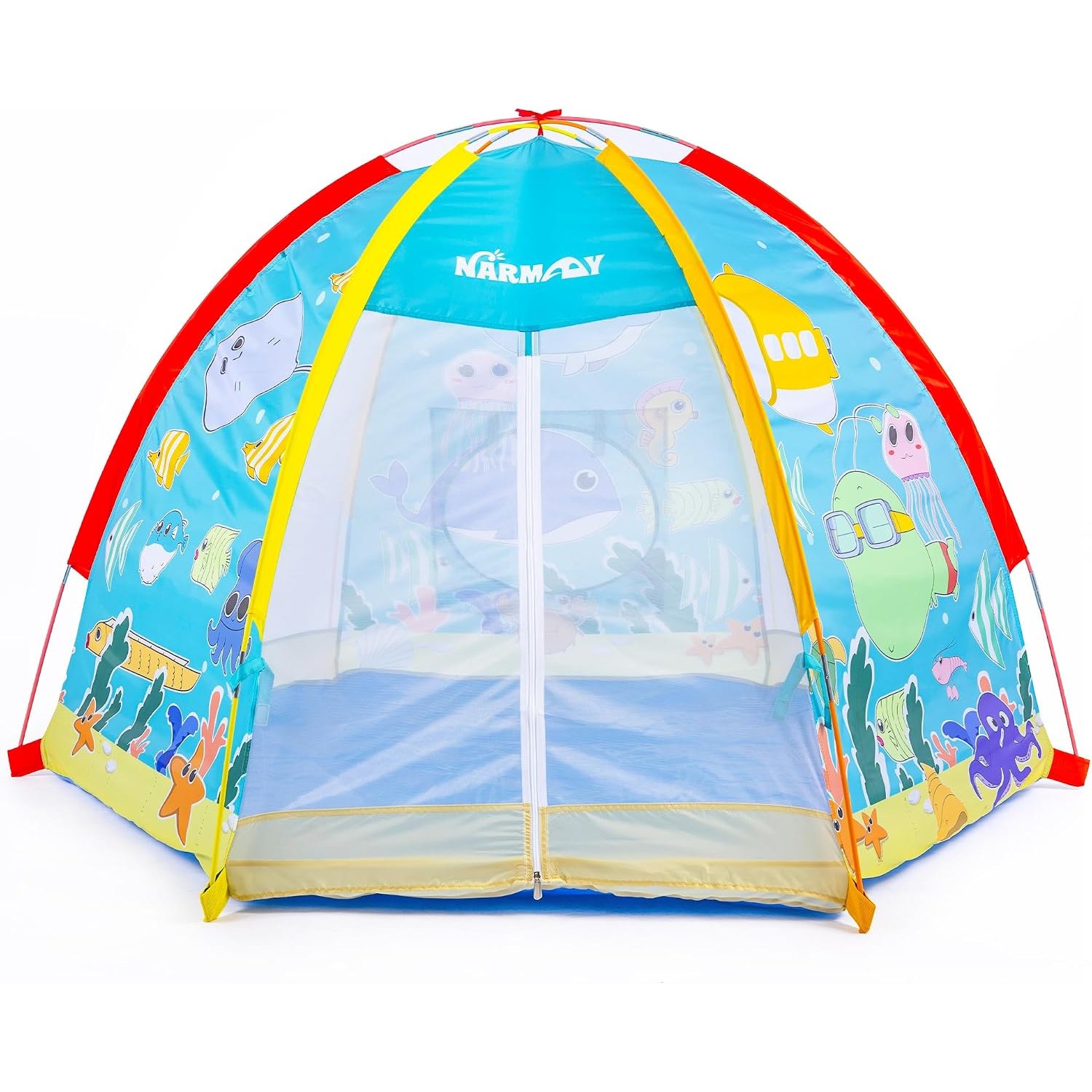
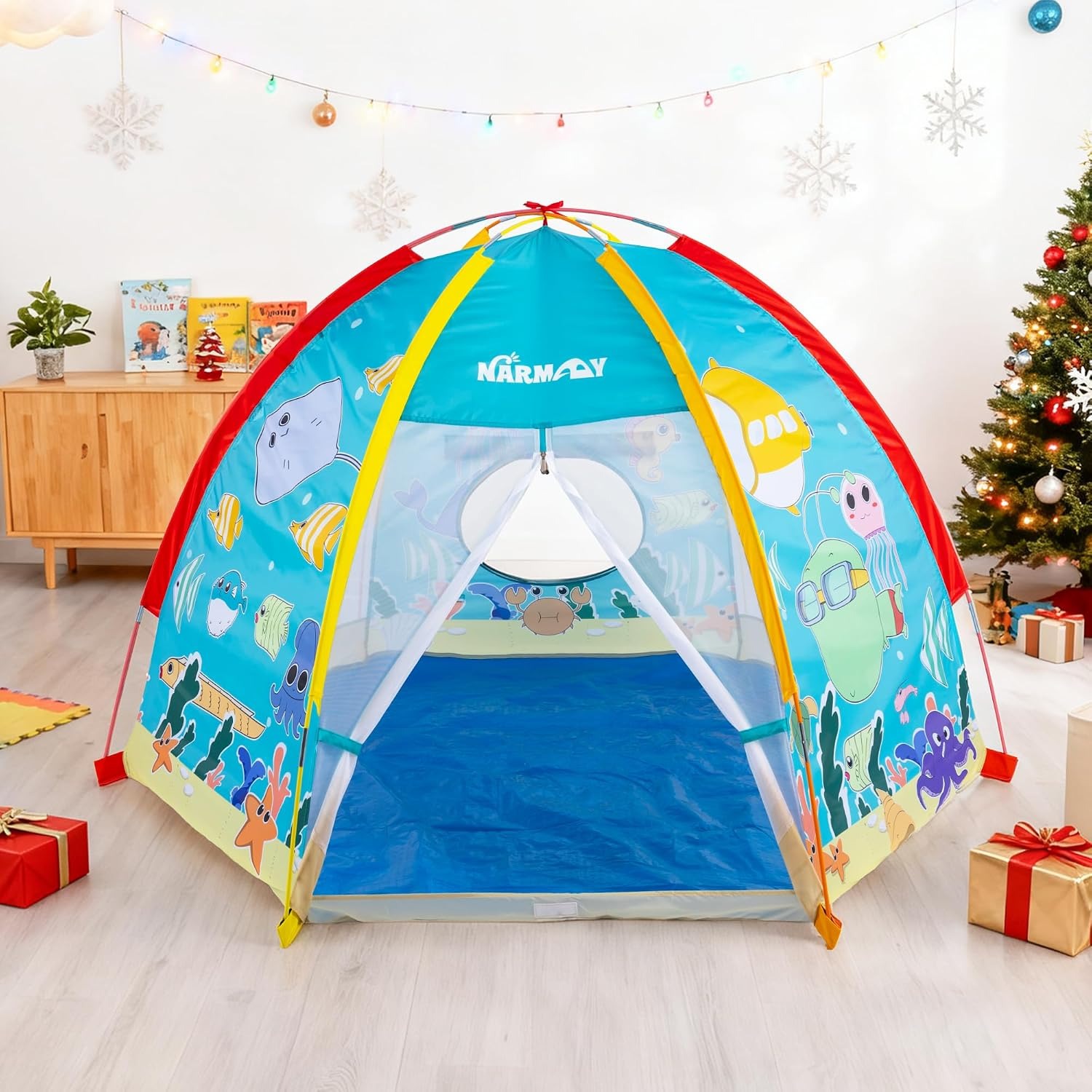
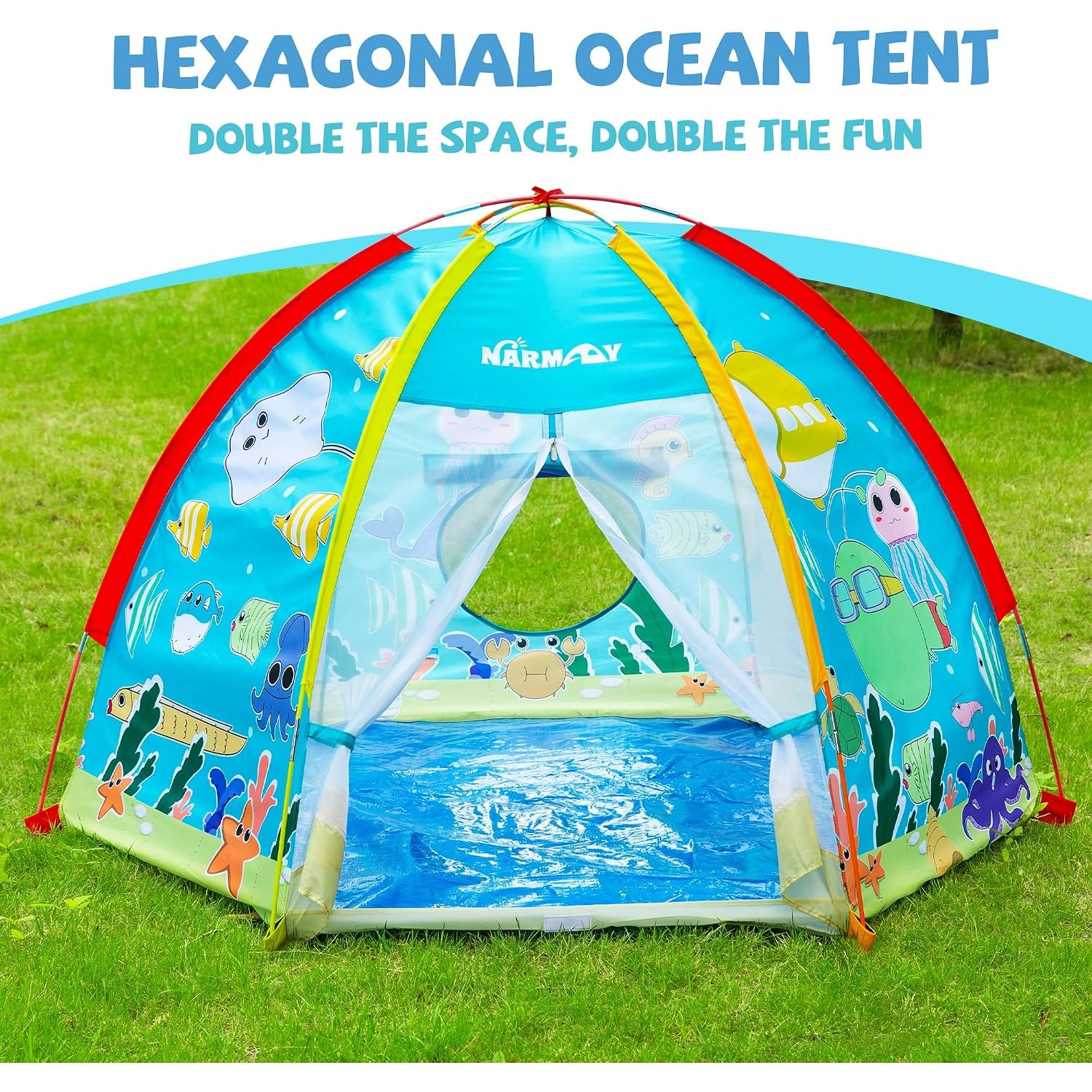
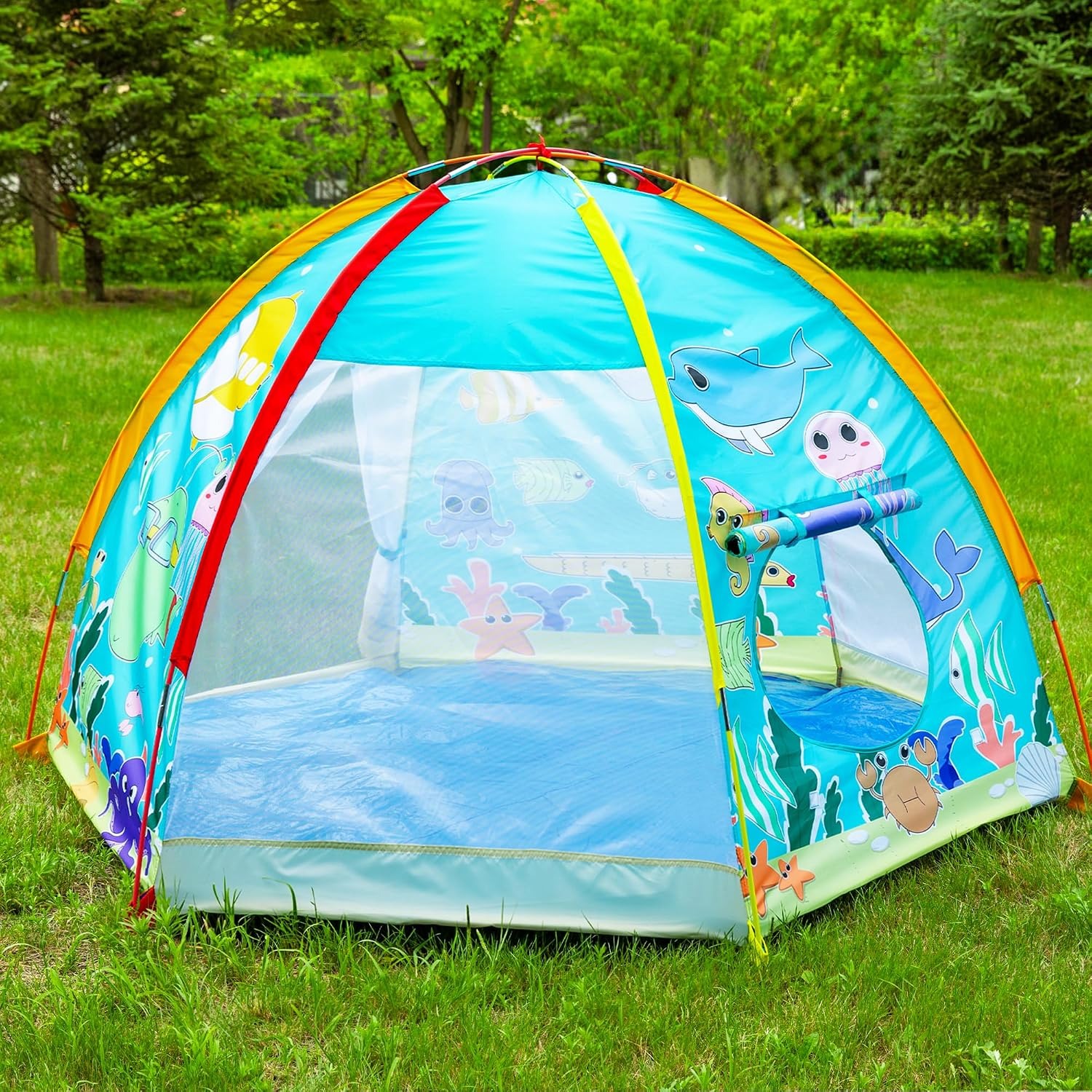
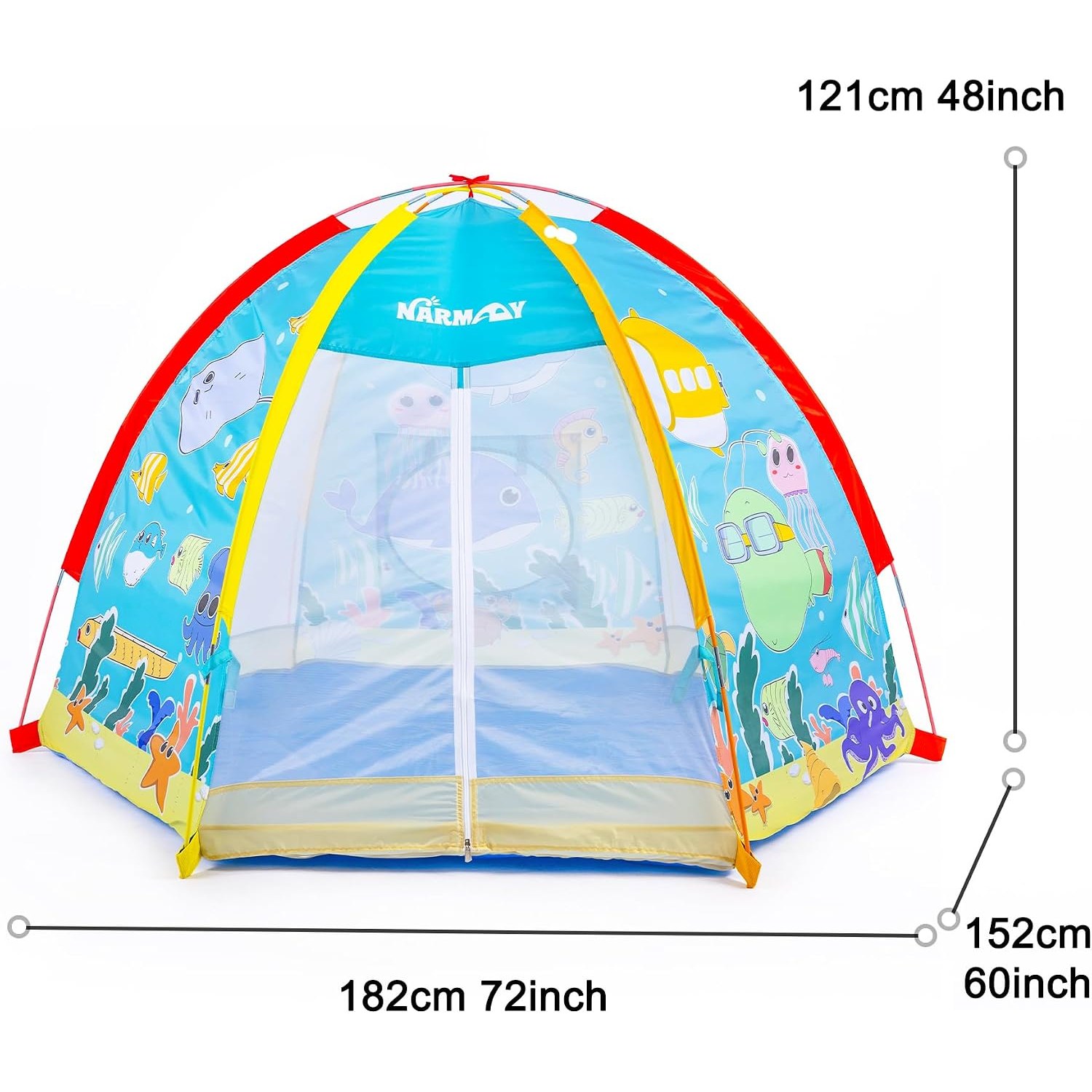
A hexagonal dome holds its width much closer to the walls. At about 183 cm deep and 152 cm wide, with a ceiling just over 107 cm, this one gives children a flat floor they can genuinely spread out on. Two kids with cushions and a pile of toys fit without anyone's feet in anyone's face. Three works for shorter stretches. An adult can duck in and sit cross-legged to read a story, which turns out to be the thing parents value most once they have one in the house.
That extra interior room also changes what the tent gets used for. A cramped tent is a hiding spot. A roomy one becomes a play base, a reading nook, a place to build with blocks, a quiet corner at the end of a loud day.
Airflow is the detail nobody thinks about
Here is where a lot of cheap play tents fall down. Solid fabric on all four sides looks cosy in the photo and turns into a warm, stale box within minutes. Kids come out red-faced and the tent gets blamed.
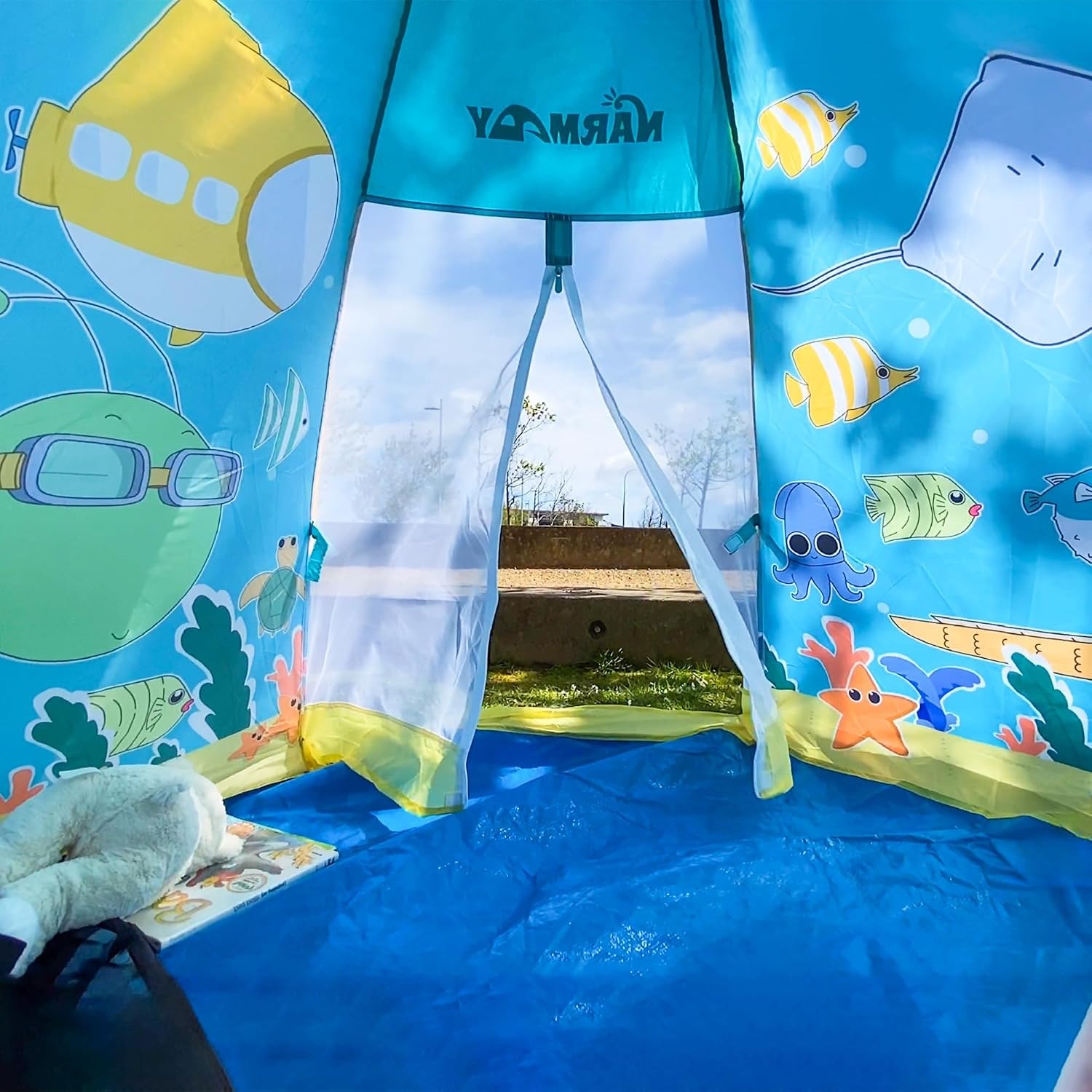
Three of the six sides on this tent use mesh fabric instead of solid panels. Air moves straight through, light comes in, and the inside stays close to room temperature. You can also look in from across the room and check on a young child without unzipping anything.
The same mesh does a second job outdoors. Fine weave keeps mosquitoes and flies out while the breeze comes in, which matters on a summer evening in the garden. The zip door at the front opens the whole entrance when you want easy access, and closes when a child wants their own space. Most preschoolers manage the zip themselves within a day or two, which is a small independence win worth having.
The floor is doing more than you think
Spills happen. Juice, water from a paintbrush, a yoghurt pouch that lost an argument. Without a lined floor, all of that goes straight through into carpet or between floorboards.
The waterproof lining under this tent's floor stops that. It is not a thick camping groundsheet, so on tiles or timber you will want a rug or foam mat underneath for comfort, but it does the protective job well. Outdoors the same lining keeps morning dew and damp grass away from your child's clothes, which is the difference between twenty minutes of play and an immediate change of outfit.
The shell itself is polyester taffeta, chosen because it resists the small rips and snags that come with children who treat walls as doors. It will not survive a cat sharpening claws on the mesh, so that is worth managing, but normal rough play is well within what it handles.
Setting it up and packing it down
Three PE-coated fibreglass poles run on internal shock cord. That means the sections pull themselves together as you unfold them, so there is no hunting through a bag for the right piece. Slide them through their channels, flex the dome upright, and you are done. First time might take five minutes while you work out which pole goes where. After that it is a couple of minutes at most.
Packing down matters just as much. A tent that takes a wrestling match to repack stays up permanently or ends up in the bin. This one folds flat and slides back into the carry bag, and at 1.18 kg the whole package is light enough for a child to drag to the car themselves. That is the quality that makes a foldable kids tent survive long term in a house without a playroom.
A quick note on storage. Always let it dry completely before folding. A damp tent in a bag turns musty fast, and the smell is hard to remove once it sets in. Store it out of direct sun so the printed artwork stays bright.
Who it suits
The suggested age range is three to eight years, and that lines up with how children use it. Three and four year olds love the enclosed, den-like feel. Five and six year olds build elaborate games around the ocean theme, inventing stories about the marine animal characters on the panels. Seven and eight year olds tend to use it as a reading spot or a place to escape a sibling for half an hour.
Younger children can use it with an adult nearby. The poles should always be handled by a grown-up, during both setup and takedown.
It also suits families who move things around a lot. Renters, small apartments, grandparents who want something for visits, holiday houses. Anywhere a permanent playhouse is not realistic but a play corner is still wanted.
How to choose between play tents
A few questions sort the field quickly.
How much clear floor can you give it? Measure before buying. This one needs roughly 183 by 152 cm with the door opening into free space.
Will it live indoors, outdoors, or both? If both, a waterproof floor and mesh ventilation stop being nice extras and become essential.
Who is packing it away? If that is you, every night, pick the design that folds simply. Shock-corded poles are generally friendlier than a sprung frame that needs a specific twist.
How many children? If siblings or playdates are part of the picture, the hexagonal footprint buys you real room that a narrow A-frame does not.
Does the theme have staying power? Ocean and marine animals age well. A specific cartoon character often does not last past the next favourite show.
Looking after it
Care is simple. Wipe marks with a damp cloth and a little mild soap, then air dry fully. Skip the washing machine, the dryer, bleach and the iron, all of which can damage coated fabric and printed panels. Deal with spills while they are fresh and most of them lift without a trace.
Check the poles before each setup. You are looking for cracks in the coating or splintering at the joins. A damaged fibreglass pole should be retired rather than patched. Keep the poles bundled together when stored so they do not take a bend.
The short version
The Ocean Dome Play Tent gets the basics right. A hexagonal shape that gives children real floor space instead of sloping walls. Mesh on three sides so it stays cool and insect-free. A waterproof floor that protects your carpet and your child's clothes. Shock-corded fibreglass poles and a carry bag so it disappears when playtime is over.
At about 183 x 152 x 107 cm and 1.18 kg, it is big enough to matter and light enough to move. For kids aged three to eight who want somewhere of their own, that combination is hard to beat.