

The complete guide
Choosing a Kids Play Tent That Actually Gets Used
The problem with most toys in the room
Walk into any family home and you will find the same thing. A pile of toys that cost a lot, got played with hard for two weeks, and now live in a crate. Meanwhile the cardboard box the big one came in is still standing in the corner, because somebody turned it into a house and nobody is allowed to throw it out.
That tells you something. Children do not just want objects. They want a place. A spot with edges they can see, a roof over their head, and a door they control. A kids playhouse tent gives them that in a form that does not collapse after a week and does not look like rubbish in your lounge room.
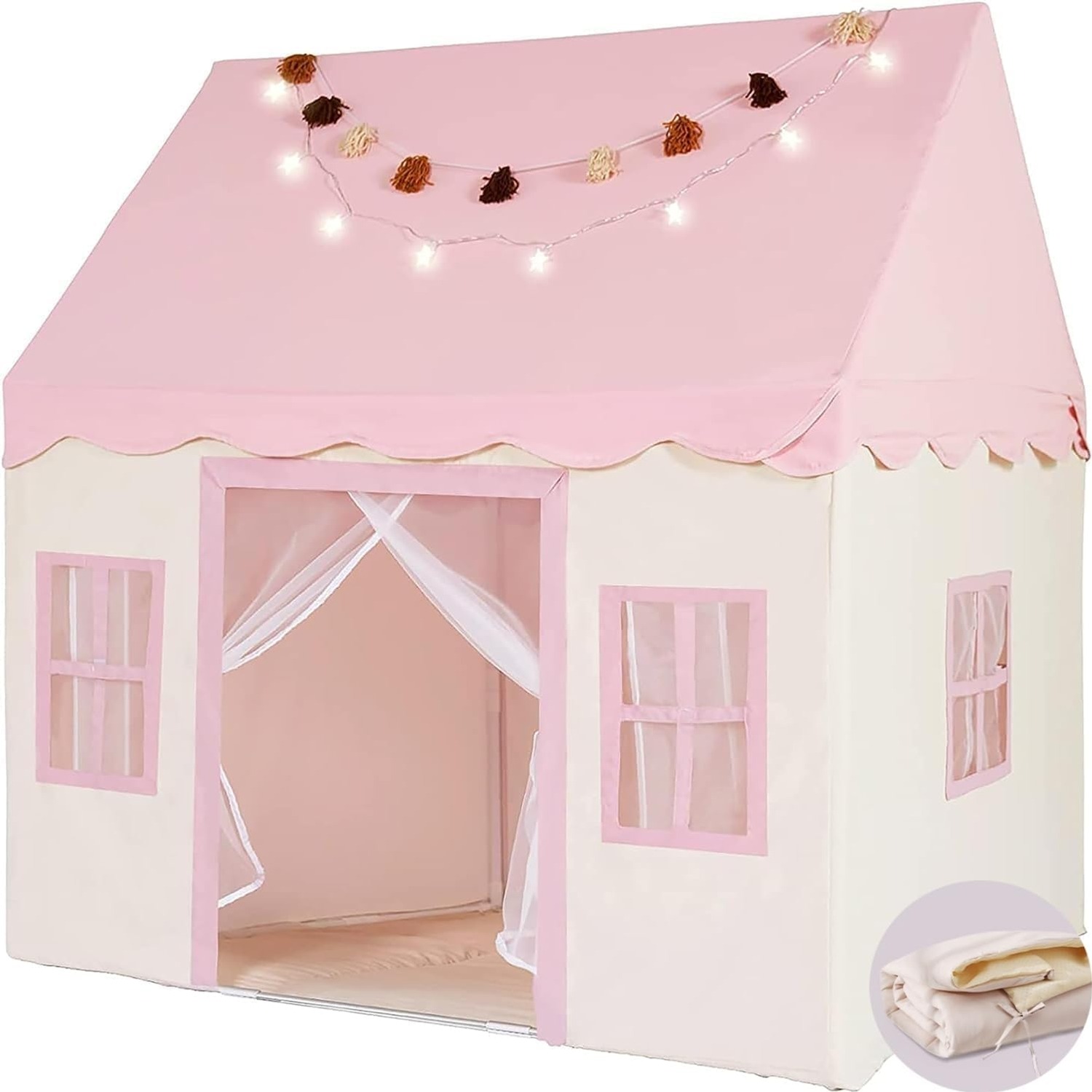
This one takes the idea seriously. It is a castle-themed play tent, 102 cm deep by 120 cm wide by 132 cm tall, with fabric walls, window openings, star lights and a padded mat included. It is pink, it is built on a pine wood frame with steel and fabric construction, and it is recommended for ages three and up.
Why the included mat matters more than you think
Lots of play tents are sold as a frame and a cover. You put it up, your child crawls in, and within about four minutes they are asking for a blanket because the floorboards are cold or the carpet is scratchy.
Then you go hunting for a rug that is the right shape. Nothing is the right shape. You end up folding a bath towel in half.
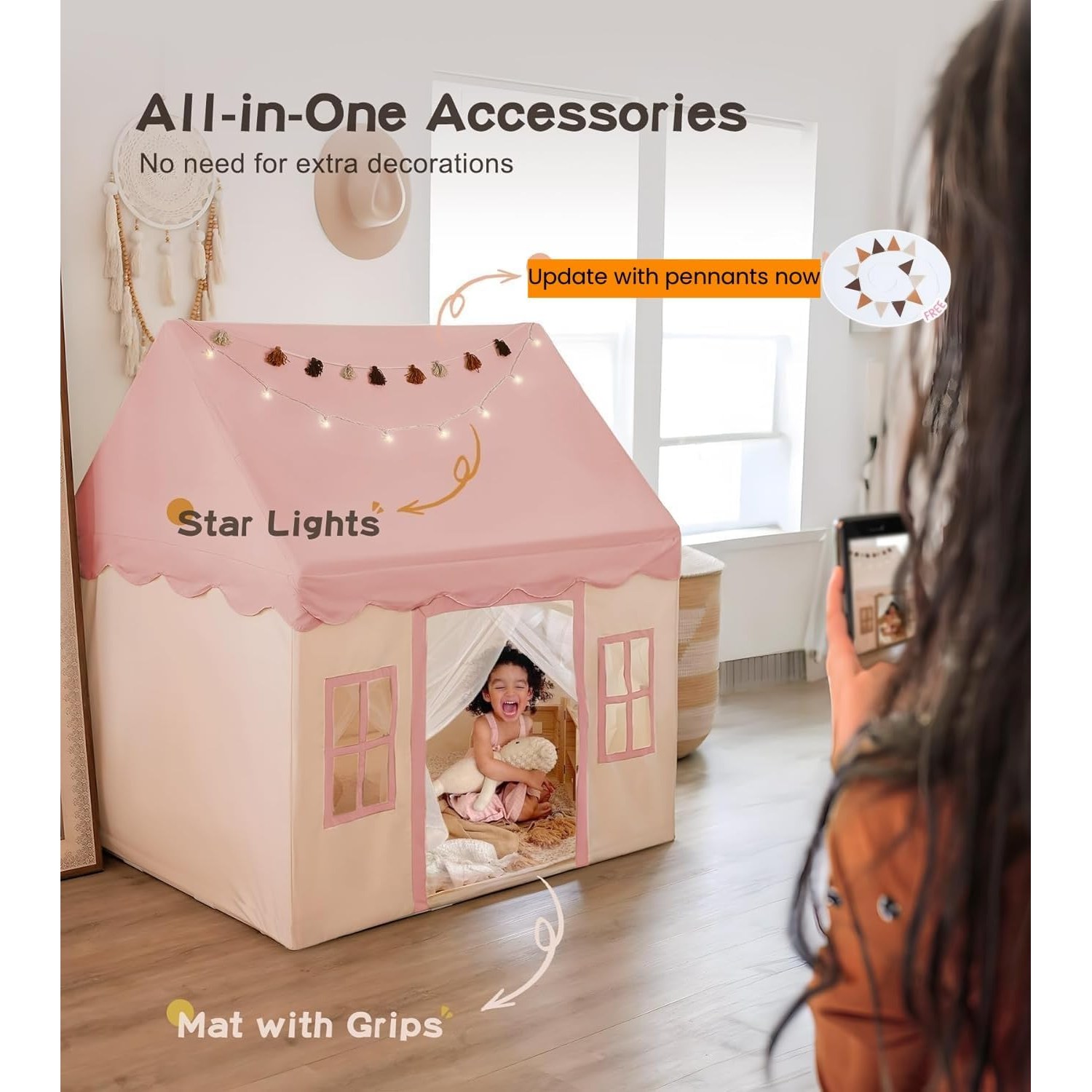
Having a padded mat in the box skips all of that. The base is soft from the first day, the tent looks complete rather than improvised, and children settle in faster because the floor is actually comfortable. If you have ever watched a child fidget their way out of a play space because the ground was hard, you know how much difference this makes.
The mat also protects your flooring a little. Not from everything, but from the general scuffing that comes with four children shuffling around in one spot.
How the design works
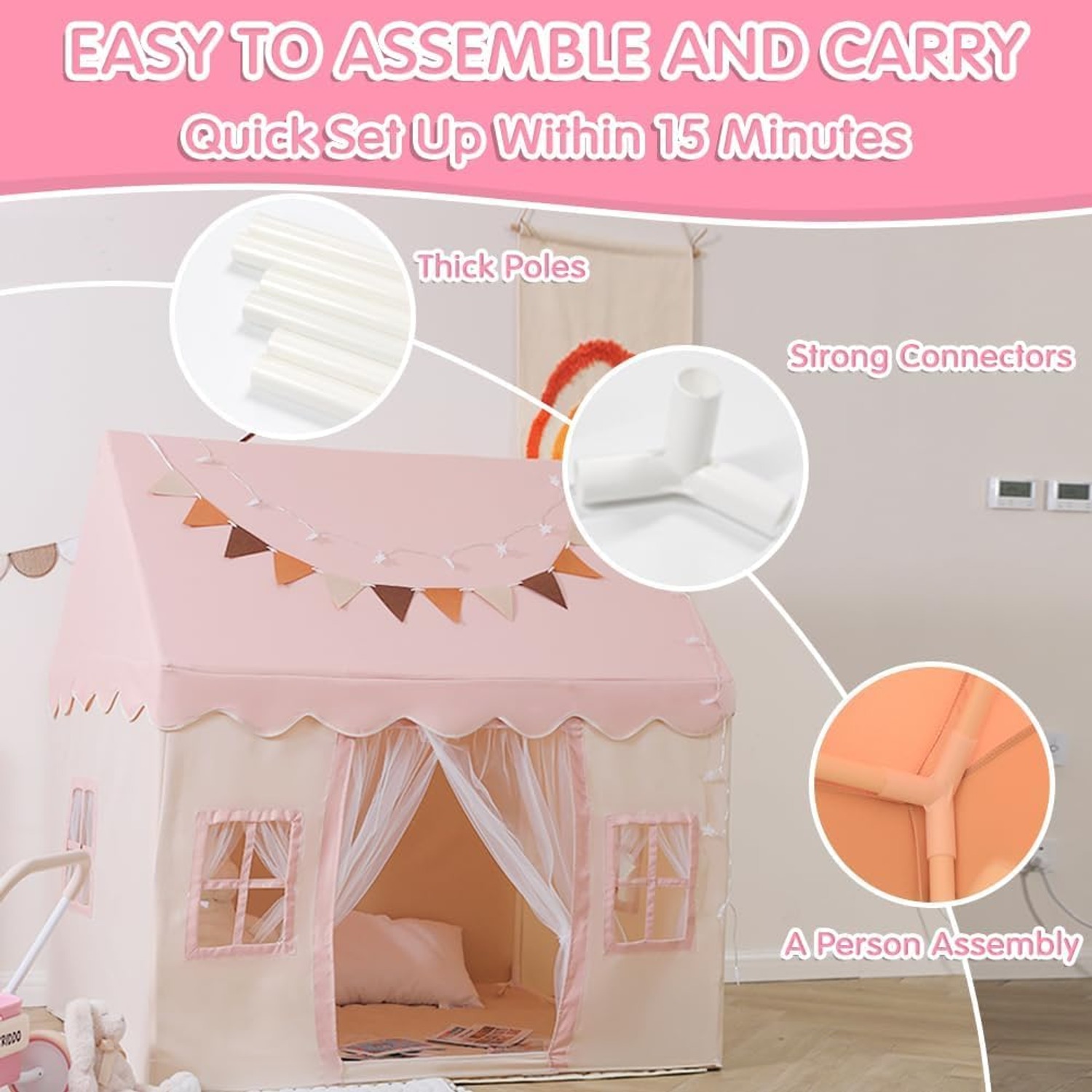
The frame is the part that decides whether a tent is a one-season toy or something that lasts. Pop-up tents with flexible wire hoops are cheap and they fold down small, but they wobble, they twist out of shape, and the wire eventually kinks. A structured frame holds its form.
Here the frame material is listed as pine wood, with the overall build given as steel and fabric. That means the tent stands up on its own, keeps its shape when a child leans on the inside wall, and does not need to be propped against anything.
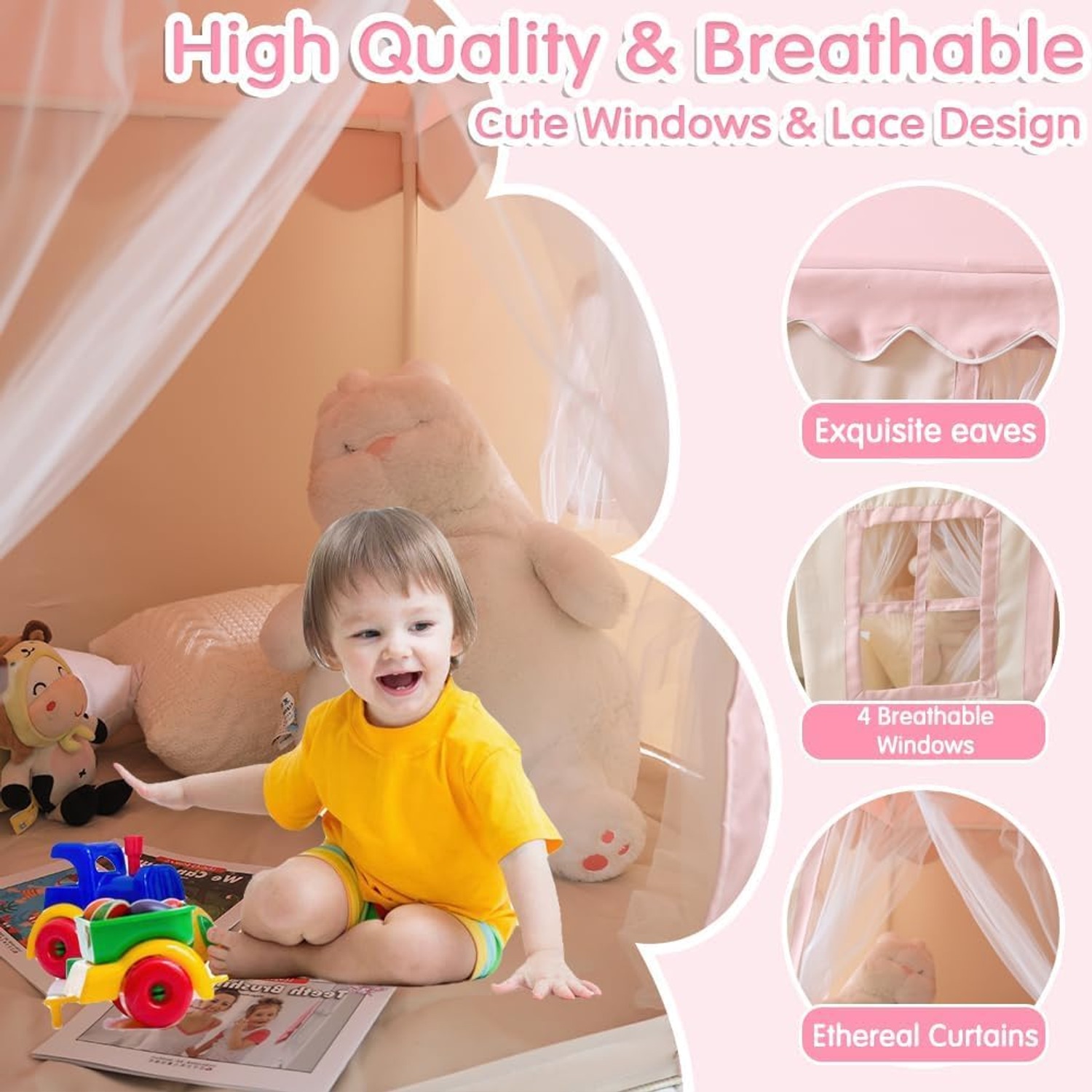
The fabric cover slides over that frame. Windows are built in, which does two useful jobs. It stops the inside getting stuffy and dark, and it lets you look in without crouching down and opening the door flap. Children also love a window for its own sake. Half the play that happens in these things involves someone shouting out of a window at someone else.
The star lights are the last piece. A lit interior changes the mood of the whole thing. Instead of a dim fabric box, you get a soft glow that children want to sit in. This is the feature most often responsible for a tent turning into the quiet-time spot in a house.
Who it suits
The manufacturer recommends ages three and up. That is a sensible floor. By three, most children have the imaginative play to make something of a space like this, and they are steady enough on their feet to get in and out without trouble.
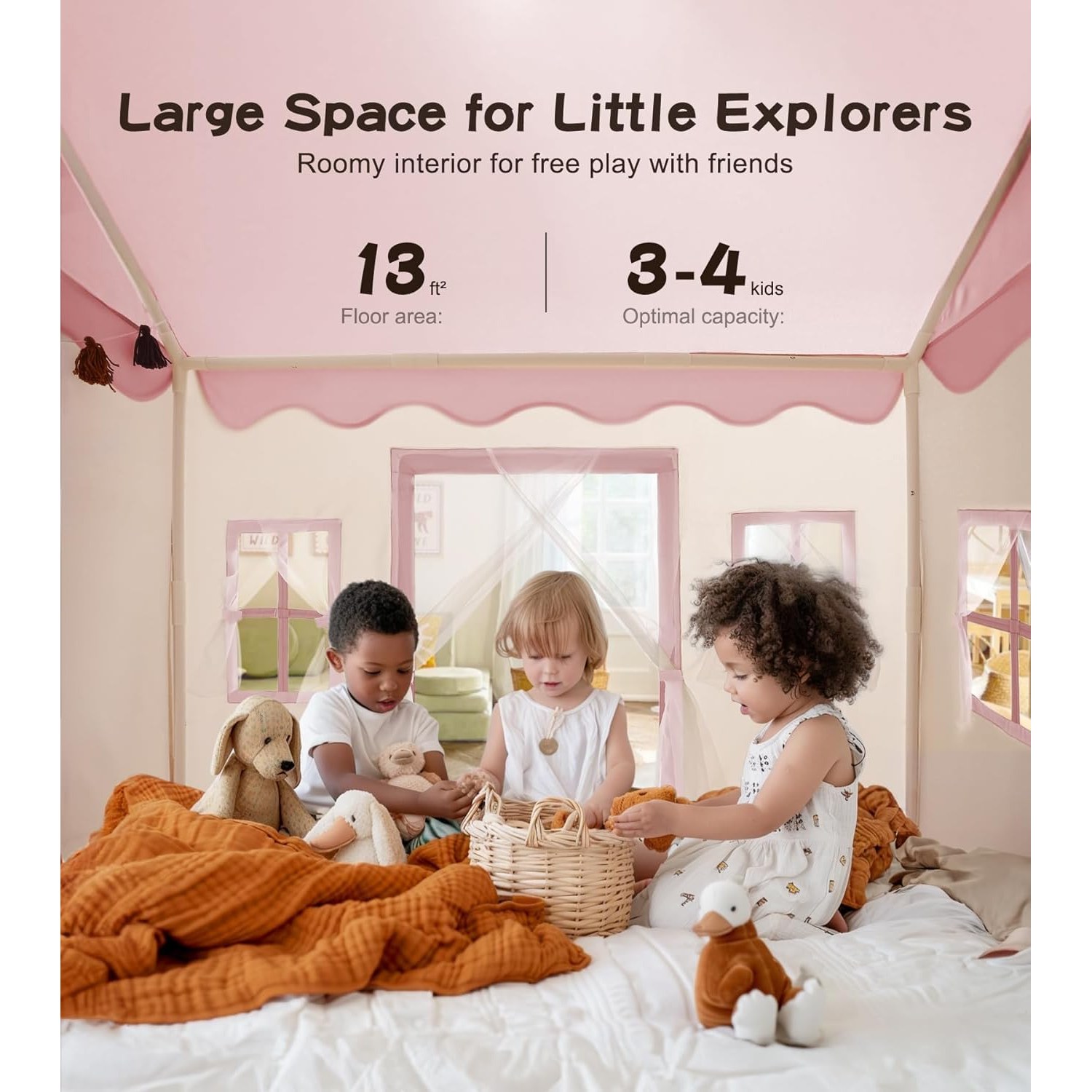
The upper end is less about a number and more about room. At 132 cm tall, children up to around seven or eight can usually stand inside. Past that they tend to use it sitting down, which still works for reading and games but feels less like their own house.
It fits a few different homes well:
- Families with one child who needs a quiet corner of their own, especially in an open plan house where there is nowhere to go. - Siblings sharing a bedroom, where a tent gives each of them somewhere to retreat to in turn. - Playrooms that have plenty of toys but no defined zones, so everything spills into one heap. - Grandparents' houses, where a folding tent is far easier to store than a plastic playhouse.
It is less suited to very small bedrooms with no spare corner, or to families who want something that can live permanently outdoors.
Working out if it fits your room
Before you order anything this size, do the tape test. Mark out 120 cm by 102 cm on the floor with masking tape or lay down two bath towels end to end to get a rough sense of the footprint.
Then check three things. Can a door open fully without hitting it? Is there enough clear space in front for a child to crawl in and out without knocking into a bed frame? And is there anything directly above, like a shelf or a hanging light, that would interfere with the 132 cm height?
Corners are usually the best place. Two walls do a lot of the work of making the space feel enclosed, and you lose less usable floor than you would by putting it in the middle of a room.
Keep it away from heaters, radiators, curtains near a window that gets strong afternoon sun, and the top of stairs.
Assembly, honestly
Assembly is required. The maker describes it as simple and quick, and in general these frame-and-cover designs do go together fast once you understand how the pieces connect.
A few things make it easier. Lay all the parts out on the floor first so you can see what you have. Build the whole frame before you try to put the cover on, and check that every joint is pushed fully home, because a half-seated joint is what makes a tent lean later. Getting the fabric over the frame is the fiddliest step, so a second person helps if you have one handy.
Keep the instructions somewhere you can find them. If you take the tent down and store it over summer, future you will be grateful.
Looking after it
The fabric is machine washable, which is the single most useful care feature a kids' product can have. Take the cover off the frame, wash it gently, and air dry it fully before putting it back on. Do not put a damp cover back onto a wooden frame.
For the frame itself, a dry cloth is enough. Wood does not like sitting wet, so keep it away from spills where you can and dry anything that does land on it.
The padded mat usually does best with spot cleaning. Damp cloth, a little mild detergent, then let it dry completely. Follow the care label that comes with it rather than assuming.
Every few weeks, give the joints a quick check and push anything loose back into place. That one habit will add a lot of life to the tent.
Colours fade in strong sun over time, so if your tent sits in a bright window, consider moving it or drawing the curtain during the hottest part of the day.
Getting more out of it
A play tent with mat is already usable the moment it is built, but small additions change how often it gets used:
- Two or three floor cushions on top of the mat, which turn it from a play spot into a lounging spot. - A shallow basket of books kept just inside the door. - A small soft toy or two that live in the tent and nowhere else, which gives the space its own identity. - A cheap battery lantern for nights when you want a bit more light than the star lights give.
What tends not to work is turning it into general storage. Once a tent becomes the place where loose toys get shoved, children stop going in it. Keep the inside fairly clear and it stays somewhere they want to be.
The short version
If you want a kids playhouse tent that lasts longer than a season, look for a real frame rather than a wire hoop, a floor that comes included, and a cover you can actually wash. This one has all three, plus windows and star lights that make the inside somewhere children choose to stay.
It stands 132 cm tall with a 120 cm by 102 cm footprint, fits up to four children, and is rated for ages three and up. Assembly is required, the fabric goes in the machine, and the whole thing packs down when you need the floor back.
Measure your corner, order it, and give them somewhere that is theirs.