
The complete guide
Choosing a Castle Play Tent That Actually Gets Used
The problem with most play tents
Plenty of children's tents look great in a photo and disappoint in a living room. The walls sag. The frame pops out of the fabric the second someone leans on it. The whole thing is so short that a child has to crawl, and so narrow that a second child is not welcome. After a week it ends up folded behind a wardrobe.
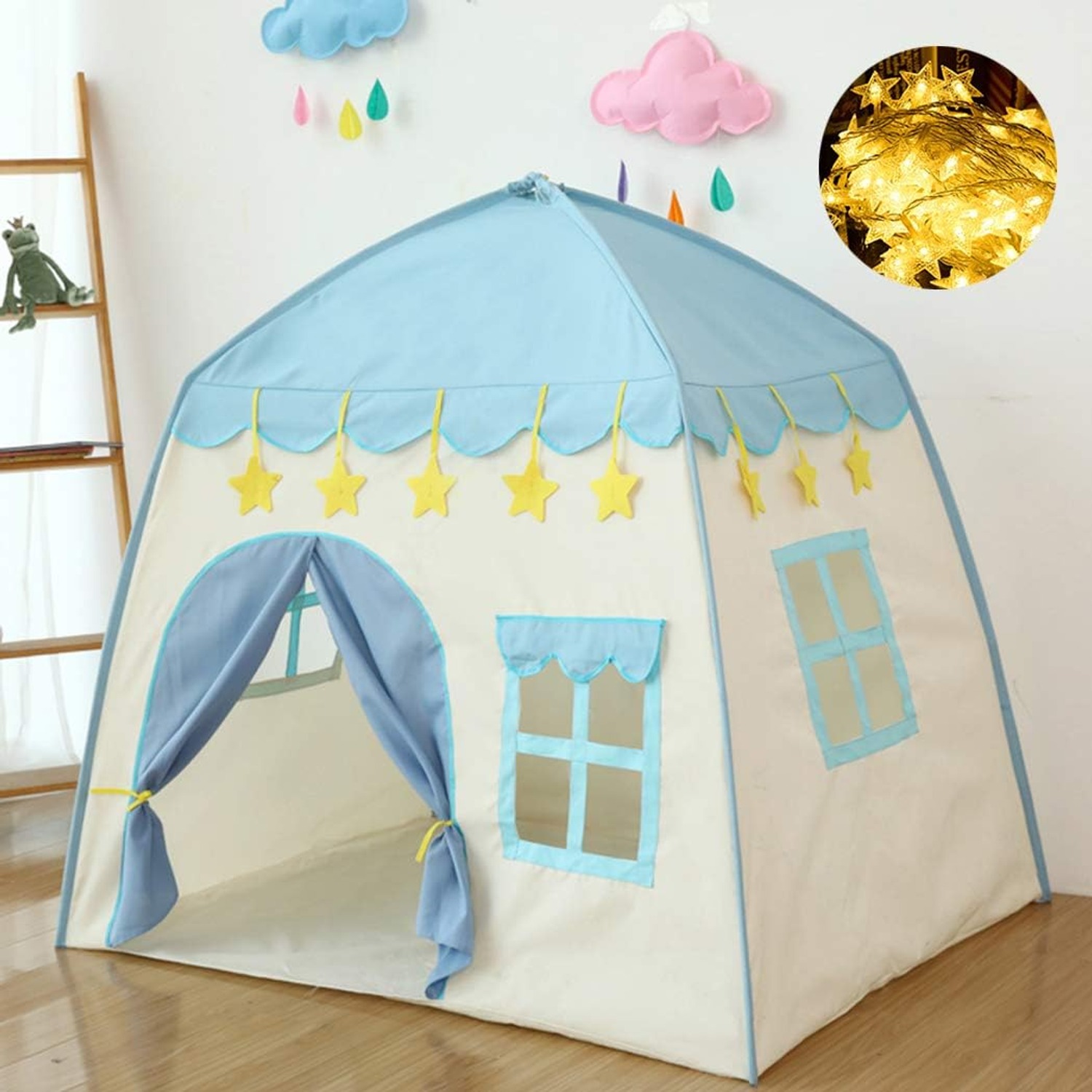
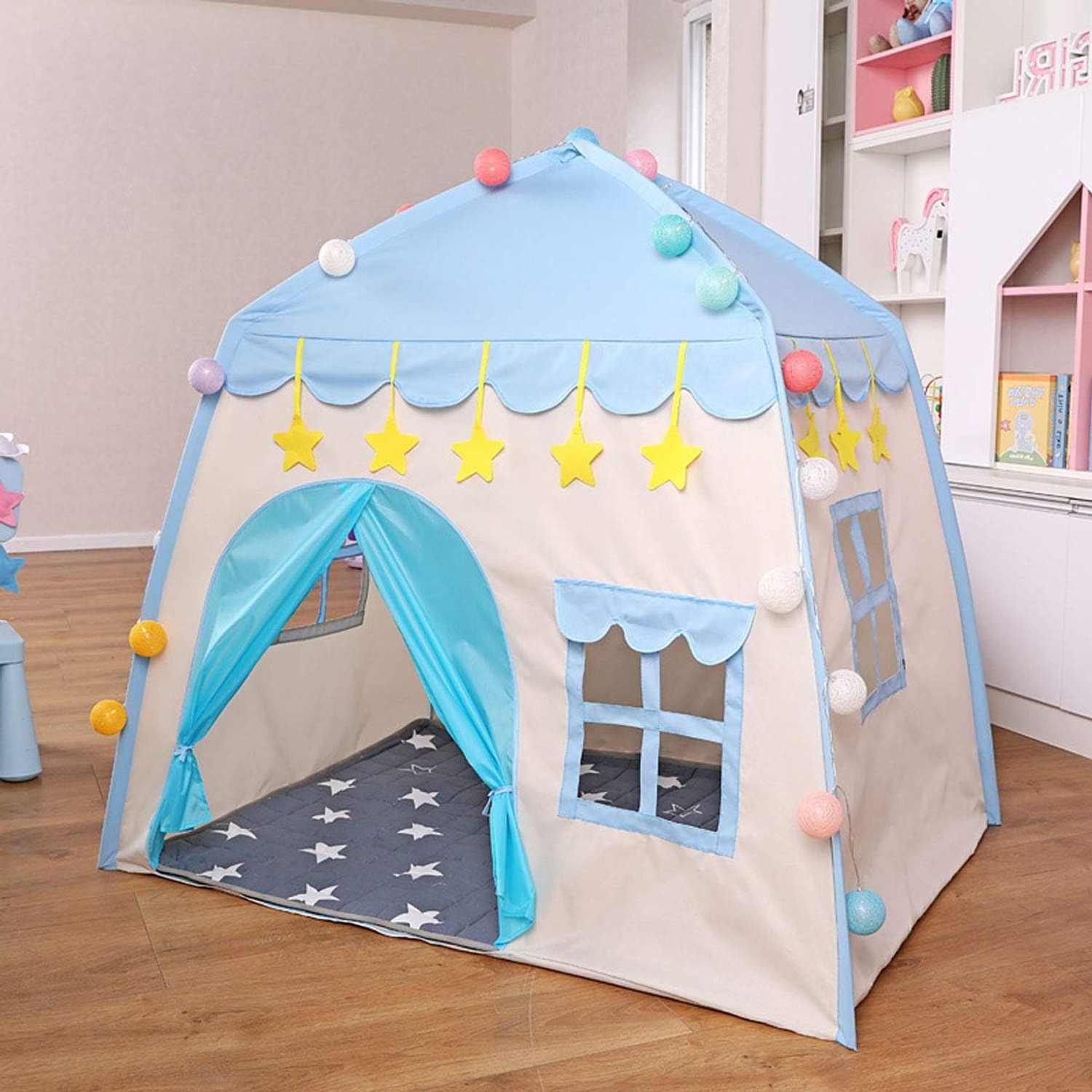
What children actually want is a space that feels like a real place. Somewhere with walls and a doorway and a bit of ceiling above their head. That is the gap a proper castle tent fills. A blue castle play tent with a shaped roof and standing headroom reads as a little house, and children treat it like one.
How this one is built
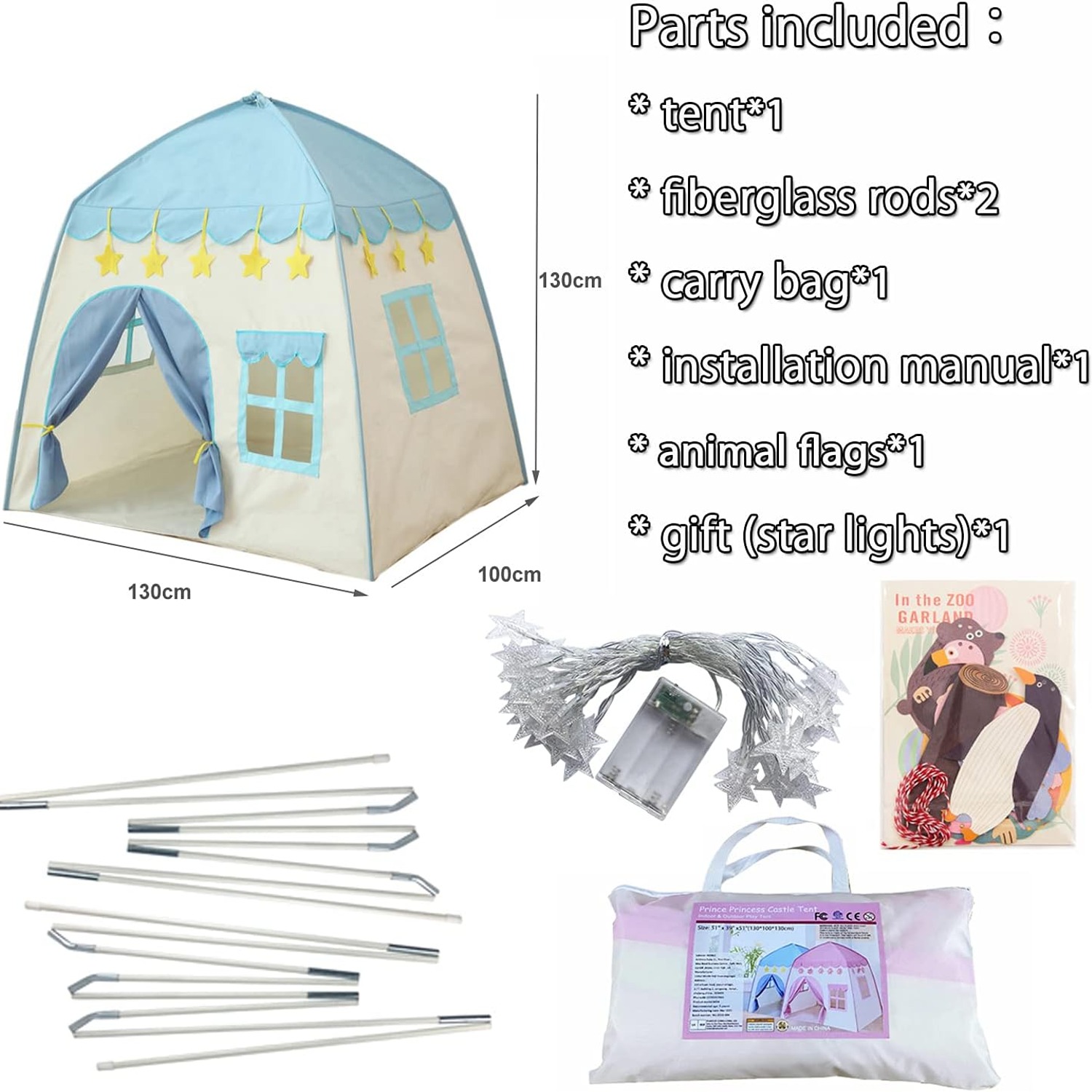
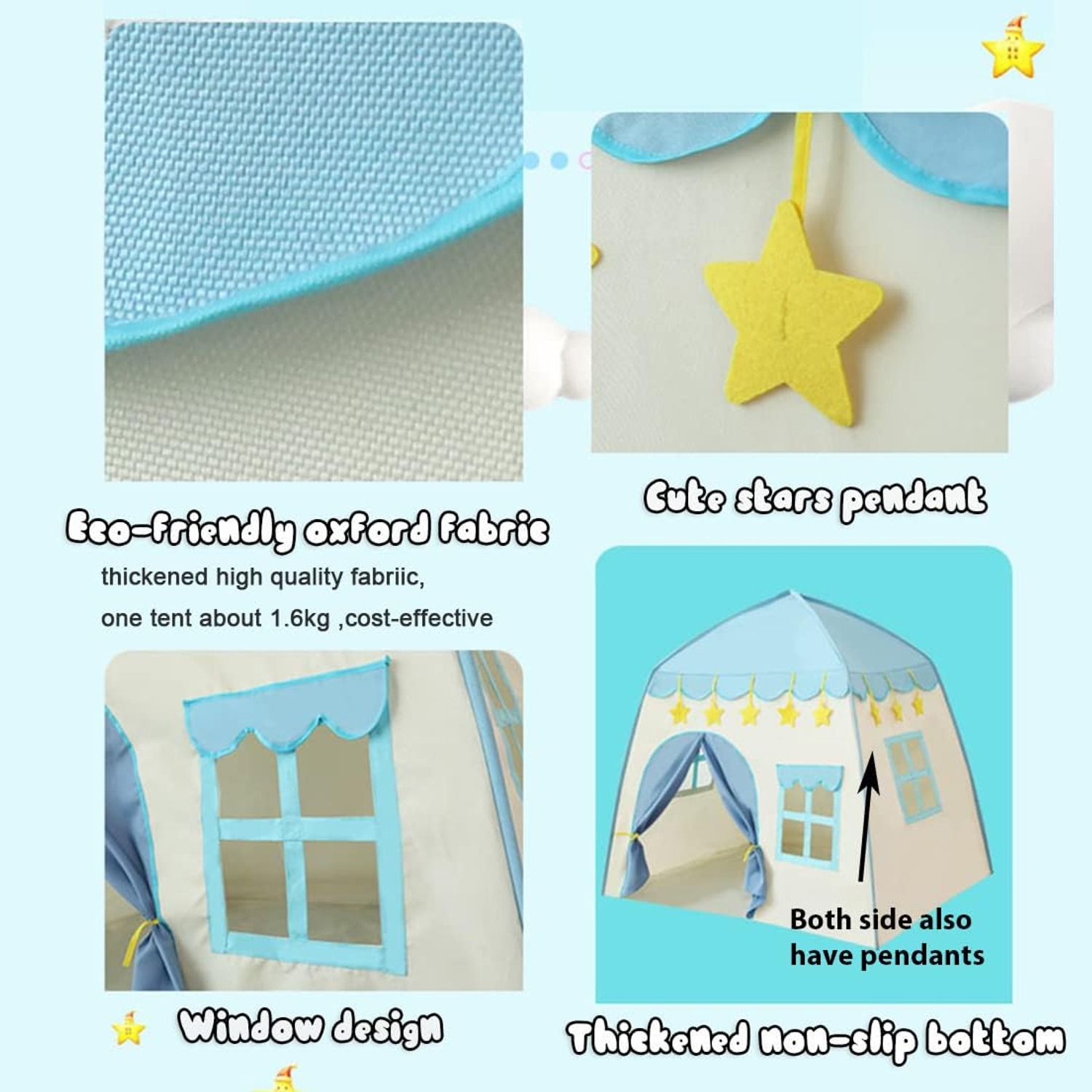
The shell is Oxford fabric, a woven polyester commonly used for bags and outdoor gear because it keeps its shape and takes knocks without looking tired. Two fibreglass rods support it. Fibreglass flexes under pressure instead of snapping, which is exactly what you want when a six year old charges through the doorway.
Assembly is not required. The rods slot into the fabric and the castle stands up. An installation manual is included if you want to follow the steps the first time, and after that most people can put it up from memory.
Finished size is 130 cm wide, 100 cm deep and 130 cm tall. Those numbers are worth writing on a scrap of paper and marking out on the floor before you order, because that is the single thing most people get wrong when buying any indoor playhouse tent.
Why the size is the deciding factor
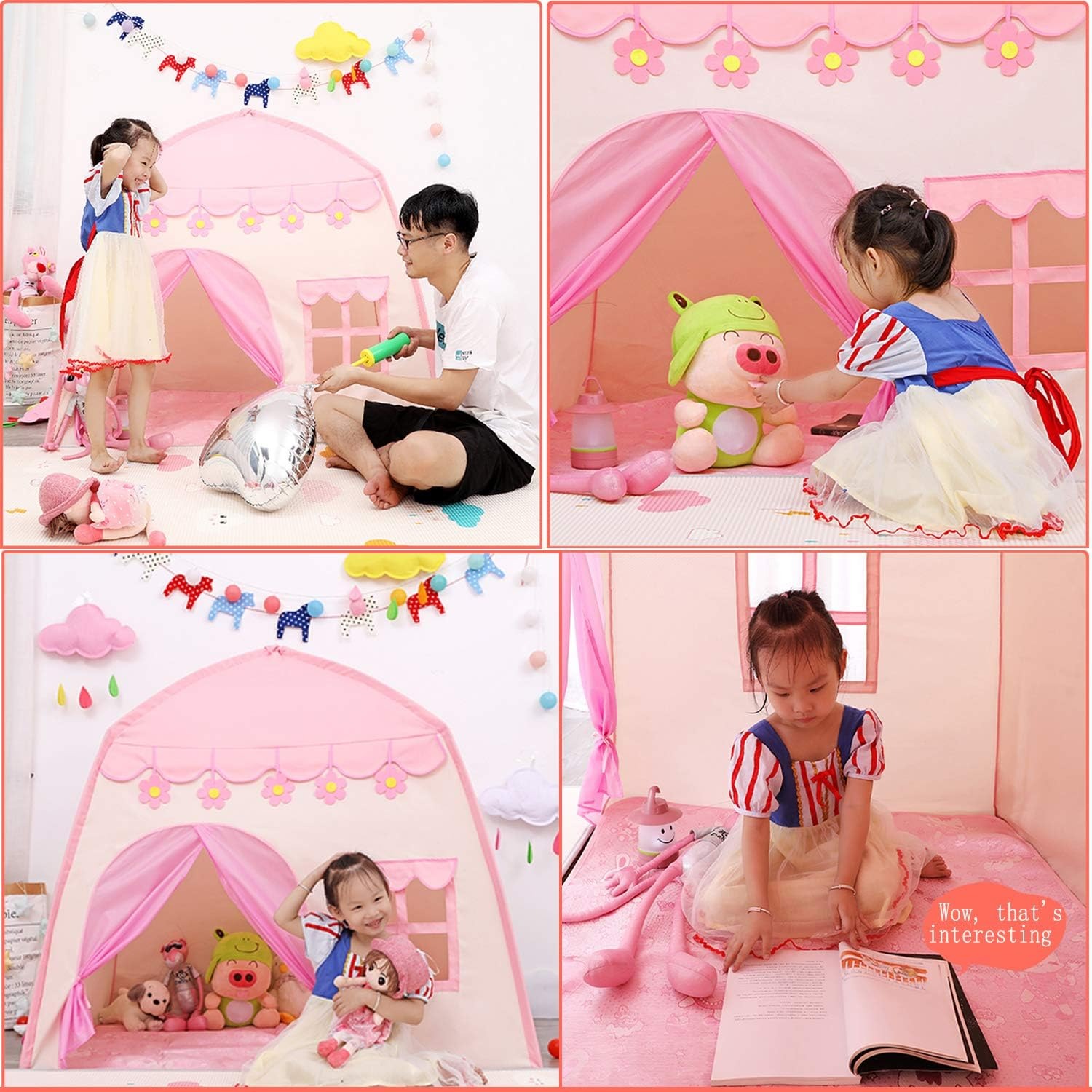
A tent that is 130 cm tall changes the way children use it. They can walk in rather than crawl. They can stand up and turn around. An adult can duck inside and sit on the floor for a story, which sounds small but is the thing that turns a toy into a routine.
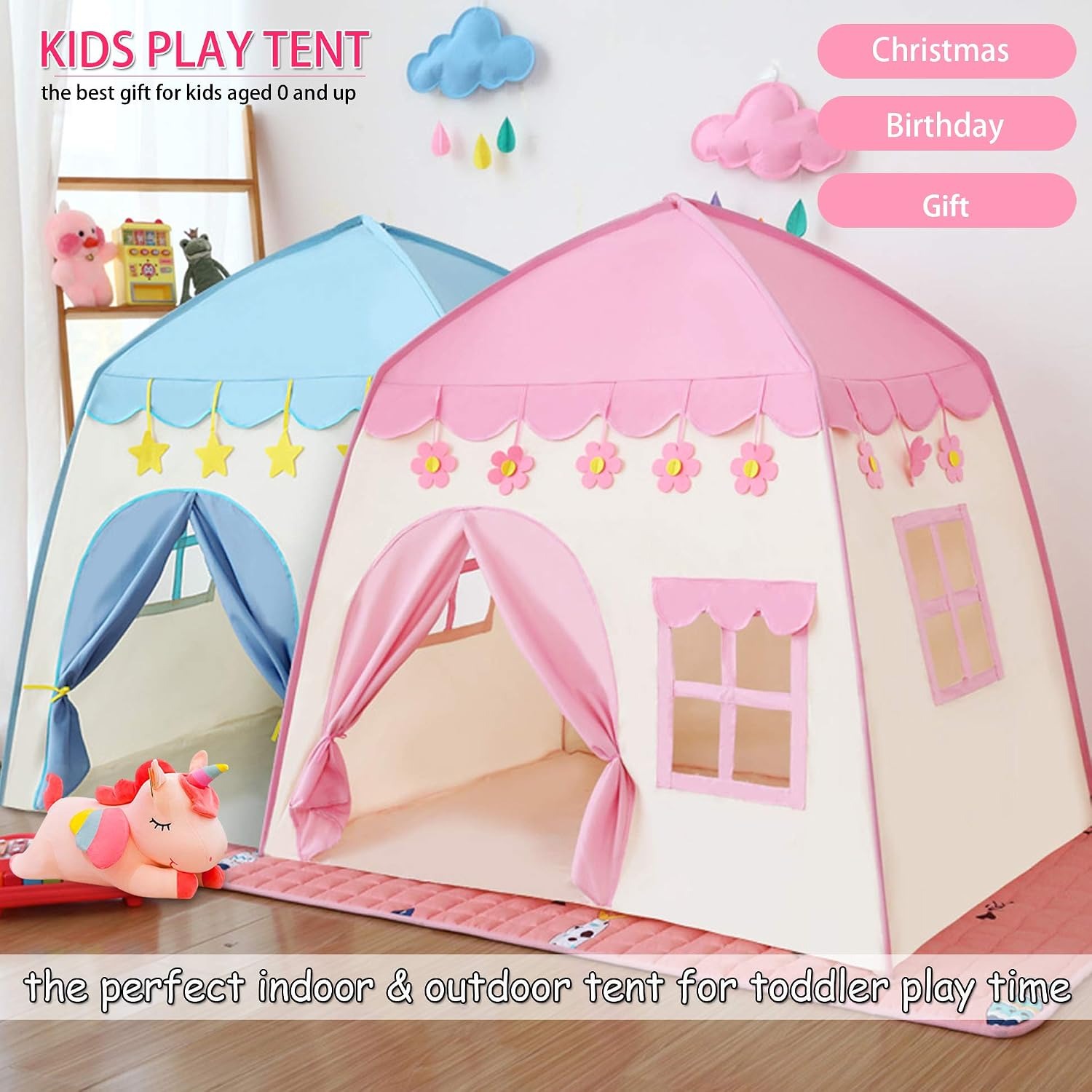
At 130 cm by 100 cm of floor space, two or three children fit without constant bumping. That matters for siblings, for playdates and for nursery or classroom use. If you are hunting for the best play tent for siblings, floor area is the number to compare, not the price.
If your room is tight, remember the tent folds flat into the carry bag. Set it up after school and pack it down before dinner. A tent you can put away is a tent you will keep.
Who it suits
The manufacturer's recommended age range runs from 36 months up to 13 years, which is wider than you might assume. A three year old uses it as a cave to hide in. A five year old runs a shop or a palace out of it. An eight year old drags a cushion in and reads. Older children often use it as a place to be left alone for half an hour, which has its own value.
The blue colour and castle theme work for any child who likes castles, knights, dragons or royalty, and the royalty theme makes it an easy choice for anyone searching for a princess castle play tent without the usual pink. Plenty of parents pick blue precisely because it suits a shared room.
It also works beyond the home. Daycares, classrooms, waiting areas and family rooms at grandparents' houses all benefit from a quiet corner that can appear and disappear in a couple of minutes.
The lights and flags
Two extras come in the box and both earn their place. The animal flags dress the castle and give children something to point at and name. The 5 metre string of 30 LED star lights is the one that really lands. Run it around the inside of the roof and the tent stops being a daytime toy and becomes somewhere children want to sit in the evening.
A soft, low light inside a small enclosed space is calming. If bedtime is a battle in your house, a lit reading den can be a useful halfway step between playing and sleeping. Keep the cord tidy and out of the way of small hands, and supervise younger children around it.
Indoor or outdoor
Indoors is the main home for this tent. On a rug or carpet it sits nicely, and the floor stays soft underneath without needing a mat.
Outdoors it is fine on grass or a patio on a dry, still day. Picnics, birthday parties, barbecues and garden play all suit it. What it is not is a camping tent. There is no weatherproofing claim in the maker's details, so bring it inside before rain, and never leave it out overnight to collect damp. If it does get wet, open it out somewhere airy and let it dry completely before packing it.
How to choose between play tents
A few things separate a tent that lasts from one that does not.
Look at the frame material first. Fibreglass is a good sign. Thin steel wire frames kink and never sit straight again.
Then look at the fabric. Oxford fabric is a step up from the papery polyester used on the cheapest pop ups. It holds its shape and wipes clean.
Check headroom and floor area against your actual space, not against a photo.
Finally, check whether it packs away. A carry bag is not a luxury. It is what decides whether the tent lives in the playroom or in a landfill after three months.
Looking after it
Care is simple. Wipe the fabric with a damp cloth and a bit of mild soap, then air dry it. Skip the washing machine, the tumble dryer, bleach and the iron, all of which will damage the fabric or its finish.
Take the lights out before cleaning. Keep the rods straight in storage rather than bending them into a drawer, since fibreglass will take a permanent set if you force it.
Set one house rule early. The tent is for sitting in, not climbing on. Children accept that quickly, and it adds a long time to the life of any fabric playhouse.
Setting it up well
The tent does most of the work, but a few small additions make it much better. A folded quilt or a cheap foam mat on the floor turns it from a shell into a nest. Two cushions and a blanket make it a reading spot. A small basket of books inside gives it a purpose, and children are more likely to use a space that already has something to do in it.
Position matters too. Away from radiators, heaters, candles and stairs. Somewhere with enough clearance that the doorway is not blocked by furniture. A corner of a bedroom or the quiet end of a living room usually works best.
The short version
This is a castle themed children's tent, 130 cm wide and 130 cm tall, in Oxford fabric over fibreglass rods, in blue with a royalty theme. Nothing needs assembling. The box includes the tent, two rods, a carry bag, a manual, animal flags and a 5 metre string of 30 LED star lights. It is recommended for ages three to thirteen.
It is big enough for two or three children, light enough to move between rooms, and small enough when folded to live in a cupboard. If you want somewhere for a child to read, hide, invent games and occasionally escape their siblings, this does the job without taking over the house.