
The complete guide
Choosing a Large Play Tent, A Practical Buyer's Guide
The problem with open-plan play
Children do not always want more room. They want a room. Watch a four year old in a large open lounge and they will almost always end up under the dining table, behind the curtains, or in the gap between the sofa and the wall. It looks like odd behaviour until you think about how a small person experiences a big space. Open rooms are noisy, bright and full of adults moving around. A small enclosed spot is predictable, quiet and theirs.
The usual parent response is to buy a pop-up tent, and the usual outcome is disappointment. Most of them are tiny. A child crawls in, finds their shoulders touching both sides, and crawls back out. Within a fortnight it is folded behind a door. The tent failed not because the idea was wrong but because the size was.
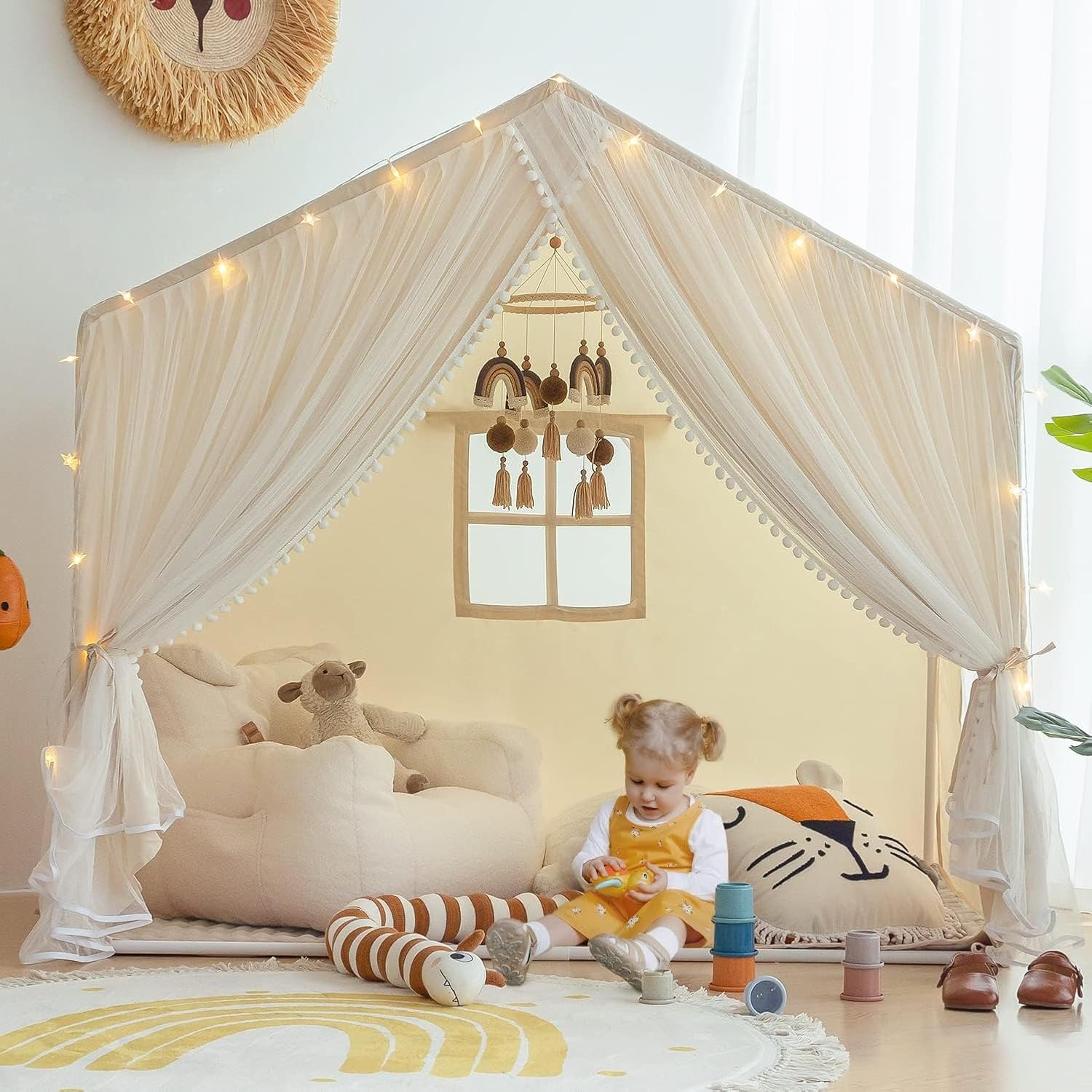
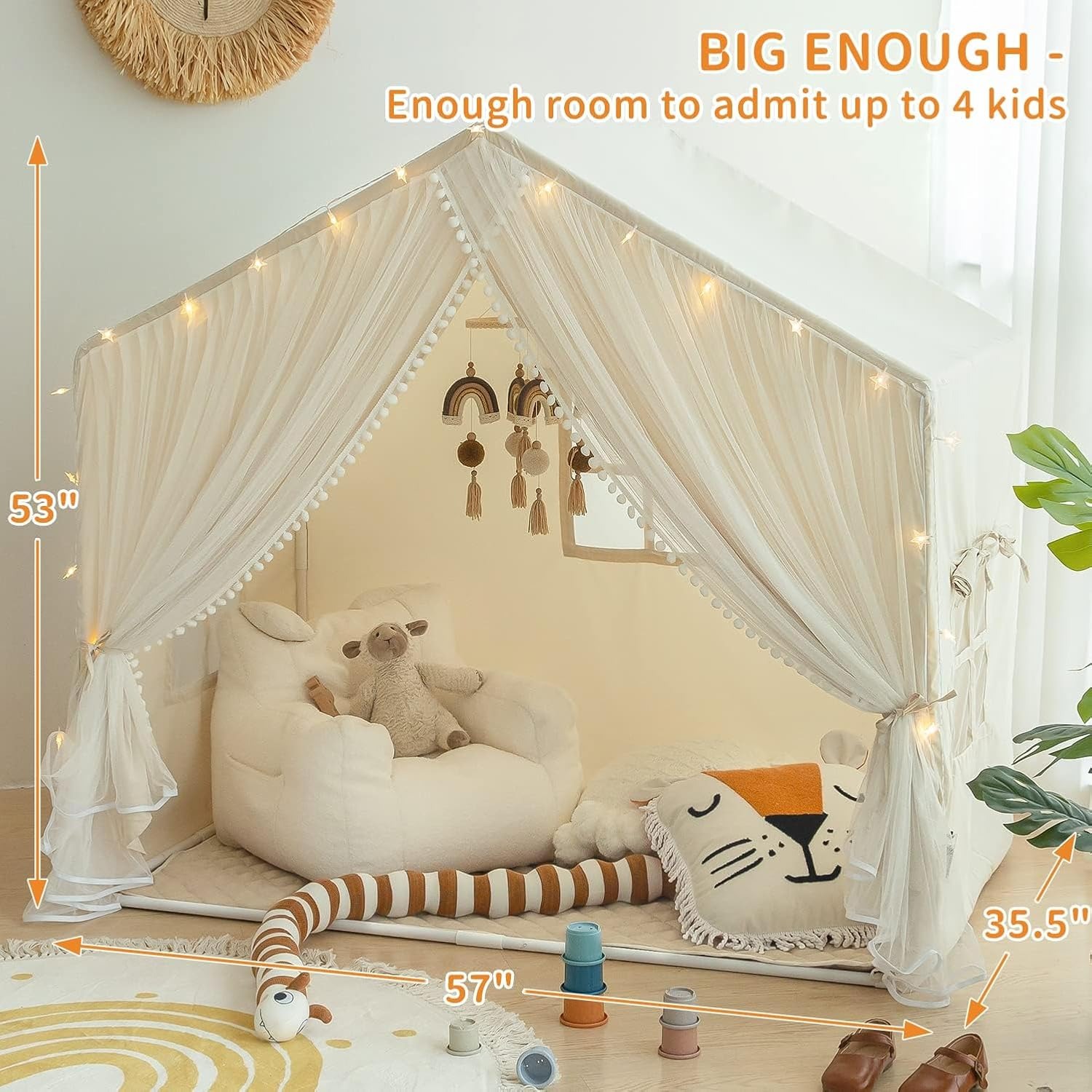
A large play tent fixes the size problem. This one is 145 cm wide, 90 cm deep and 135 cm tall. Those numbers matter more than any feature list. A 135 cm interior height means most young children stand up inside rather than shuffling on their knees. A 145 cm width means a friend fits. That is the difference between a toy and a place.
How it works
The construction is the familiar collapsible design. Flexible poles give the tent its shape, fabric stretches over them, and the whole thing comes down when you twist it flat. The listed materials are nylon and polyester, which are the standard fabrics for this type of product because they are light, they hold colour, and they do not absorb much moisture.
Total weight is 1.2 kg. Pick that up and you understand the practical appeal. One adult can move the assembled tent from a bedroom to a lounge without dismantling anything. It also means you can take it in the car to a grandparent's house for school holidays, which is a use case people rarely consider at the point of purchase and appreciate later.
Assembly is required. That phrase puts some people off, but for a tent of this style it generally means threading poles through sleeves and clipping the frame into shape. The first build takes a little patience. Every build after that is quick, because you already know which pole goes where.
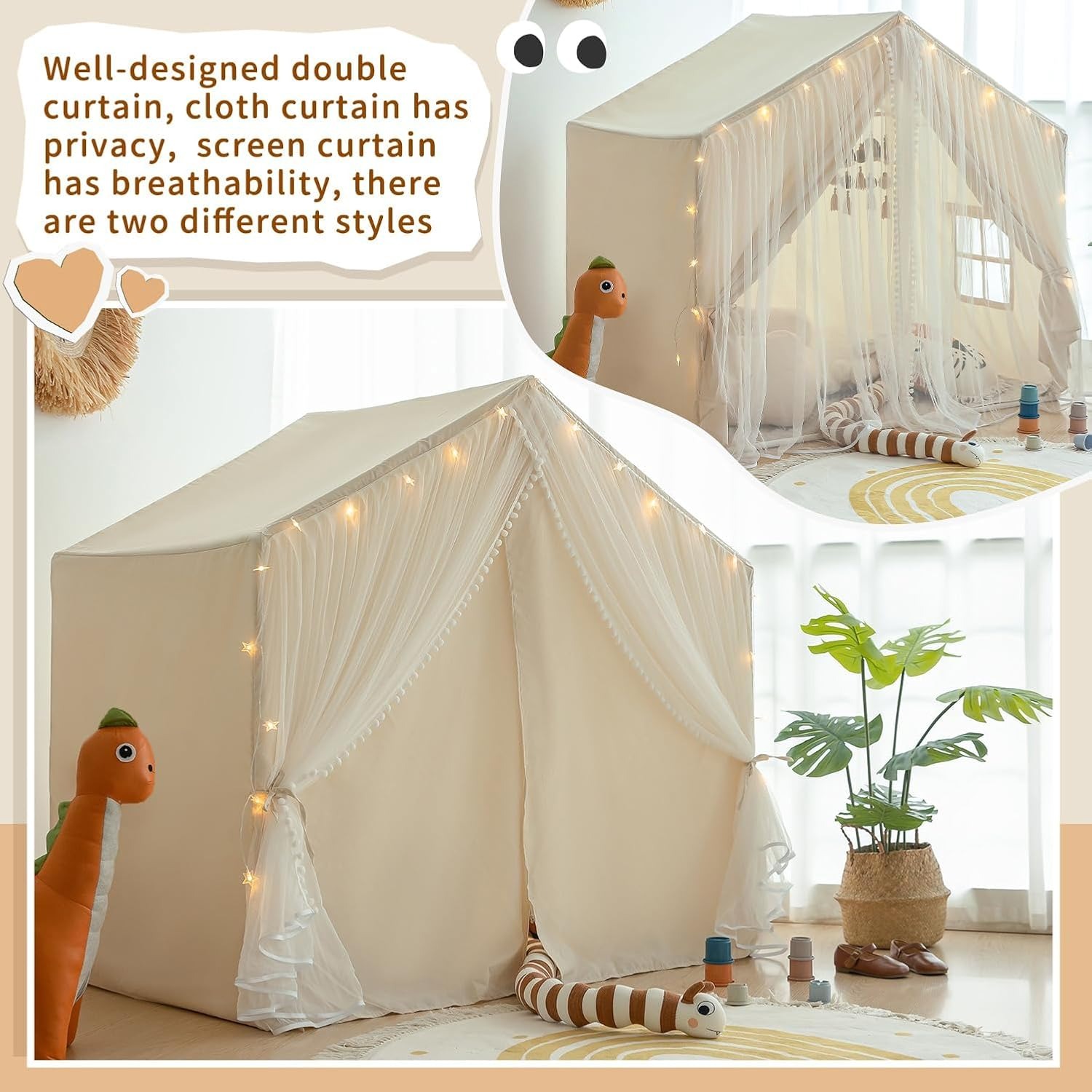
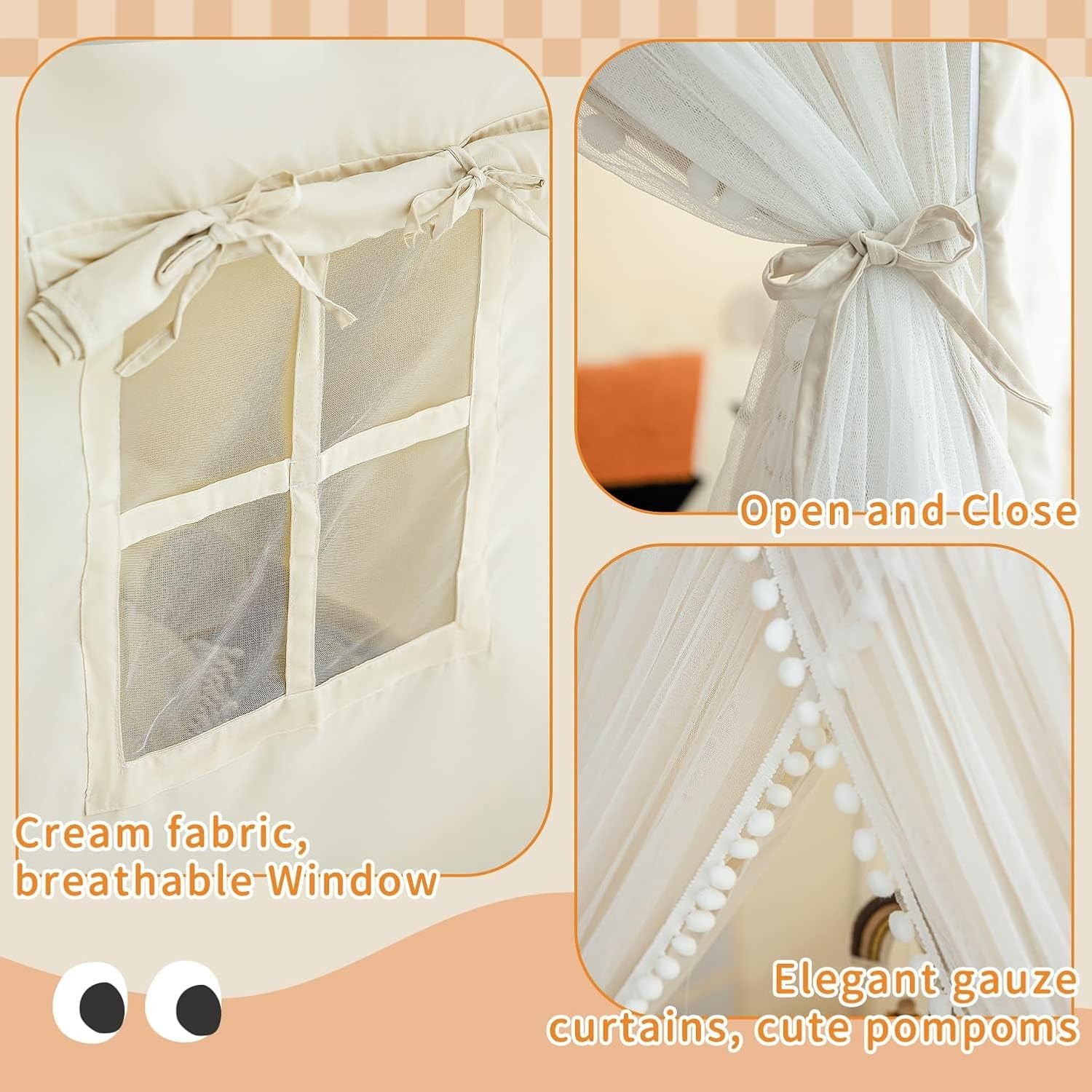
Mesh windows run around the sides. Their first job is airflow. Three children inside a sealed fabric box on a warm afternoon gets uncomfortable fast, and mesh panels keep the temperature reasonable. The second job is sightlines. You can glance over from the kitchen and see who is in there and what they are doing. Children seem happy with this arrangement because they can see out just as easily.
The star lights
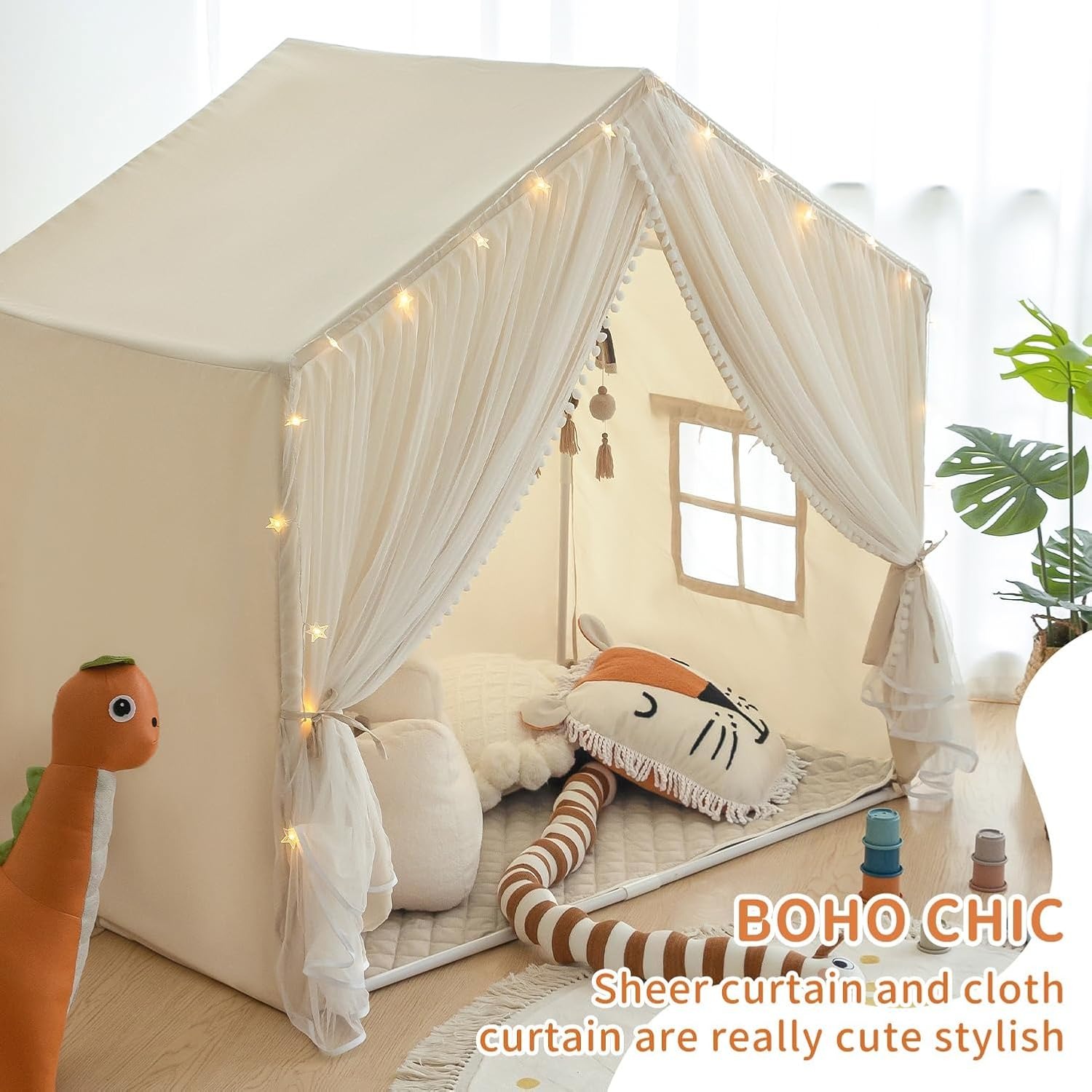
This is the feature that sells the tent, and it is worth being clear about why. Built-in star lights change what the space is. During the day the tent is a fort, a shop, a spaceship, whatever the game demands. Turn the room lights down and switch the stars on and it becomes somewhere to be calm. Points of light on fabric walls have an effect on children that is hard to argue with.
Families use that shift deliberately. Bedtime stories inside the tent with the stars on become a routine rather than a battle. Quiet time after school stops being a punishment. A child who finds a busy house overwhelming gets a reliable place to go.
The lights are part of the tent rather than a separate string you clip on, which is tidier and harder to pull down. Take them out before any cleaning and keep water away from them. Beyond that there is not much to manage.
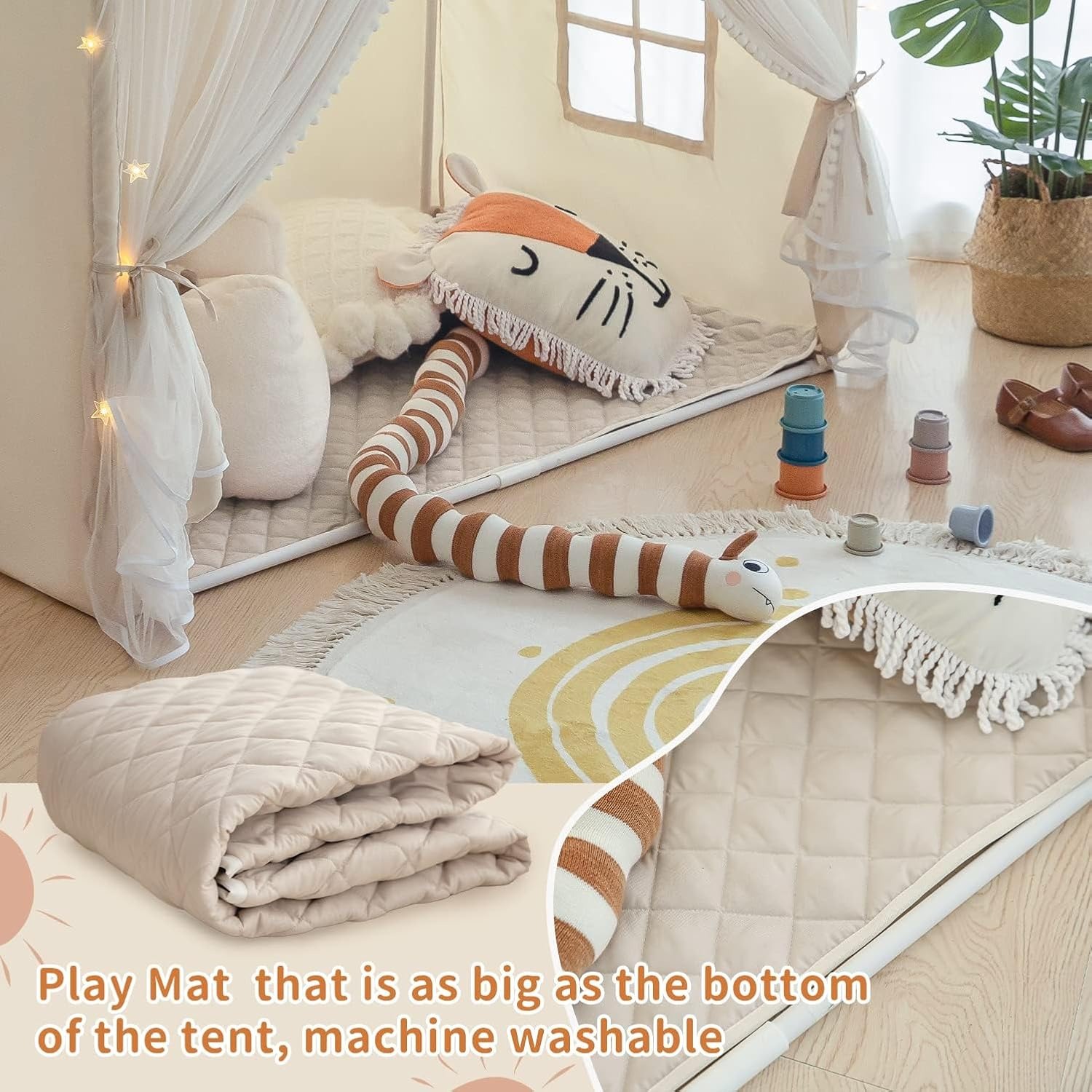
The washable mat, and why it matters
The included mat sounds like a minor extra until you own a play tent without one. Floors inside tents collect everything. Crumbs from the snack that was definitely not allowed in there. A juice drip. Sand off shoes that were definitely taken off at the door. Within a few months, a tent with no removable floor becomes a grubby thing nobody wants to sit in.
A mat you can lift out and wash resets that cycle. Pull it out, follow the care label, let it dry fully, put it back. The tent stays pleasant to use for years rather than one season. If you want more padding for a reading nook, you can also drop a rug or a folded blanket on top of the mat without affecting the tent structure.
Who it suits
Households with more than one child get the most from the large size. Two siblings can be in there at once without immediate conflict, which is not something a single-child teepee manages. Families in smaller homes benefit too, oddly enough, because a collapsible tent gives a child a dedicated space without permanently surrendering a room.
It suits children aged three and up, which is the manufacturer's guidance. Below that, supervision matters more and the age rating exists for sensible reasons. At the upper end there is no hard limit. Seven and eight year olds still disappear into these things with a torch and a book.
It also works well as a gift. It looks substantial when opened, the lights produce an actual reaction, and it does not end up in the bottom of a toy box. If you are shopping for the best kids playhouse tent as a present, the combination of size, lights and included mat covers most of what a child would want.
How to choose
Start with the floor. Measure the space you intend to use, then subtract a bit so the tent is not jammed against two walls. A footprint of 145 cm by 90 cm is roughly a small single mattress. If that does not fit the bedroom, look at a lounge corner, a playroom, or a landing.
Then think about ceiling height if you are planning to set it up somewhere with a slope, like an attic room. The tent stands 135 cm tall and needs clearance above that to get the frame into shape.
Consider the floor surface too. Carpet grips a tent base well. Smooth flooring can let the tent shift during enthusiastic play, which is usually solved by putting one side against a wall or a sofa.
Finally, be honest about storage. A collapsible tent only stays useful if you have somewhere to put it. Under a bed, in a wardrobe or at the top of a cupboard all work for something this light.
Looking after it
Take the mat out and wash it according to its label whenever it needs it. Spot clean the tent body with a damp cloth and mild soap, never a washing machine. Let everything dry completely before folding, because fabric folded while damp develops a smell that is difficult to get rid of.
Fold along the creases the tent already has rather than forcing new ones. Store it dry and out of direct sunlight. Sun fades nylon and polyester over time, and a tent stored in a conservatory window will look tired faster than one in a cupboard.
When taking the frame down, work with the poles rather than against them. The flexing that lets these tents collapse is also the thing that breaks them if you rush. Children can learn the fold with a bit of showing, and they tend to be gentler with something they helped pack away.
The short version
A large play tent earns its place because it is actually big enough to use. At 145 cm wide and 135 cm tall, two or three children can share it, stand in it and stay in it. The built-in star lights turn it from a daytime fort into an evening hideaway. The washable mat keeps it clean enough to last. It weighs 1.2 kg, folds flat, and needs assembling once.
Measure your space, check the age guidance, and decide where it will live when it is not up. Get those three things right and this is the kind of purchase that gets used daily for years.