

The complete guide
Rocket Ship Play Tent Buyer's Guide
The problem a play tent actually solves
Children do not have much territory. They share rooms, they share sofas, and most of the house belongs to adults. What a play tent gives them is a small patch that is clearly theirs, with a wall and a doorway and a roof over it. That sounds minor. In practice it changes how children use a room.
The second thing it solves is focus. Open floor space invites wandering. A defined space invites a game. Parents often notice that a child who drifts between toys in the lounge will sit in a tent for half an hour with two of them, building a story. The tent is doing the same job a cardboard box does, just with a frame that stands up properly and folds away when you want your lounge back.
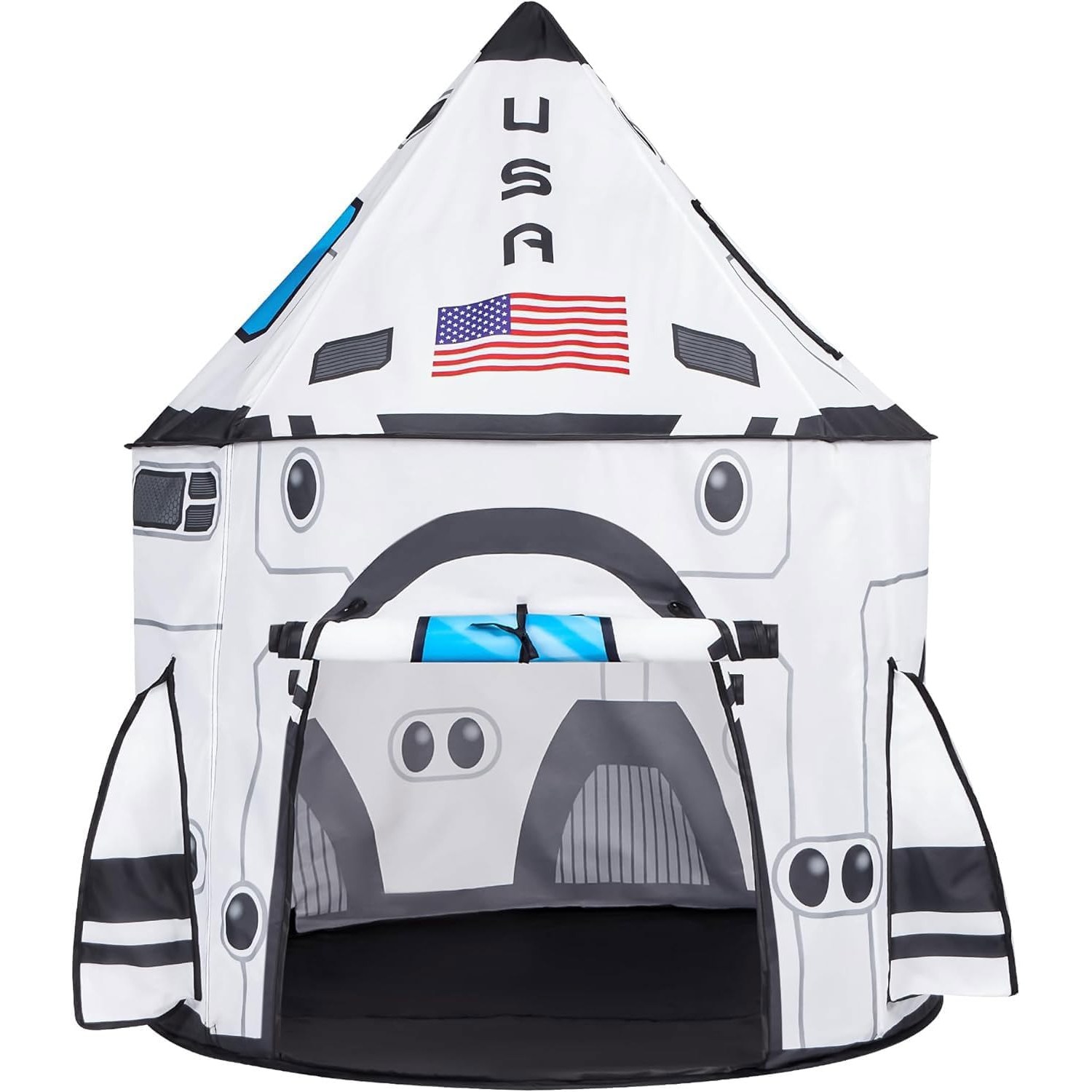
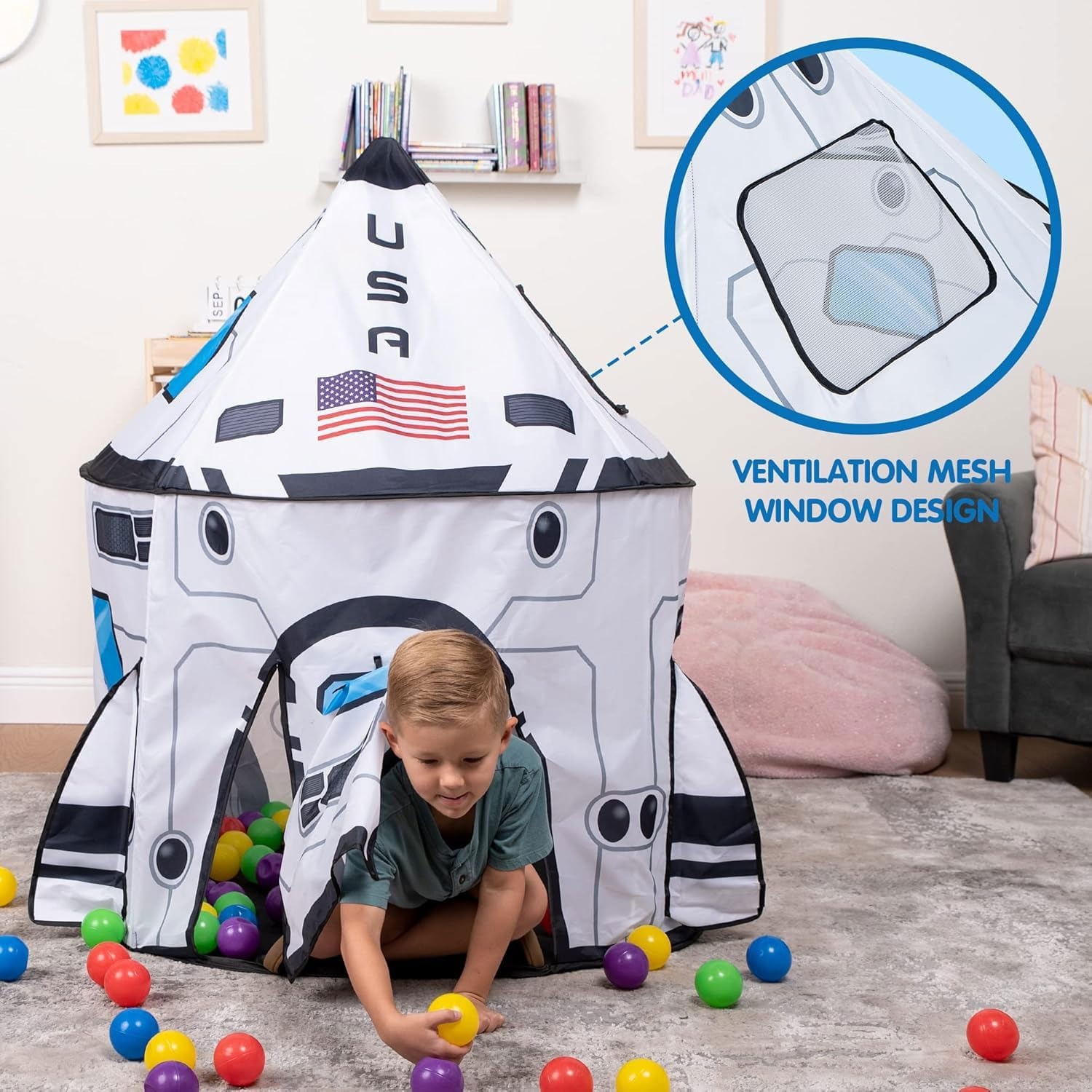
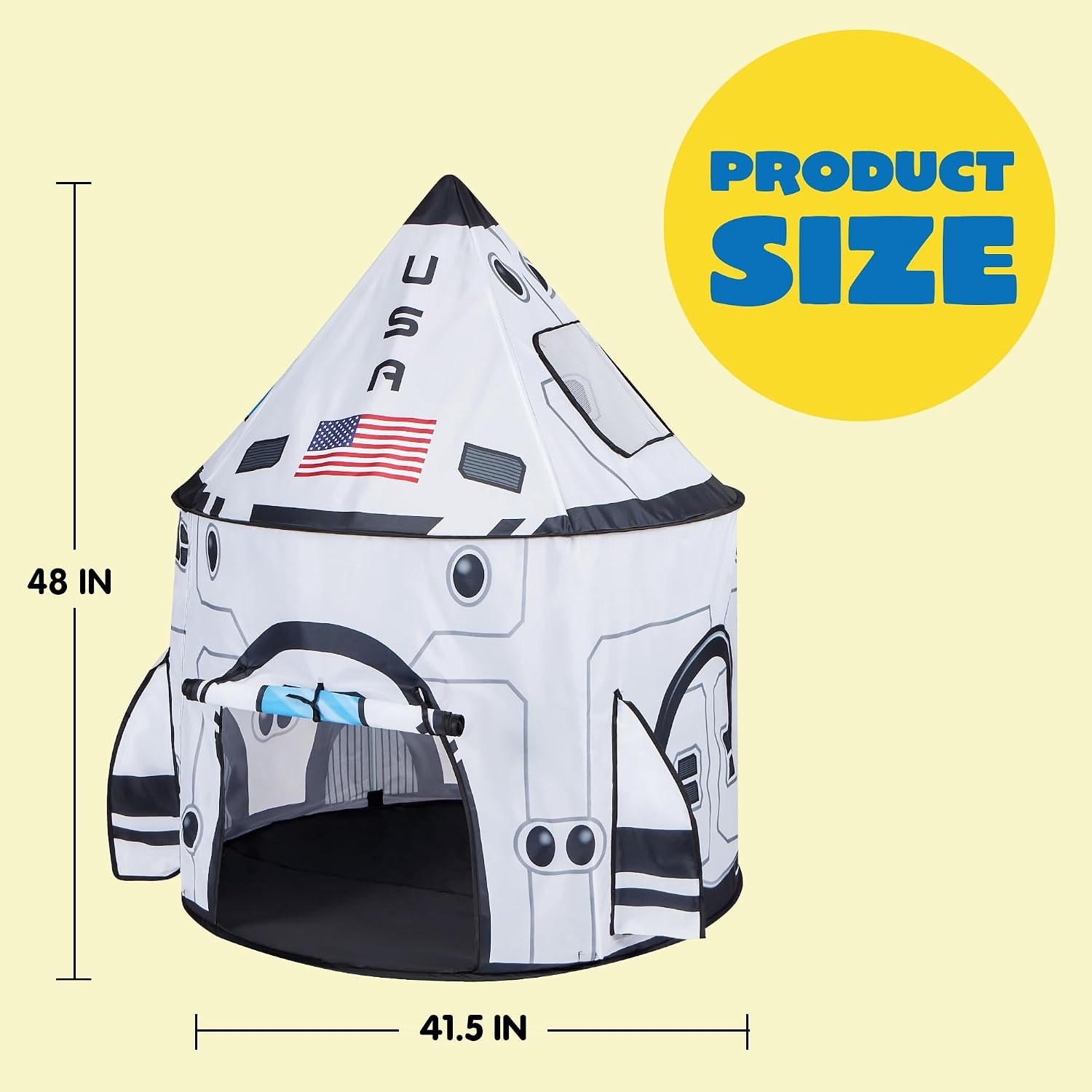
This particular tent leans into the space theme. It is a rocket ship shape with a white space graphic printed on the fabric, 137.2 cm tall and 105.4 cm square at the base. The shape gives children a starting point for the story without you having to supply one.
How it is built
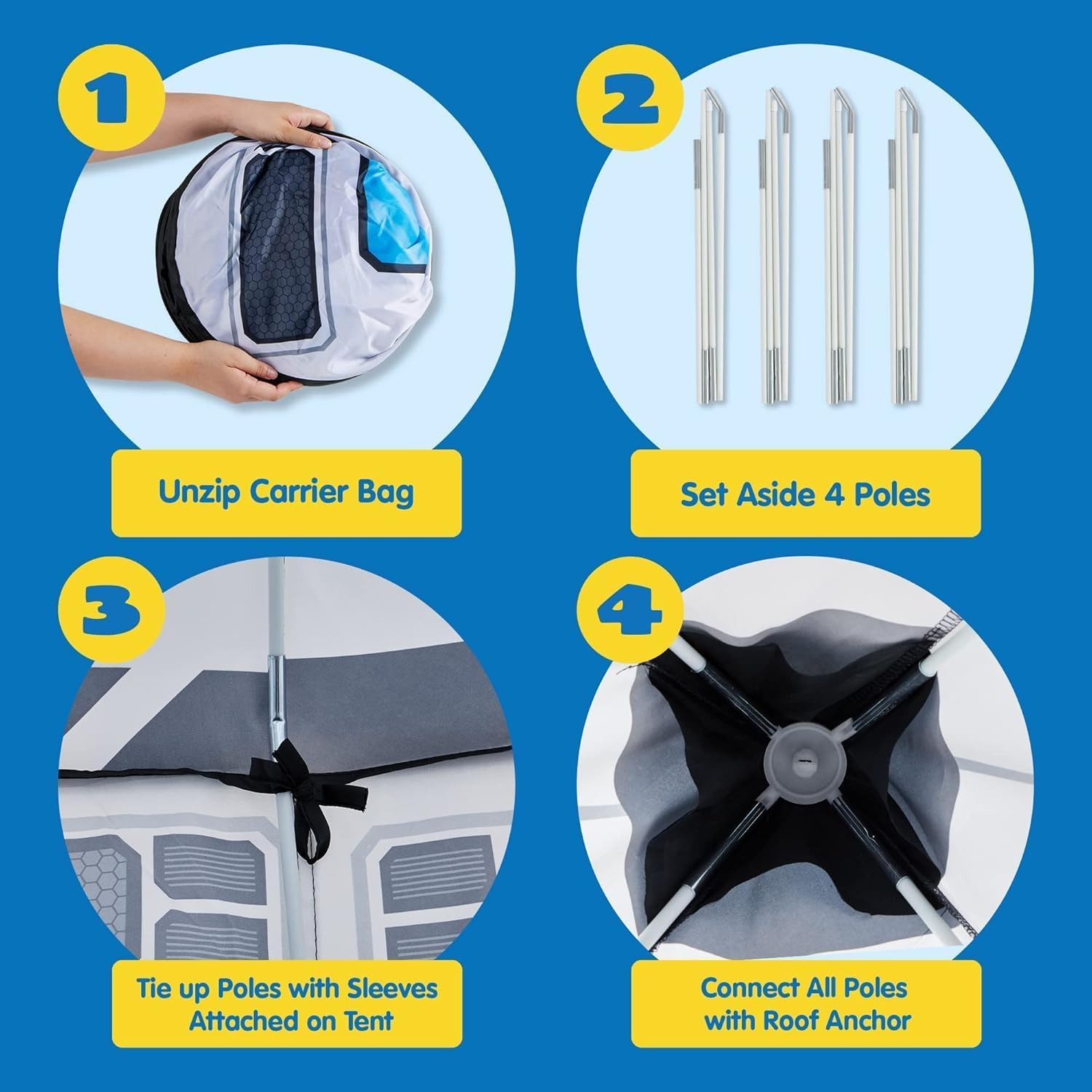
The structure is simple and that is the point. Four alloy steel poles form the frame, the polyester canopy goes over the top, and roof anchors hold the fabric in place at the peak. Floor anchors are included for outdoor use, where you push them into grass so the tent does not shift in a breeze.
Assembly is required. You get an instruction manual in the box and the parts count is low, so there is not much to go wrong. The first build is always the slowest. After you have done it once you will know which pole goes in which sleeve and the process gets much faster.
The poles fold. This matters more than it sounds. A play tent that cannot be packed down turns into permanent furniture, and in a small home that is a problem. Folding poles plus the included tote mean this one can live in a wardrobe between school holidays. Total weight is 0.91 kg, so carrying it from room to room or out to the car is not an issue.
Fabric is polyester, which the supplier describes as water resistant. Treat that as useful rather than weatherproof. Damp grass is fine. An afternoon in the rain is not.
Who it suits
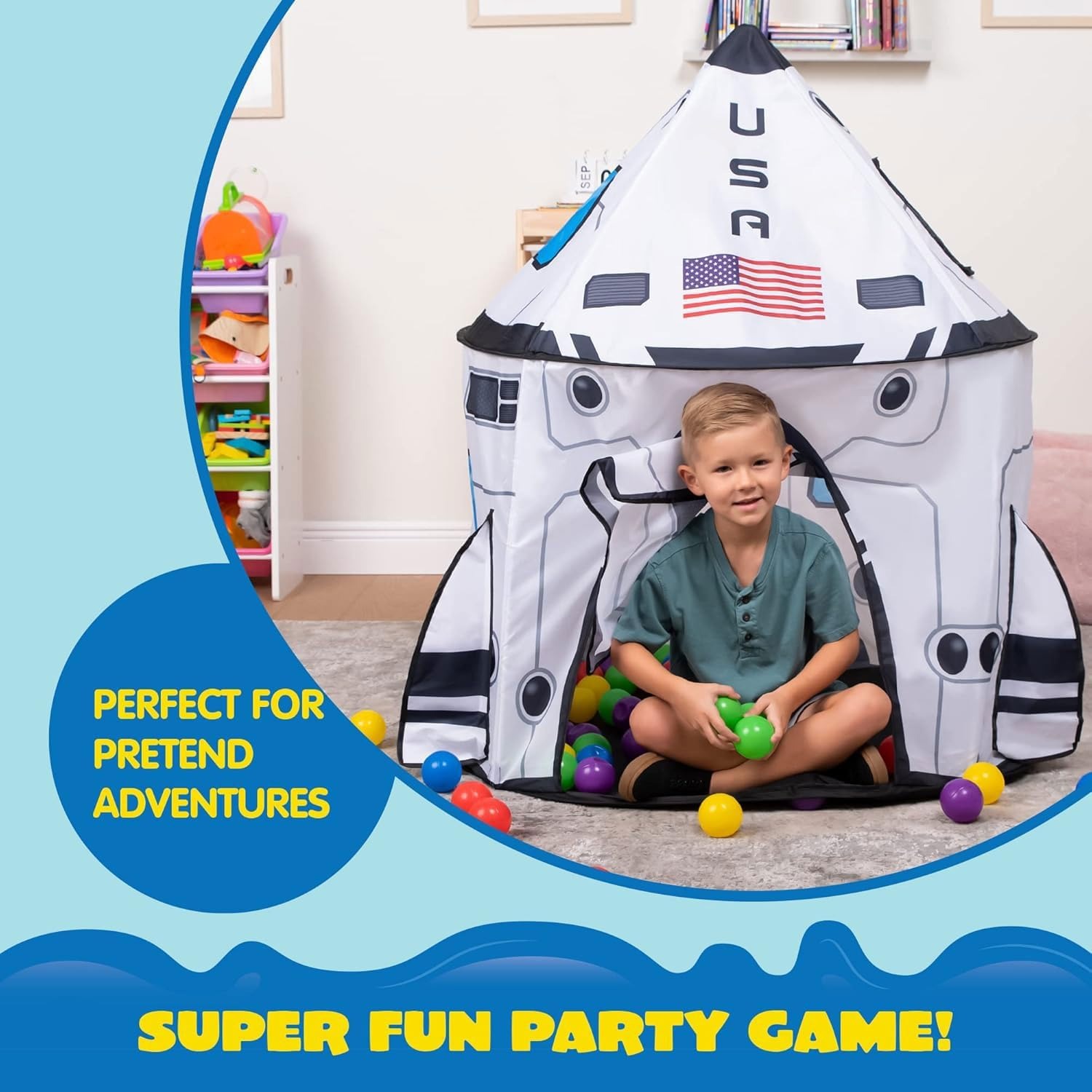
The manufacturer suggests 36 months to seven years, and that range fits the dimensions well. At the younger end, a three year old uses the tent as a hideaway. They bring toys in, they come out, they go back in. The enclosed feeling is the appeal.
By four or five, children start building narratives. The rocket theme gets used properly here. The tent becomes a ship, a base on another planet, a place to hide from whatever has been invented that week. This is the age where a space themed play tent earns its keep, because the shape and graphic do half the imaginative work.
Six and seven year olds often use it differently again, more as a private spot than a prop. Add a cushion and a book light and it becomes a reading nook. Plenty of parents buy a kids playhouse tent for the games and end up with a quiet corner instead, which is no bad outcome.
It is less suited to very tall seven year olds or children who want to share with friends in a group. The 105.4 cm footprint is comfortable for one and workable for two small children. It is not a group shelter.
Working out whether it fits your space
Before anything else, measure. Mark out a 105.4 cm square on the floor where you intend to put it and look at what that actually takes up. In a bedroom, that is usually a corner. In a lounge, it often means moving a chair.
Then check height. You need more than 137.2 cm of clearance, because you want room to lift the canopy over the frame during setup and you do not want the peak brushing a ceiling fan or a light fitting. Low-ceilinged attic rooms and bunk bed alcoves are the places people get caught out.
Think about the surface too. Carpet is ideal indoors, since it is soft and the frame sits level. Hard floors work fine, though a rug underneath makes it more comfortable to sit in. Outdoors, look for flat grass without stones or sticks that could press into the fabric, and use the floor anchors.
Finally, think about where it will live when it is packed up. The tote is compact, but it still needs a home. A cupboard shelf or the space under a bed usually does it.
Setting it up well
Clear the area first. Setting up a tent around a toy box is frustrating and you risk bending a pole. Lay all the parts out and check you have four poles, the anchors and the canopy before you start.
Follow the manual rather than guessing. Frames like this go together in a specific order, and forcing a pole into the wrong sleeve is the main way these get damaged. If something will not seat, back off and check the diagram rather than pushing harder.
Once it is up, do a quick check around the base. Make sure the tent is not sitting against a radiator, a heater, a power point or a window with a cord hanging down. Keep it clear of stairs. None of this is complicated, it is just worth doing once at the start rather than after something goes wrong.
Outdoors, put the floor anchors in properly, all of them, even on a still day. Wind picks up quickly and a lightweight tent moves easily.
Keeping it in good shape
Cleaning is easy. Wipe the polyester with a damp cloth, a little mild soap and water, and let it air dry. That is the whole method. No machine washing, no bleach, no solvents. Grass stains and juice spills come off much more easily if you deal with them the same day rather than leaving them to set.
The important habit is drying before folding. Packing a damp tent into a tote is how fabric starts to smell, and the smell is harder to remove than the original mark. Let it stand open for an hour after an outdoor session.
Every so often, check the poles and connectors. Look for bends, splits or joints that have worked loose. A frame that feels slightly wobbly usually just needs a pole seating properly rather than replacing.
Store it in the tote, out of direct sunlight. Prolonged sun fades printed fabric, which is worth avoiding if you want the space graphic to stay crisp.
What children actually do with it
Worth saying plainly, because expectations matter. Some children will play in a tent daily for months. Others use it heavily for two weeks, ignore it for a month, then rediscover it. Both are normal and neither means you bought the wrong thing.
The rediscovery pattern is actually an argument for the foldable design. Put it away during the quiet stretch and bring it back out, and it feels new again. A fixed playhouse in the corner of a bedroom does not get that reset.
If play stalls, small additions help. A torch, a cushion, a blanket over the entrance, a few toys moved inside. Children tend to take the hint and build from there.
The short version
This is a rocket ship play tent at 105.4 x 105.4 x 137.2 cm, polyester over an alloy steel frame, weighing 0.91 kg. The set has four poles, roof anchors, floor anchors and a carry tote. Assembly is required and the poles fold for storage.
It suits children roughly three to seven, works indoors or on flat grass outside, and wipes clean with a damp cloth. Measure your floor space and ceiling height first, store it dry, and it should hold up to a lot of launches.