
The complete guide
Choosing a Play Tent and Tunnel Set That Actually Gets Used
The problem with a wet Saturday
Every parent knows the shape of it. Rain on the windows, a child who has been circling the kitchen since breakfast, and the slow realisation that there are seven hours left before bedtime. Screens buy you twenty minutes and cost you an argument. Craft gets you ten minutes and a stained table. What you actually need is something that lets a small person move, because most indoor restlessness is really just unspent energy with nowhere to go.
That is the gap a play tent and tunnel set fills. It takes a patch of floor you were not using and turns it into somewhere to crawl through, hide in and come out of. The crawling is the key part. A tent on its own is a nice little hideout, but children sit still in it. Add a tunnel and suddenly there is a circuit, a reason to keep moving, and a game that can run for an hour without an adult inventing the next bit.
How this set works
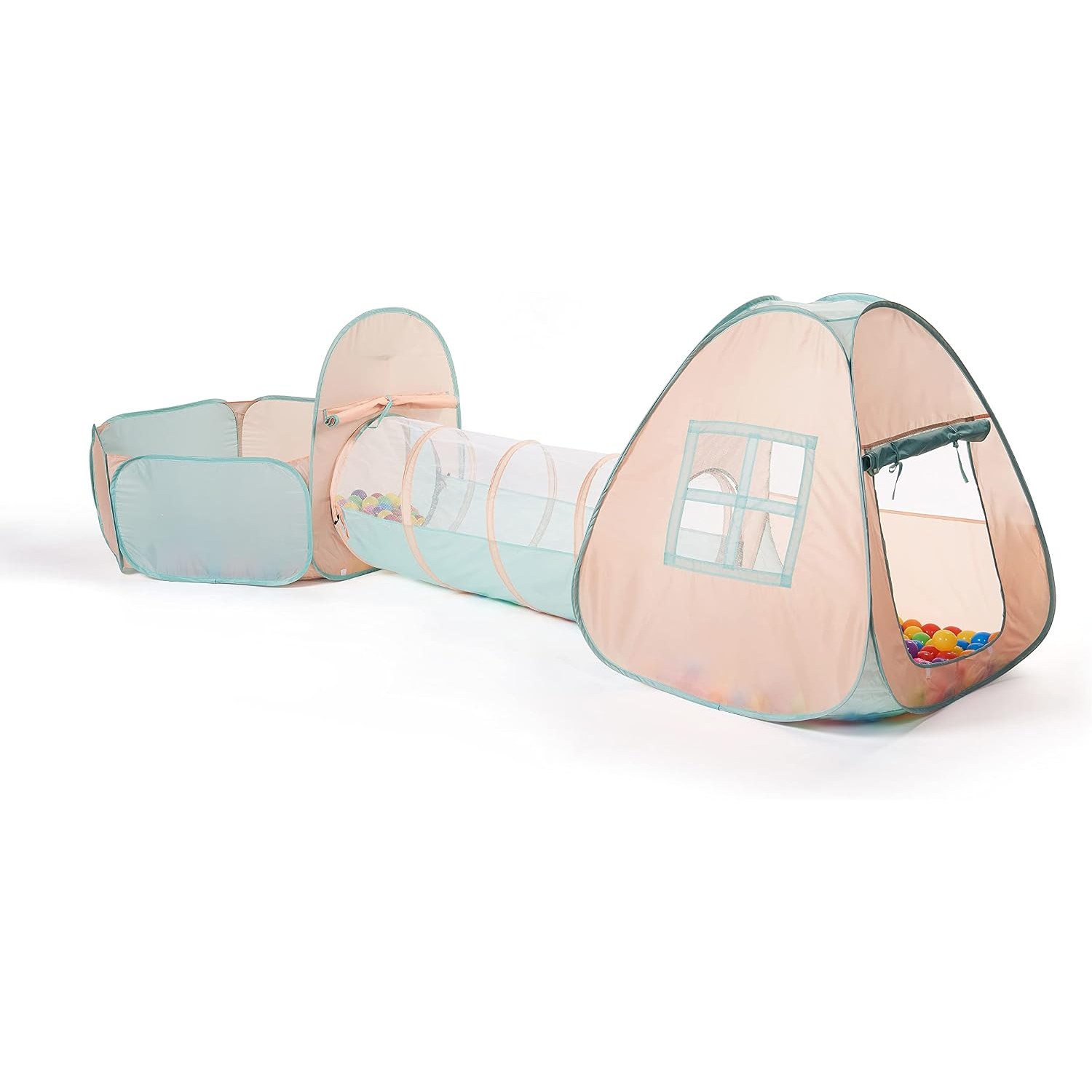
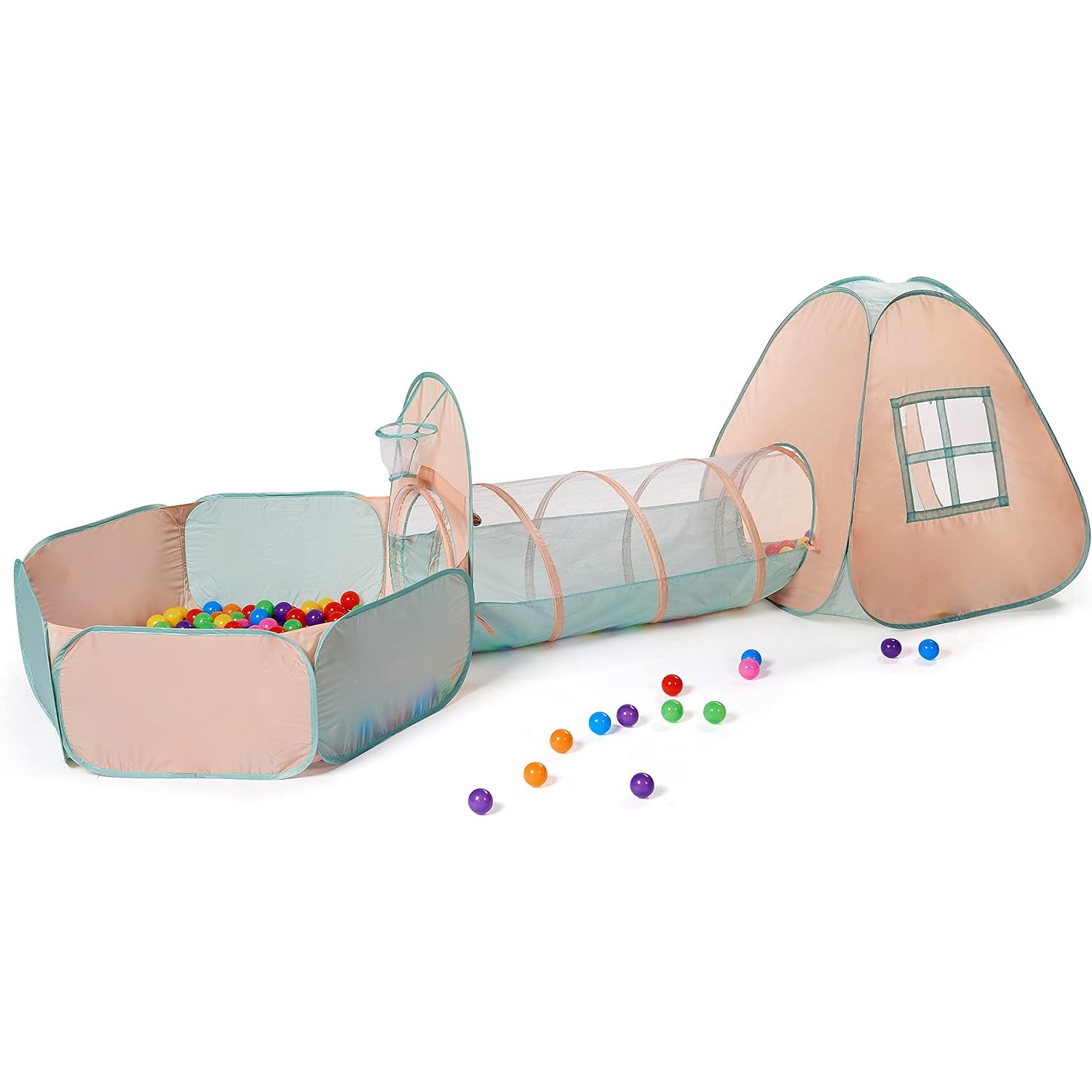
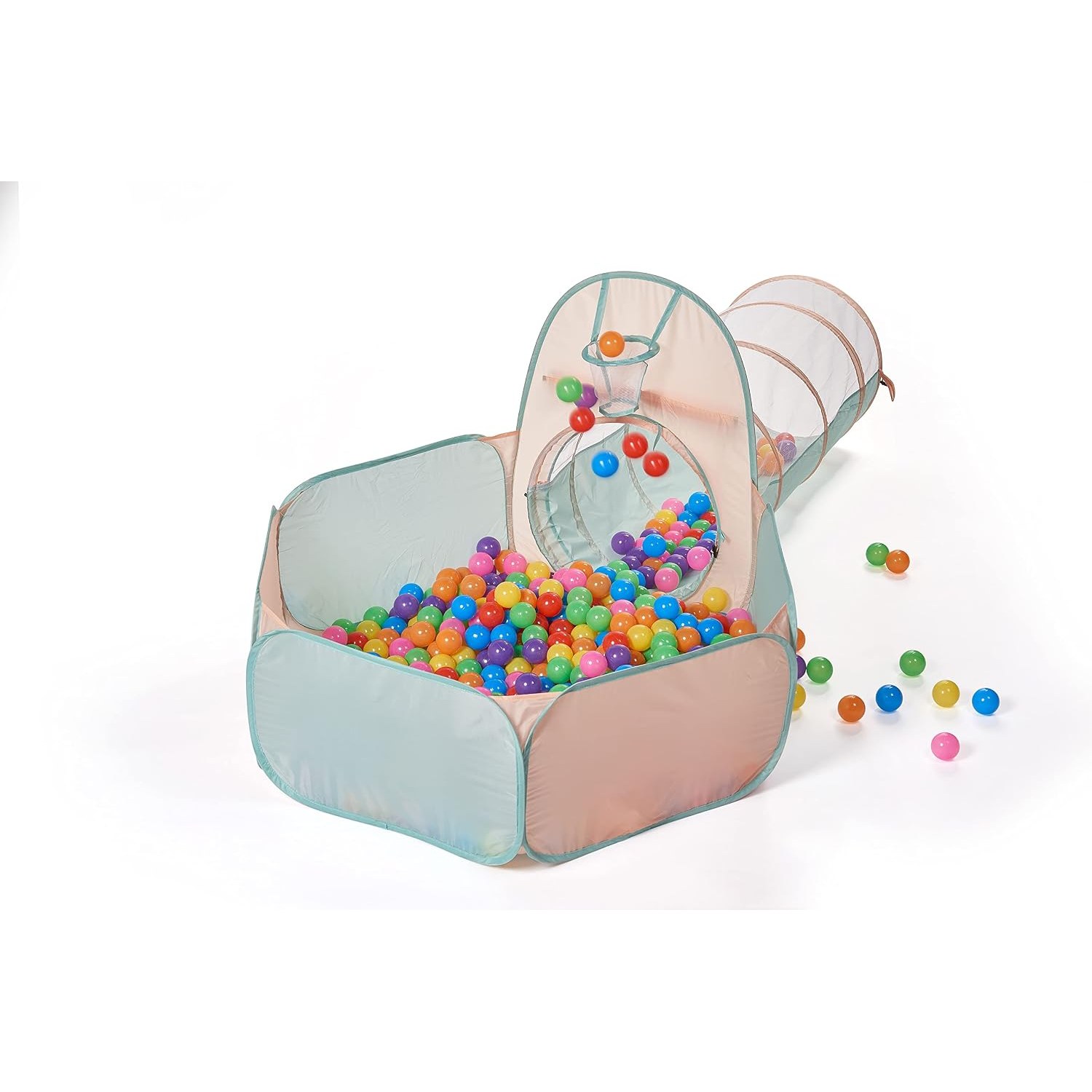
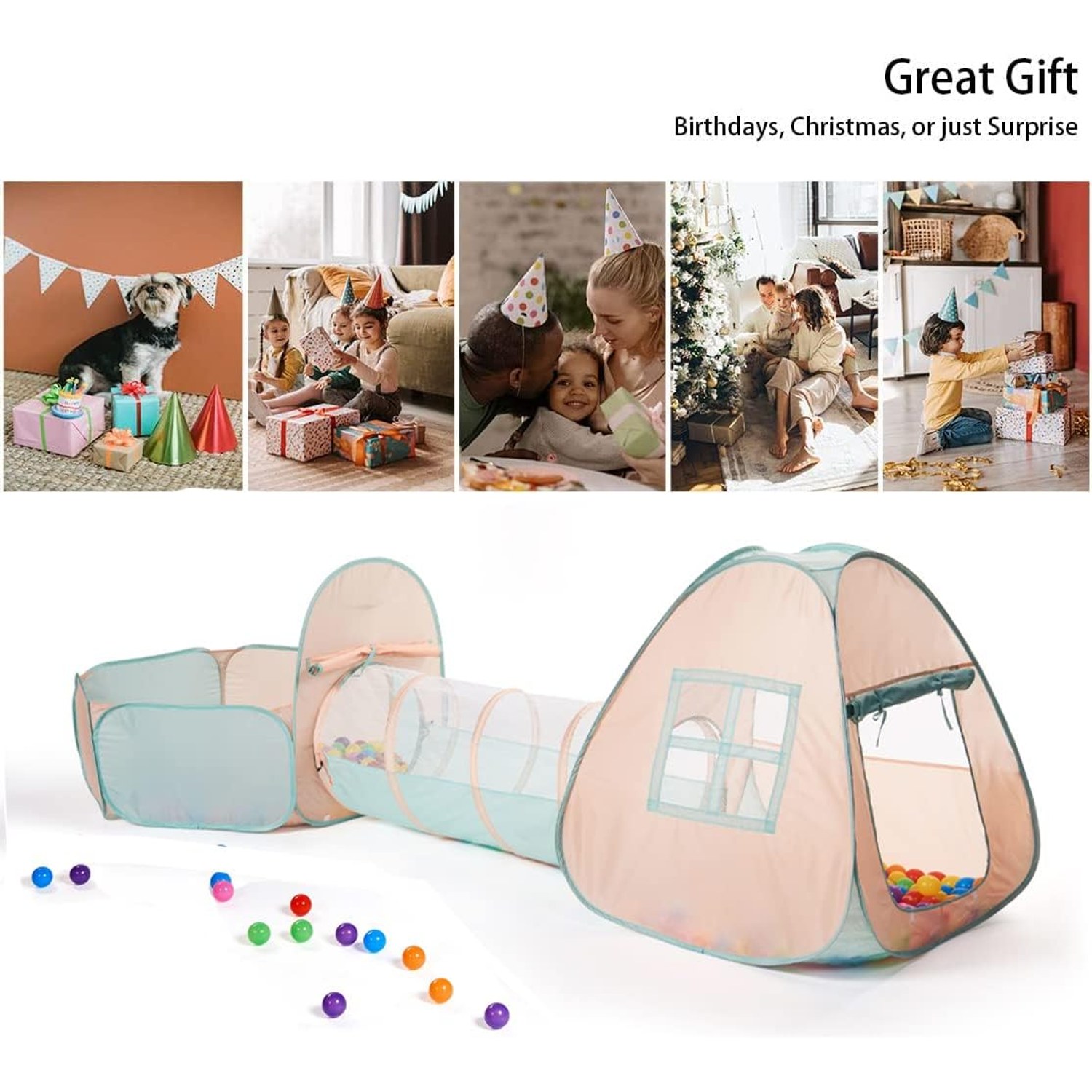
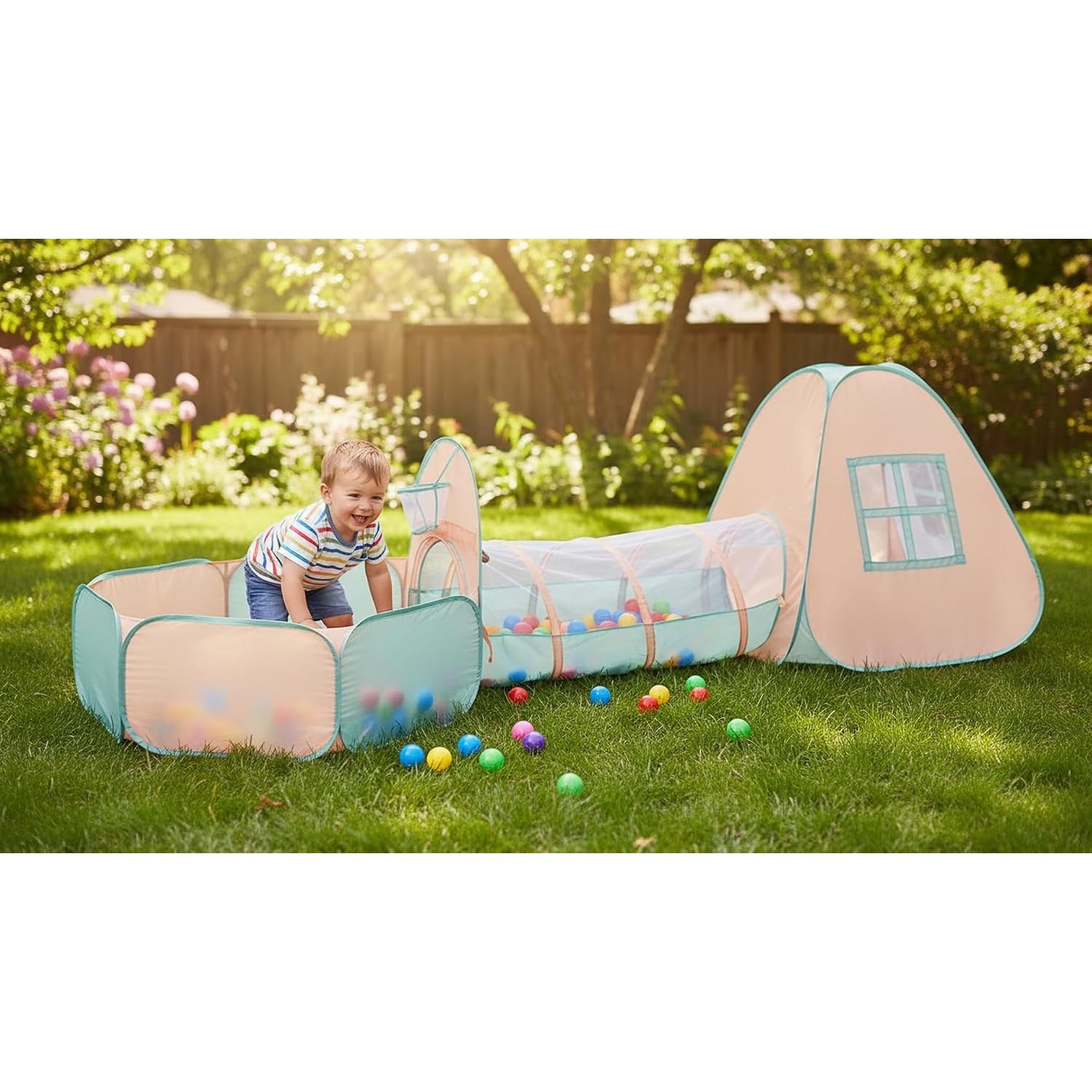
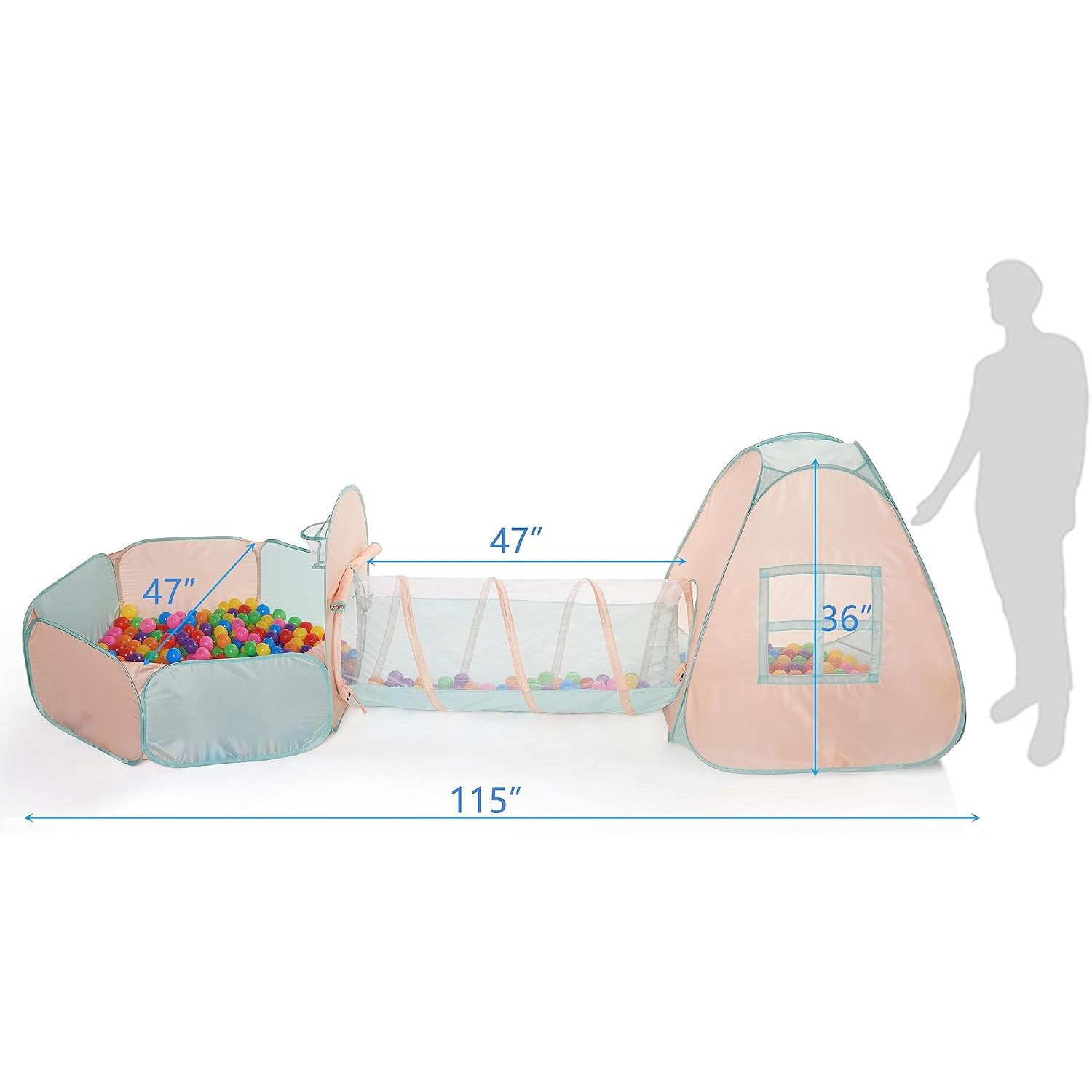
This one comes in three connected pieces. There is a tent house, a ball pit section and a long tunnel. They join up so a child can go in at one end and come out at the other. Set up end to end, the assembled footprint is listed at 90 inches long by 39 inches wide by 54 inches high, which is around 229 cm of running length and roughly 137 cm at the tallest point.
The build is polyester fabric over a sprung frame listed as aluminium or stainless steel. If you have ever used a pop up laundry hamper or a beach shelter, you already know the behaviour. The metal hoops want to be open. Release them from the bag and they snap into shape on their own. There is still some assembly in that you connect the three sections together, but there are no tools, no screws and no bag of small parts to lose.
Mesh windows are built into the design. They do two jobs. For the child they are peek holes, good for spotting whoever is coming up the tunnel and good for shouting through. For the adult they are a window into the thing, so you can look across the room and see a shape moving rather than guessing. Mesh also keeps the air moving, which stops the tent turning into a warm fabric box on a hot afternoon.
Packed, it weighs 1.36 kg and goes into its own carry bag. Among the best play tent and tunnel set options, portability is usually what separates the ones that live in the lounge room from the ones that live in the back of a cupboard.
Who it suits
The manufacturer recommended age starts at 36 months. Three to around seven is the sweet spot. Younger children in that range mostly want the physical loop, in one end and out the other, over and over, with great seriousness. Older ones start using it as scenery. It becomes a cave, a submarine, a shop, a secret base, whatever the game of the week happens to be.
It works for a single child, though two is often better. A tunnel is more fun when there is someone at the other end. Siblings tend to split it naturally, with one claiming the tent and the other running the tunnel. It is also a sensible thing to own if you host, because a children's play tent with ball pit occupies a visiting group instantly and gives them something to do that is not your stairs.
Households with little floor space need to think it through. Two and a bit metres of clear length is a fair ask in a small flat. The honest answer there is that many families set up the tent alone indoors and bring the tunnel out when they get to a park or a grandparent's hallway. The fast fold down helps, because nothing has to stay out all week.
Indoor or outdoor
It goes both ways, with one caveat. Indoors it is straightforward, and carpet or a rug underneath makes the crawling softer. Outdoors it works on dry grass or a patio as a garden play tent for kids. It is not described as waterproof or weatherproof, though, so it should come in before rain and it should not sleep outside. A light fabric structure can also catch wind, so on breezy days keep it close to a sheltered wall and keep an eye on it.
Sand and grass clippings are the usual outdoor nuisance. A good shake out before you fold it saves you from finding half a beach in the carry bag next time.
How to choose between sets
If you are comparing a few options, a handful of things actually matter.
Length is the first. Short tunnels get boring quickly because the crawl is over before it starts. A long run gives the game somewhere to go.
Setup method is the second. Anything that needs poles threaded through sleeves will get used less, simply because adults avoid the faff. A tool free pop up frame is the difference between a ten second decision and a chore.
Pack size and weight come third. Under two kilos with a bag means it can travel. Over that, and it starts to feel like furniture.
Then there is visibility. Mesh panels are worth looking for. They solve ventilation and supervision at the same time, and children genuinely enjoy them as part of the play.
Last, think about colour honestly. Bright is fun for kids and some of us have to look at it every day. Orange and green with an adventure theme sits in a reasonable middle, cheerful without glowing.
Keeping it in one piece
Care is simple and mostly about habits. Wipe the fabric with a damp cloth and a bit of mild soap, then let it dry fully before folding. Never put it in the washing machine, because the sprung frame is sewn inside the fabric and neither the tent nor your machine will enjoy the experience.
Fold it dry. Fabric packed away damp picks up a musty smell within a week, and getting that out of polyester is harder than just waiting ten minutes for it to air.
Teach the climbing rule early. Crawling through and sitting inside are what it is built for. Standing on it, leaning on the tent walls or hanging off the frame will bend the hoops and once a sprung hoop is kinked, it never folds quite right again.
Check the frame when you set it up. A quick feel along the hoops tells you if anything has gone out of shape in storage. If it has, straighten it gently rather than forcing the tent open.
Getting the most out of it
A few small things stretch the life of the game. Rotate where you set it up, because a new location resets the novelty for free. Add a torch and a blanket and the tent becomes a reading nook for a quiet half hour. Put a basket of soft balls in the pit section if you buy some, since balls are not listed as included here. Set a cushion at the tunnel exit and let them make an obstacle course out of what you already have.
The other trick is to pack it away sometimes. A toy that is always out becomes part of the furniture. One that comes out of the bag on a rainy Saturday still feels like an event.
The short version
This is a three piece set, tent plus ball pit plus tunnel, made from polyester on a sprung metal frame in orange and green. It sets up without tools, stands about 137 cm at its tallest and runs roughly 229 cm end to end. It weighs 1.36 kg and folds into a carry bag. Age guidance starts at 36 months.
It suits families who want indoor movement on bad weather days and a quick setup for the garden when the sun is out. It is less suited to very small rooms unless you are happy to use the tent on its own. Balls are not included, so budget for those if you want the pit filled. Beyond that, it does the one thing a good play tunnel set should do, which is give children a reason to keep moving and a world of their own to do it in.